⚡ Key Facts
- Scale of Need: Over 131 million Americans—66% of the adult population—rely on prescription medications, many of which are temperature-sensitive biologics, hormones, or vaccines that require strict temperature controls. For the practical checklist side, use the community emergency preparedness guide.
- The 4-Hour Window: According to the CDC and FDA, a standard, unopened household refrigerator will only maintain a safe temperature range (36°F to 46°F) for up to 4 hours during a power outage. For the practical checklist side, use the neighborhood preparedness network.
- Potency Loss: Life-saving medications like insulin can lose potency rapidly when exposed to temperatures above 86°F (30°C) or below freezing (32°F / 0°C), leading to unpredictable dosing and medical emergencies. For the practical checklist side, use the emergency communication plan.
- Federal Safeguards: The Emergency Prescription Assistance Program (EPAP) can be activated by federal authorities during declared disasters to help uninsured individuals access prescription drugs, but pre-disaster physical preparation remains the primary line of defense. For the practical checklist side, use the family emergency planning guide.
When the power grid fails, the clock starts ticking. For most people, a blackout means dimming lights, silent appliances, and the gradual warming of the refrigerator's perishable foods. But for millions of individuals managing chronic conditions—such as diabetes, rheumatoid arthritis, severe asthma, or growth hormone deficiencies—a power outage is a direct threat to their life-sustaining medication supply. The biological proteins, hormones, and complex molecules that make up modern pharmaceuticals are highly sensitive to thermal fluctuations. Without a proactive strategy for maintaining the cold chain, these expensive and vital therapies can degrade into useless, or even toxic, compounds within hours. This guide provides an authoritative, step-by-step blueprint to safeguard your medications when the power goes out, ensuring you are never left vulnerable in a crisis.
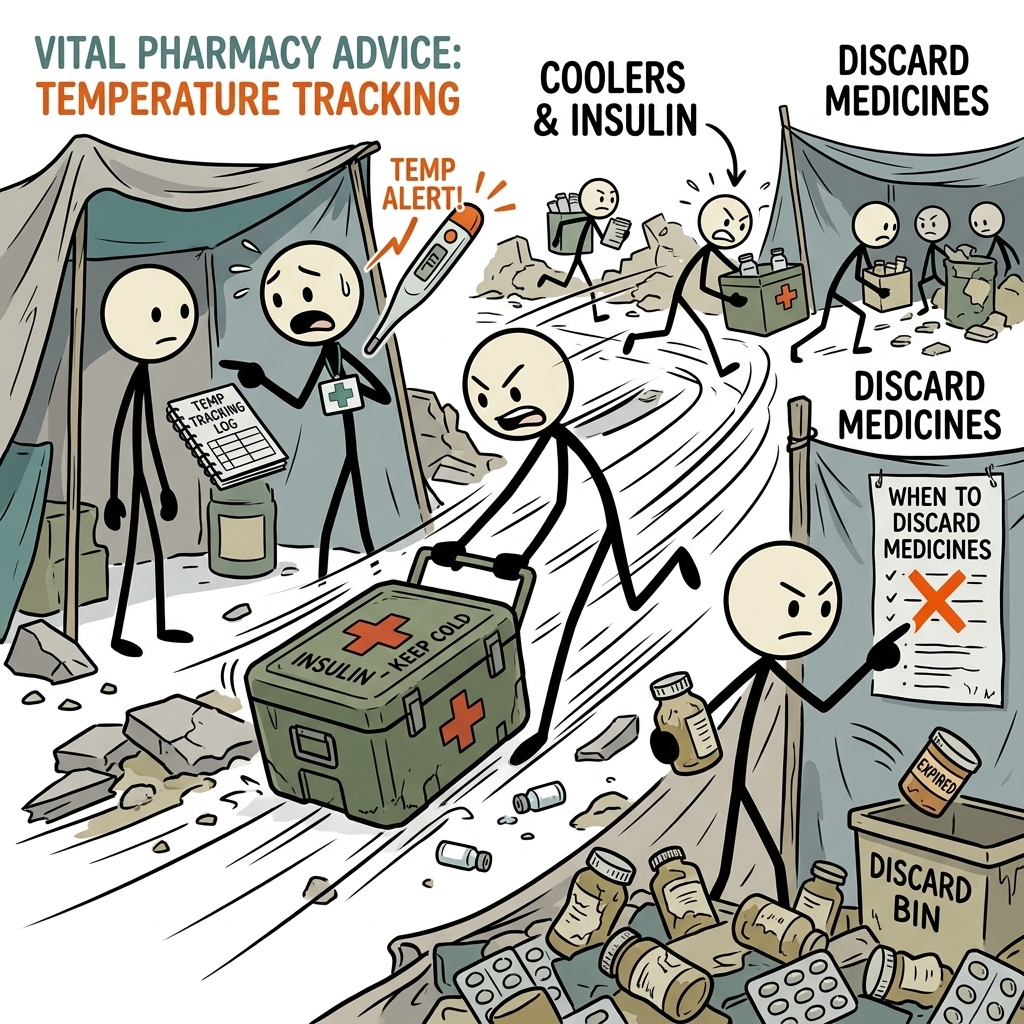
Understanding the Pharmaceutical Cold Chain
To understand why temperature control is so critical, one must understand the biochemistry of modern pharmaceuticals. Many of today’s most advanced medications are biologics—drugs manufactured in, or synthesized from, living organisms. These include monoclonal antibodies, vaccines, insulin, and interferon. Unlike simple chemical compounds like aspirin, which are highly stable, biologics are composed of large, complex protein structures held together by delicate chemical bonds.
When these proteins are exposed to temperatures outside their specified storage range—typically 36°F to 46°F (2°C to 8°C)—they undergo a process called denaturation. Heat causes the protein chains to unfold and clump together, permanently destroying their therapeutic efficacy. Conversely, freezing temperatures can cause ice crystals to form within the liquid solution. These sharp crystals can shear the delicate protein structures, rendering the medication inactive. Once a biologic has denatured or frozen, no amount of recooling can restore its structure or function. This makes emergency medication refrigeration emergency preparedness a foundational pillar of any household disaster plan.
Furthermore, the physical integrity of the delivery system can be compromised by temperature extremes. Prefilled syringes, auto-injector pens, and glass vials can crack or leak when frozen due to the expansion of liquid. Even if the medication itself survives a thermal spike, a compromised delivery device can result in inaccurate dosing or contamination, introducing pathogens directly into the bloodstream. Understanding these vulnerabilities underscores why keeping a continuous, unbroken cold chain is not merely a recommendation, but a life-saving necessity.
Temperature Tracking: Your First Line of Defense
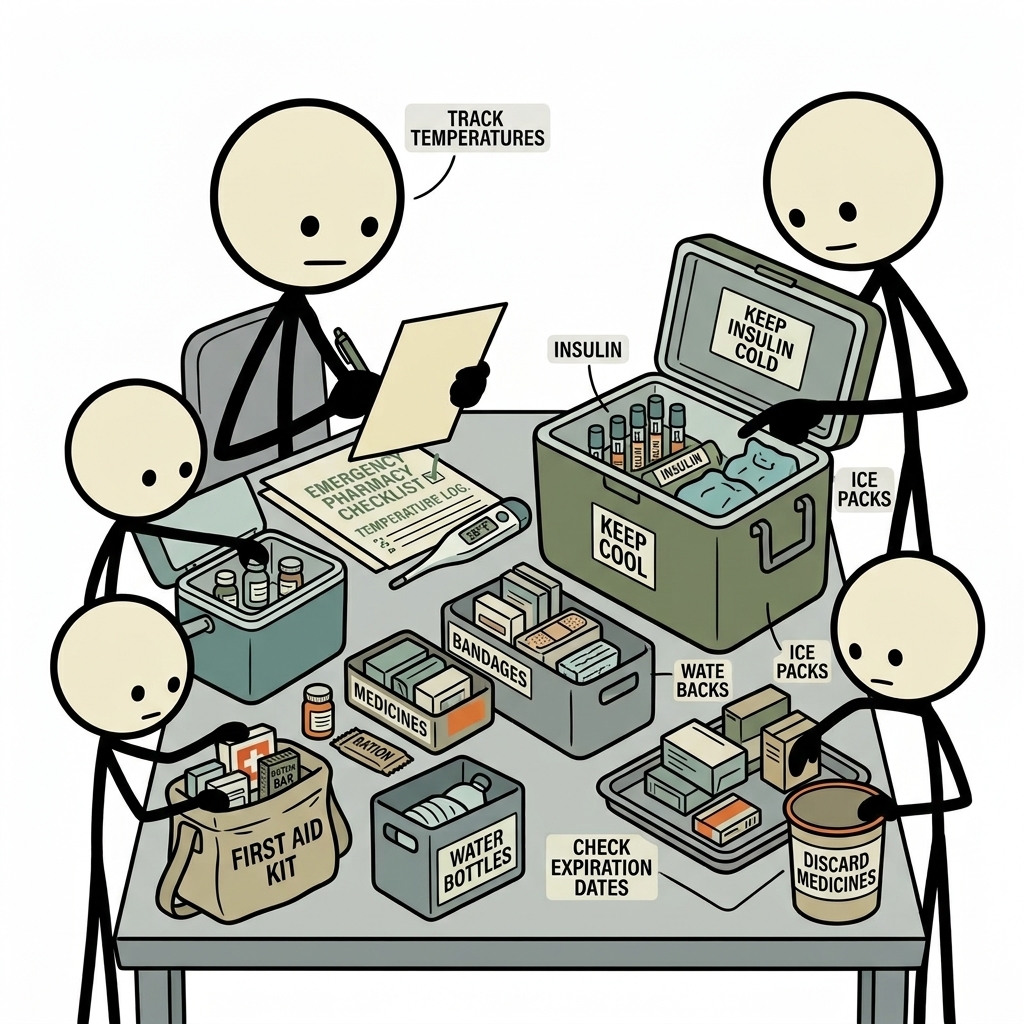
You cannot manage what you do not measure. During a power outage or evacuation, guessing the temperature of your medication storage is a recipe for failure. A closed refrigerator may feel cool to the touch, but its internal temperature can rise above the safe 46°F threshold long before the exterior surfaces indicate a problem. To ensure safety, you must implement a robust, redundant temperature tracking system.
NIST-Traceable Thermometers
For high-stakes medication storage, standard household dial thermometers are insufficient. You should invest in a National Institute of Standards and Technology (NIST) traceable digital thermometer. These devices are calibrated to precise scientific standards and often feature a dual-probe system. One probe remains inside the medication storage environment (such as a refrigerator or cooler), while the digital display sits outside, allowing you to monitor temperatures without opening the container and letting precious cold air escape.
Min/Max Data Loggers
The most dangerous temperature excursions are those that happen while you are asleep or evacuated. A min/max thermometer records the lowest and highest temperatures reached during a specific period. More advanced Bluetooth or cellular-enabled data loggers can send real-time alerts to your smartphone if the temperature approaches the danger zone. If you return to a cooler and see that the maximum temperature reached 58°F, even if it is currently back at 42°F, you will know that the medication's safety has been compromised.
Low-Tech Backups: The Coin-on-Ice Trick
If electronic monitoring fails or is unavailable, simple analog safeguards can provide critical clues. Freeze a small cup of water, and once solid, place a coin on top of the ice. Keep this cup inside your medication cooler or refrigerator. If you return to find the coin has sunk to the bottom of the cup, you have definitive proof that the temperature rose high enough to completely melt the ice, meaning your medications were exposed to unsafe warmth for an extended duration.
Cooler Selection and Thermodynamics for Medication Safety
When the home refrigerator fails, a high-quality cooler becomes your temporary mobile pharmacy. However, not all coolers are created equal. Understanding the thermal properties of different materials and the physics of heat transfer is essential for selecting the right equipment for emergency medication refrigeration.
| Cooler Type | Insulation Material | Ice Retention Capacity | Best Use Case |
|---|---|---|---|
| Rotomolded (e.g., Yeti, RTIC) | Thick polyurethane foam | 5 to 7+ Days | Long-term power outages, extreme heat evacuations |
| Standard Plastic (e.g., Coleman, Igloo) | Medium-density foam | 2 to 3 Days | Short-term outages, rapid transport |
| Expanded Polystyrene (EPS/Styrofoam) | Air-infused polystyrene | 12 to 24 Hours | Emergency backup, single-day transport only |
| Soft-Sided Insulated Bags | Closed-cell foam | 12 to 24 Hours | Personal transport, short evacuations |
The Physics of Ice Retention
Heat enters a cooler through three mechanisms: conduction (direct contact), convection (air movement), and radiation (light/infra-red waves). High-end rotomolded coolers excel because their thick, pressure-injected polyurethane walls contain millions of microscopic gas bubbles that drastically slow down conduction. To maximize this insulation, you must pre-chill your cooler. If you store your empty cooler in a hot garage, its internal insulation will retain that heat. Bringing it indoors and filling it with sacrificial ice 12 hours before loading your medications will cool the structural foam, vastly extending the life of your primary ice supply.
Phase Change Materials (PCMs) vs. Water Ice
While standard water ice is readily available, it poses a significant risk: direct contact can freeze your medications. Additionally, as ice melts, medications can become submerged in water, compromising labels, packaging, and sterility.
Phase Change Materials (PCMs) are engineered gel packs designed to freeze and melt at specific temperatures. For medical applications, choose PCMs formulated to maintain a steady 36°F to 46°F (2°C to 8°C) range. Unlike water ice, which drops to 32°F or lower, these medical-grade gel packs absorb heat while maintaining a constant, safe temperature, eliminating the risk of accidental freezing.
How to Pack a Medical Cooler: Step-by-Step
Packing a cooler for food is simple; packing it for life-saving pharmaceuticals requires precision engineering. Follow this structural protocol to prevent thermal shock and physical damage:
- The Thermal Base: Place your frozen gel packs or ice blocks at the very bottom of the cooler. Cold air naturally sinks, but starting with a solid cold base helps establish a stable thermal gradient.
- The Thermal Buffer Zone: Never place medication vials or pens directly on top of ice or gel packs. Place a physical barrier—such as two layers of bubble wrap, a thick piece of closed-cell foam, or rolled towels—directly over the ice. This prevents the medication from dropping below 36°F.
- The Medication Core: Place your medications inside waterproof, airtight containers (like heavy-duty zip-top bags or dry boxes) to protect them from moisture and condensation. Position these containers in the center of the cooler, surrounded by the buffer zone.
- The Monitoring Layer: Place your digital thermometer probe directly inside the medication container or immediately adjacent to it. Run the thin wire or transmit the wireless signal to the external reader.
- The Top Insulation: Fill any remaining empty space at the top of the cooler with crumpled newspaper, bubble wrap, or dry towels. Dead air space is the enemy of cold retention; filling this space prevents warm air from circulating when the lid is briefly opened.
Insulin Management in a Crisis
Of all the temperature-sensitive medications, insulin is the most widely used and one of the most chemically delicate. According to the American Diabetes Association (ADA) and the FDA, unused, unopened insulin must be stored in a refrigerator between 36°F and 46°F to maintain its full potency until the expiration date printed on the vial.
The Room Temperature Rule (And Its Limits)
Once a vial or pen of insulin is opened and kept at room temperature (59°F to 86°F / 15°C to 30°C), it generally remains stable and safe to use for up to 28 days (some brands can last up to 42 days). While this offers some flexibility during a brief power outage, this rule comes with a massive caveat: ambient temperatures must not exceed 86°F.
During a summer blackout, indoor temperatures in many regions can quickly soar past 90°F or 100°F. Under these conditions, uncooled insulin will degrade rapidly, losing its potency within days or even hours. Therefore, relying on the "room temperature" exemption during a hot-weather disaster is a high-risk strategy.
Evaporative Cooling: The Frio Wallet Solution
If you lose power or must evacuate without access to ice or electricity, evaporative cooling is an excellent survival tool. Devices like Frio wallets utilize simple thermodynamic principles. The wallet contains polyacrylamide crystals that absorb water and form a cool gel.
As the moisture in the gel slowly evaporates through the breathable outer fabric, it draws heat away from the inner chamber, keeping the insulin at a safe temperature (usually under 79°F) for several days, even in hot climates. The only requirement is immersing the wallet in cool water periodically to reactivate the crystals. Note that evaporative coolers require airflow to function; they should not be placed inside airtight plastic bags or closed, unventilated spaces.
Pharmacy Protocols and Legal Safeguards
Emergency preparedness is not just about physical gear; it is also about navigating the legal and administrative landscapes of healthcare. When a disaster strikes, obtaining refills can be incredibly difficult due to closed pharmacies, disrupted supply chains, and strict insurance limitations. Understanding how to work with your pharmacist beforehand can prevent a medication gap.
The Emergency Prescription Assistance Program (EPAP)
Managed by the Department of Health and Human Services (HHS) and FEMA, the EPAP is a federal program designed to help disaster survivors who do not have health insurance. When activated following a federally declared disaster, participating pharmacies can dispense a 30-day supply of prescription medications, vaccinations, and certain medical supplies (like insulin syringes) to eligible individuals free of charge. Keep a physical copy of your prescriptions and medical history in your emergency go-bag essentials guide to facilitate this process.
State Emergency Refill Laws (The Stafford Act & State Declarations)
Many states have laws that require insurance companies to waive "too soon to refill" restrictions during a declared state of emergency. This allows patients to obtain an emergency 30-day supply of their maintenance medications early.
Do not wait for a hurricane or blizzard to make landfall to request this. If a major storm is forecasted, contact your pharmacy immediately and ask if an emergency override can be processed under your state’s emergency declarations.
Securing a 90-Day Supply
One of the most effective ways to build a medication buffer is to transition your maintenance prescriptions from 30-day refills to 90-day refills. Many insurance plans allow this, especially through mail-order pharmacy programs. By maintaining a 90-day supply, you naturally build a rolling buffer of medication, ensuring you always have several weeks of supply on hand at any given moment, reducing your reliance on immediate refills during a crisis.
The Ultimate Emergency Medication Refrigeration Checklist
When a crisis occurs, panic can cloud your judgment. Having a highly structured, printed emergency medication refrigeration checklist attached to your refrigerator or stored in your emergency binder ensures that you and your family can act swiftly and without error.
- [ ] Inventory and Documentation: Maintain a printed list of all medications, exact dosages, prescribing doctors, and pharmacy phone numbers. Keep physical copies of your insurance cards and prescription labels.
- [ ] Designated Emergency Cooler: Keep a dedicated, clean, rotomolded or high-efficiency cooler specifically for medical use. Ensure it is stored in an easily accessible location.
- [ ] Pre-Frozen Gel Packs/PCMs: Keep at least four medical-grade gel packs or phase change materials permanently stored in your home freezer. If space allows, keep a few bottles of water frozen to serve as emergency ice blocks.
- [ ] Calibrated Thermometer: Store a digital, NIST-traceable min/max thermometer with your medical cooler. Check the batteries annually.
- [ ] Waterproof Barriers: Keep heavy-duty, zip-top plastic bags, dry boxes, and bubble wrap stored inside your emergency cooler so they are ready for packing immediately.
- [ ] Evaporative Cooling Gear: For insulin or other small-vial medications, keep a clean, dry Frio wallet or similar evaporative cooling sleeve on hand for mobile or low-resource situations.
- [ ] Backup Power Source: If budget permits, maintain a portable solar generator or a dedicated Uninterruptible Power Supply (UPS) capable of running a small, highly efficient 12V medical travel refrigerator for at least 48 hours.
- [ ] Outage Protocol Sheet: Post a clear, step-by-step instruction card on your refrigerator detailing exactly who is responsible for moving medications to the cooler and the steps required to pack it safely.
When to Discard vs. When to Keep: Clinical Safety Guidelines
In a prolonged survival situation, you may face a agonizing dilemma: do you discard a medication that has slipped outside its recommended temperature range, or do you risk using it? While clinical guidelines from agencies like the FDA and CDC are conservative to ensure absolute safety, understanding the signs of chemical degradation can help you make informed, rational decisions.
Visual and Physical Indicators of Degradation
Before administering any medication that has experienced a temperature excursion, conduct a meticulous visual inspection. If you observe any of the following changes, the medication must be discarded:
- Clumping or Precipitation: If a normally clear liquid medication (like rapid-acting insulin) appears cloudy, has floating particles, or has formed a white, frosty film on the inside of the glass, the proteins have denatured and clumped. It is no longer safe to use.
- Color Changes: Any yellowing, browning, or unexpected discoloration of a liquid medication indicates chemical oxidation or degradation.
- Viscosity Alterations: If a liquid medication has become noticeably thicker, stringy, or gel-like, its molecular structure has broken down.
- Suspension Separation: For medications that are designed to be suspended (like NPH insulin, which is naturally cloudy when mixed), if the liquid fails to mix evenly after gentle rolling and instead remains separated into clumps or layers, it has degraded.
The Danger of Freezing
It is worth repeating: freezing is often far more destructive than mild warming. If a biologic medication has frozen solid, even if it has completely thawed and looks perfectly normal, it should be discarded. The physical forces of ice crystallization almost always destroy the delicate tertiary structures of therapeutic proteins, rendering them completely inactive.
When to Consult Professionals
If your medications have been exposed to temperatures above their safe limits but show no visual signs of damage, do not immediately throw them away if doing so leaves you with zero treatment options. Instead, isolate those medications, label them clearly as "Exposed - Pending Verification," and contact your pharmacist, the drug manufacturer’s medical information department, or your healthcare provider immediately. Manufacturers often have extensive stability data for temperature excursions that is not printed on the standard patient insert, and they can tell you exactly how many hours or days that specific batch can survive at elevated temperatures.
Empowered Preparedness: Taking Control of Your Health Security
Securing your life-saving medications during a disaster is not a matter of luck; it is a matter of physics, planning, and proactive action. By understanding the vulnerabilities of the pharmaceutical cold chain, investing in the right monitoring and cooling tools, and establishing a clear, step-by-step emergency medication refrigeration protocol, you transform a potential medical emergency into a manageable inconvenience. Do not wait for the next storm warning or grid failure to test your systems. Take the time today to freeze your gel packs, check your thermometer batteries, and speak with your pharmacist. True survival preparedness is about eliminating variables before the crisis arrives, ensuring that you and your loved ones remain safe, healthy, and resilient in the face of any adversity.
Frequently Asked Questions
What should a emergency medication refrigeration plan include?
Start with the immediate safety steps, the supplies and records your household needs, a communication plan, and a regular review schedule. Follow local official guidance during an active emergency.
How often should I review emergency medication refrigeration preparations?
Review them at least twice a year and whenever your household, medication, location, or local risks change. Replace expired supplies and practice key steps.
Where can I find reliable emergency guidance?
Use local emergency management alerts and established public-health or emergency-management agencies. A blog guide should support, not replace, official real-time instructions.