⚡ Key Facts
- The Katrina Lesson: According to FEMA, an estimated 44% of people who chose not to evacuate during Hurricane Katrina did so because they refused to abandon their pets, directly leading to the passage of the PETS Act of 2006. For the practical checklist side, use the community emergency preparedness guide.
- The Planning Gap: An ASPCA survey revealed that while 83% of pet owners live in communities threatened by natural disasters, only 46% have a dedicated disaster plan in place for their animals. For the practical checklist side, use the neighborhood preparedness network.
- Reunification Rates: The American Veterinary Medical Association (AVMA) reports that microchipped dogs are returned to their owners at more than double the rate of non-microchipped dogs, while microchipped cats are reunited 21.4 times more often. For the practical checklist side, use the emergency communication plan.
- Shelter Realities: The American Red Cross generally cannot allow non-service animals inside its emergency shelters due to health and safety regulations, making independent pet-friendly lodging plans a critical necessity.
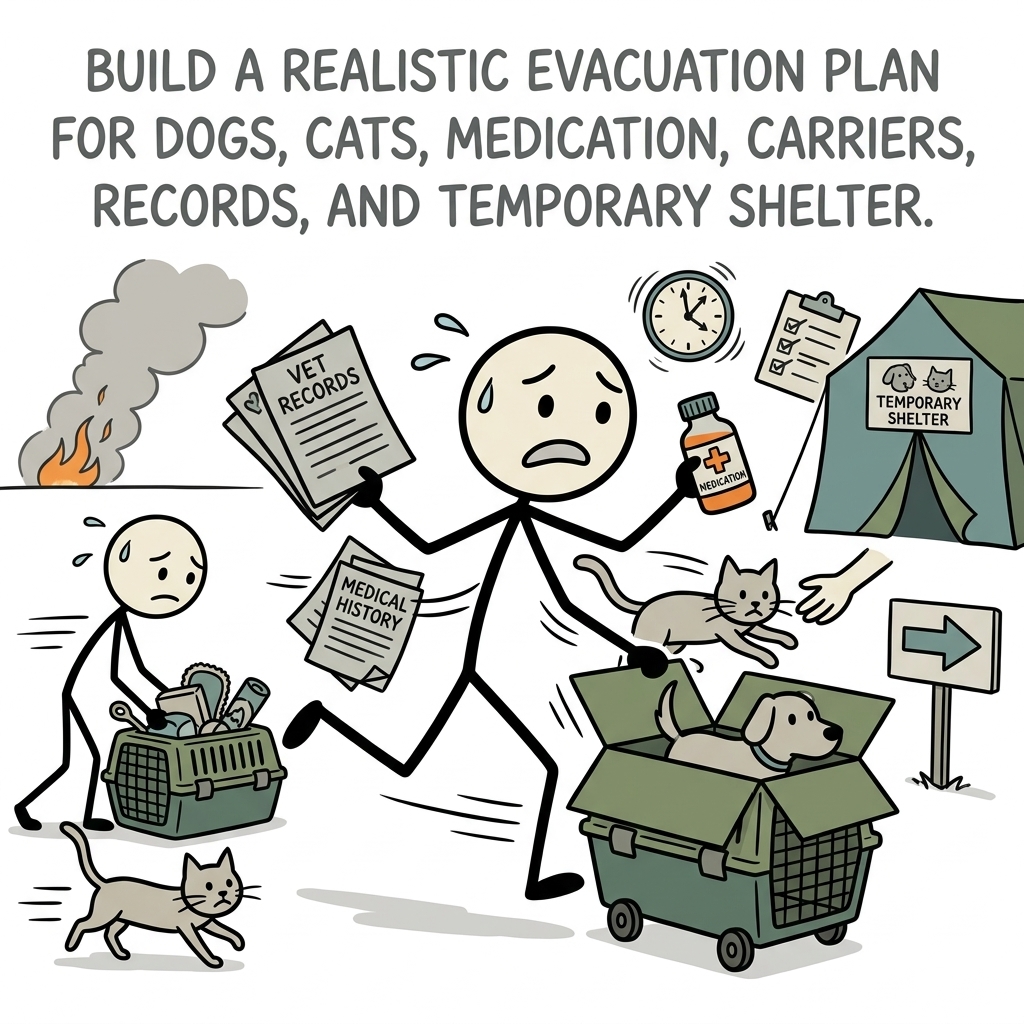
When the emergency siren sounds or an evacuation order is issued, adrenaline spikes, cognitive bandwidth narrows, and seconds feel like fractions of a second. For pet owners, this moment of crisis is compounded by a profound sense of responsibility for creatures who cannot comprehend the danger around them. Too often, emergency preparedness guides offer generic advice like "grab your pet and go," ignoring the logistical realities of coaxing a terrified cat out from under a bed, transporting heavy crates, or managing life-saving veterinary medications on the move. Building a truly realistic pet family emergency plan requires moving past high-level theories and designing a stress-tested, highly organized system tailored to the unique behaviors of your dogs and cats.
The Psychology of Evacuation: Why Pets React Differently in Crises
Before assembling gear, it is vital to understand how animals respond to atmospheric pressure drops, smoke, sirens, and human panic. Dogs and cats possess sensory systems far more acute than our own. Long before you receive an emergency alert on your phone, your pet may exhibit signs of extreme distress: pacing, hiding, vocalizing, or displaying unexpected aggression. In these moments, a normally docile animal can become impossible to handle.
Understanding this behavioral shift is the foundation of any realistic pet evacuation plan emergency preparedness strategy. If you assume your cat will willingly walk into a carrier when smoke is filling your hallway, your plan is built on a dangerous fallacy. You must design your evacuation protocols around the Survival Scenarios behavioral scenario: a pet that is actively resisting capture, terrified, and operating purely on survival instincts.
The Feline "Fight, Flight, or Freeze" Response
Cats are notoriously difficult to capture when their adrenaline surges. Their instinct is to find the deepest, darkest, most inaccessible crevice in your home—under floorboards, behind heavy appliances, or inside box springs. If cornered, they may scratch or bite, even their most trusted caregivers. A successful plan must include pre-emptive containment strategies, specialized handling tools, and a clear understanding of your cat’s favorite hiding spots.
The Canine Pack Dynamic and Panic Behaviors
Dogs often feed directly off their owner's emotional state. If you are rushing, shouting, or crying, your dog will interpret this as an active threat. This can manifest as stubborn refusal to move, bolting out of open doors, or protective aggression toward emergency responders. Managing a dog during an evacuation requires physical security measures—such as slip leads and escape-proof harnesses—alongside a calm, authoritative demeanor from the handler.
Step 1: The Master Pet Evacuation Checklist

When executing a rapid departure, you should not have to think about what to pack. Having a pre-staged, dedicated pet evacuation checklist is the difference between a controlled exit and a chaotic scramble. This checklist must be divided into immediate "grab-and-go" items and secondary support gear that can be loaded if time permits.
To ensure your household is fully prepared, creating a physical and digital pet evacuation checklist checklist can save lives by allowing you to systematically cross off tasks as you prepare your home and load your vehicle. Keep one copy laminated inside your pet's emergency supply bin and another saved on your phone for instant access.
Essential Supplies for a 72-Hour Rapid Exit
- Potable Water: At least one gallon of water per pet, per day (stored in durable, BPA-free containers). Keep in mind that active stress increases water consumption in both dogs and cats.
- Nutritional Reserves: A minimum of a 3-to-7-day supply of their regular dry or wet food. Avoid introducing new food brands during an evacuation, as sudden dietary changes combined with stress can cause severe gastrointestinal distress.
- Manual Can Opener and Utensils: Essential if your pet eats canned wet food.
- Collapsible Bowls: Lightweight silicone bowls for food and water that fold flat to save space in your pack.
- Sanitation Supplies: Heavy-duty waste bags for dogs; a small, disposable aluminum roasting pan, a zip-top bag of litter, and a plastic scoop for cats.
- High-Value Treats: Freeze-dried meat or squeeze-tube treats. These are not just for comfort; they are vital tools for luring hiding animals and rewarding calm behavior in high-stress environments.
The Secondary Support Gear (For Longer-Term Displacements)
If you have more than ten minutes to evacuate, or if you are preparing for a planned evacuation due to an approaching hurricane or wildfire, you should load your secondary support kit. This includes grooming tools to remove toxic ash or floodwater contaminants, comfort items like familiar blankets or toys smelling of home, and extra leashes, stakes, or tie-outs to secure your animals in temporary outdoor settings.
Step 2: Medical Preparedness, Records, and Identification
A physical emergency is also a medical emergency. If you are forced to flee your home, you may not have access to your primary veterinarian, local pharmacies, or digital medical databases. You must carry physical proof of your pet's health status, ownership, and medical needs.
Building the Ultimate Pet Medical Dossier
Do not rely on cloud storage or mobile apps during a disaster; cellular networks are often the first infrastructure systems to fail during major storms, earthquakes, or wildfires. Instead, compile a physical, waterproof folder containing the following documents:
- Rabies Vaccination Certificate: This is the single most important document you will need. Most temporary shelters, boarding facilities, and hotels will strictly refuse entry to any animal without physical proof of a current rabies vaccination.
- Complete Vaccination History: Proof of DHPP/FVRCP, Bordetella, and Leukaemia vaccinations, which are standard requirements for group housing or boarding.
- Microchip Registration Details: Write down the microchip number, the manufacturer's name, and the phone number of the registry. Ensure your contact information is updated with the registry *before* disaster strikes.
- Proof of Ownership: Adoption papers, registration documents, or veterinary bills showing your name associated with the pet. In the chaotic aftermath of a disaster, proving an animal is yours can be incredibly difficult without paperwork.
- Clear, Printed Photographs: Keep high-resolution photos of your pets from multiple angles, including one photo of you *with* your pet to establish ownership. These are invaluable for creating "lost pet" posters if you become separated.
- Veterinary Contact Information: Names, phone numbers, and addresses of your primary clinic and the nearest 24-hour emergency veterinary hospital to your evacuation destination.
Medication Management and the 14-Day Rule
If your pet relies on daily life-saving medications—such as insulin for diabetic cats, phenobarbital for epileptic dogs, or heart medications—managing these prescriptions is a top priority. The Centers for Disease Control and Prevention (CDC) recommends maintaining a minimum 14-day supply of all essential veterinary medications in your pet evacuation checklist emergency preparedness kit.
Work with your veterinarian to establish a rotation system. Because medications have expiration dates, you cannot simply leave a bottle in your emergency kit for years. Label all medications clearly with the drug name, exact dosage instructions, prescribing veterinarian, and expiration date. If a medication requires refrigeration (like certain types of insulin), pack a small insulated cooler bag and reusable cold packs next to your emergency kit so you can grab them instantly.
Step 3: Tactical Carrier and Crate Selection
Your pet’s carrier is not merely a transport device; during an evacuation, it serves as their safe haven, their bedroom, and their primary defense against physical hazards. If your carrier is structurally weak, difficult to load, or uncomfortable, it will actively impede your evacuation efforts.
Selecting the Right Carrier for Cats
For cats, soft-sided carriers are convenient for light travel, but hard-sided plastic carriers are far superior for emergency evacuations. Hard plastic offers protection from falling debris, shifting luggage in a vehicle, and external impacts.
Look for a carrier with both a front door and a top-loading door. The top-loading feature allows you to gently lower a stressed, splay-legged cat into the carrier rather than forcing them through a narrow front opening. Ensure the carrier is secured with thumb-screws or heavy-duty locking clips rather than cheap plastic tabs that can easily snap under pressure.
Sizing and Securing Crates for Dogs
For dogs, transport crates must be large enough for the animal to stand up, turn around completely, and lie down comfortably, but not so large that they slide around dangerously during transit. For medium to large dogs, heavy-duty wire crates that fold flat are excellent for saving vehicle space, but rotomolded plastic crates (such as those certified for airline travel) offer the highest level of physical protection.
Carrier Acclimatization: Eliminating the Fear Factor
If the only time your pet sees their carrier is when they are going to the vet, they will associate it with fear and pain. To break this association, integrate carriers into your daily living space. Leave the doors open, place comfortable bedding inside, and feed your pets their meals or high-value treats inside the carrier on a regular basis. Your goal is to make the carrier a trusted sanctuary. When a crisis occurs, your pet should willingly retreat into their carrier as a safe space, rather than fleeing from it.
Step 4: Navigating the Realities of Temporary Shelter
One of the most dangerous myths in emergency preparedness is the belief that emergency shelters will automatically accommodate pets. While the federal Pets Evacuation and Transportation Standards (PETS) Act of 2006 requires local and state emergency management authorities to include pets and service animals in their disaster plans, it does *not* mandate that every human shelter must allow companion animals inside. In most cases, pets are housed in separate, co-located facilities, or owners are directed to alternative locations.
The PETS Act Decoded: What It Means for You
Under the PETS Act, FEMA can provide funding for pet-friendly shelters, rescue operations, and veterinary care. However, these facilities are often run by local humane societies or agricultural departments under extreme resource constraints. Space is limited, noise levels are incredibly high, and infectious diseases (such as kennel cough or canine parvovirus) can spread rapidly in crowded environments. Relying on public pet shelters should always be your backup plan, not your primary strategy.
Identifying Pet-Friendly Lodging in Advance
Do not wait for an evacuation order to search for pet-friendly hotels. Establish a list of at least three designated destinations outside your immediate geographic area (ideally 50, 100, and 200 miles away in different cardinal directions).
- Hotel Chains with Generous Pet Policies: Research national chains known for pet-friendly accommodations, such as La Quinta, Red Roof Inn, Motel 6, and Kimpton Hotels. Keep their national reservation numbers and local property numbers saved in your phone.
- Verify Pet Policies Directly: Some individual franchise locations have weight limits, breed restrictions, or limits on the number of pets allowed per room. Call these locations in advance to verify their emergency policies; many hotels waive pet fees and restrictions during state-declared emergencies.
- Private Arrangements: Coordinate with friends or family members who live outside your immediate threat zone. Confirm they are willing and able to host you *and* your animals in an emergency.
- Emergency Boarding Facilities: Identify veterinary clinics, boarding kennels, or animal shelters in your target evacuation zones that offer emergency boarding services.
The Critical Distinction: Service Animals vs. Emotional Support Animals
It is legally vital to understand the difference between service animals and emotional support animals (ESAs) under federal law. According to the Americans with Disabilities Act (ADA), a service animal is defined as a dog (or in some cases, a miniature horse) that is individually trained to do work or perform tasks for the benefit of an individual with a disability.
Service animals are legally permitted to accompany their handlers in all public accommodations, including standard Red Cross emergency shelters. Emotional support animals, therapy animals, and companion pets do not have these same legal protections under the ADA. Even if you have a doctor's letter designating your dog or cat as an ESA, they may still be barred from human-only emergency shelters. Be prepared to utilize your pet-specific sheltering plan for all non-service animals.
Step 5: Step-by-Step Drills and Action Plans
A plan that exists only on paper is a plan destined to fail. To ensure your household can execute an evacuation smoothly, you must run regular, physical drills. These practice runs will highlight flaws in your logistics, help desensitize your pets to the stress of rapid movement, and build muscle memory for your entire family.
| Phase | Action Item | Responsible Party | Target Time |
|---|---|---|---|
| Phase 1: Alert & Secure | Locate all pets, secure them in a single room (e.g., bathroom), and close exterior doors/windows. | Primary Handler | 2 Minutes |
| Phase 2: Gear Retrieval | Retrieve the pet emergency supply bin, carriers, and medical dossier from storage. | Secondary Handler | 3 Minutes |
| Phase 3: Loading & Securing | Place pets in carriers, load them into the vehicle, and secure carriers with seatbelts or cargo straps. | Coordinated Effort | 4 Minutes |
| Phase 4: Final Verification | Double-check the pet evacuation checklist to ensure all critical medications and records are loaded. | Primary Handler | 1 Minute |
Executing the 10-Minute Evacuation Drill
Set a random alarm on your phone on a weekend. Treat this alarm as an immediate evacuation order. Your goal is to have all family members, your pets, and your emergency gear safely packed into your vehicle and ready to drive away within ten minutes.
During the drill, pay close attention to how your animals react. If your cat runs under the bed, note how long it takes you to safely retrieve them using a towel or a specialized cat-handling net. If your dog freezes at the sight of the car crate, practice using high-value treats to guide them in. After the drill, sit down with your family and discuss what went wrong, what went right, and how you can streamline the process for the next run.
Special Considerations for Multi-Pet Households
Managing a single pet during an evacuation is challenging; managing a multi-pet household requires military-grade logistics. If you have three, four, or more animals, you must account for the physical space they occupy in your vehicle, the potential for inter-animal aggression under stress, and the sheer physical strength required to transport multiple carriers simultaneously.
Preventing Redirected Aggression
When animals are highly stressed, they frequently experience a phenomenon known as redirected aggression. A cat that is terrified by a siren may lash out at its companion cat, leading to a violent fight. To prevent this, never house multiple animals in the same carrier, even if they are best friends under normal circumstances. Each pet must have their own dedicated, secure enclosure to prevent injuries and allow them to self-soothe in their own space.
Vehicle Space and Weight Logistics
Ensure your evacuation vehicle can physically accommodate all human passengers, personal luggage, and pet carriers. Hard-sided crates take up significant volume. Practice packing your vehicle during your drills to confirm everything fits without blocking the driver's line of sight or restricting airflow to the animal carriers. If space is tight, consider investing in a roof cargo box for human gear, leaving the climate-controlled interior of the vehicle entirely dedicated to the safety and comfort of your family and pets.
The Power of Proactive Preparation
True emergency preparedness is not about predicting the future; it is about building robust, adaptable systems that can withstand chaos. By designing a realistic evacuation plan that accounts for animal psychology, securing vital medical records, choosing the right physical transport gear, and mapping out verified pet-friendly shelter destinations, you remove the panic from the equation. When a crisis strikes, you will not have to make difficult choices under pressure. Instead, you will simply execute your plan, stepping forward with the quiet confidence that comes from knowing you have done everything in your power to protect every single member of your family—no matter how many legs they walk on.
Frequently Asked Questions
What should a pet evacuation checklist plan include?
Start with the immediate safety steps, the supplies and records your household needs, a communication plan, and a regular review schedule. Follow local official guidance during an active emergency.
How often should I review pet evacuation checklist preparations?
Review them at least twice a year and whenever your household, medication, location, or local risks change. Replace expired supplies and practice key steps.
Where can I find reliable emergency guidance?
Use local emergency management alerts and established public-health or emergency-management agencies. A blog guide should support, not replace, official real-time instructions.