⚡ Key Facts
- Disaster Displacement: According to the Federal Emergency Management Agency (FEMA), over 60% of American households own pets, yet fewer than 20% have a dedicated pet emergency preparedness plan or customized medical kit.
- Preventable Toxin Fatalities: The ASPCA Animal Poison Control Center (APCC) handles over 400,000 calls annually, with human over-the-counter pain medications consistently ranking among the top five lethal exposures in domestic animals.
- Critical Transport Windows: Clinical research published in the Journal of Veterinary Emergency and Critical Care demonstrates that pet survival rates jump significantly when field hemorrhage control and thermal stabilization are initiated within the first 15 minutes of injury.
- Physiological Baselines Vary: A resting feline heart rate ranges between 140 and 220 beats per minute, while a large-breed dog can safely rest between 60 and 100 beats per minute—highlighting why standardized human diagnostic thresholds cannot be applied in the field.
When environmental disasters strike or catastrophic field injuries occur, domesticated animals experience the exact same ballistic, blunt-force, and thermal trauma as humans. However, their survival relies entirely on your capacity to provide decisive pre-hospital care. During an evacuation or backcountry crisis, standard veterinary facilities may be unreachable for hours or days. Possessing a tailored pet first aid kit and mastering field triage transforms a chaotic emergency into a systematic, life-saving rescue mission. For the practical checklist side, use the community emergency preparedness guide.
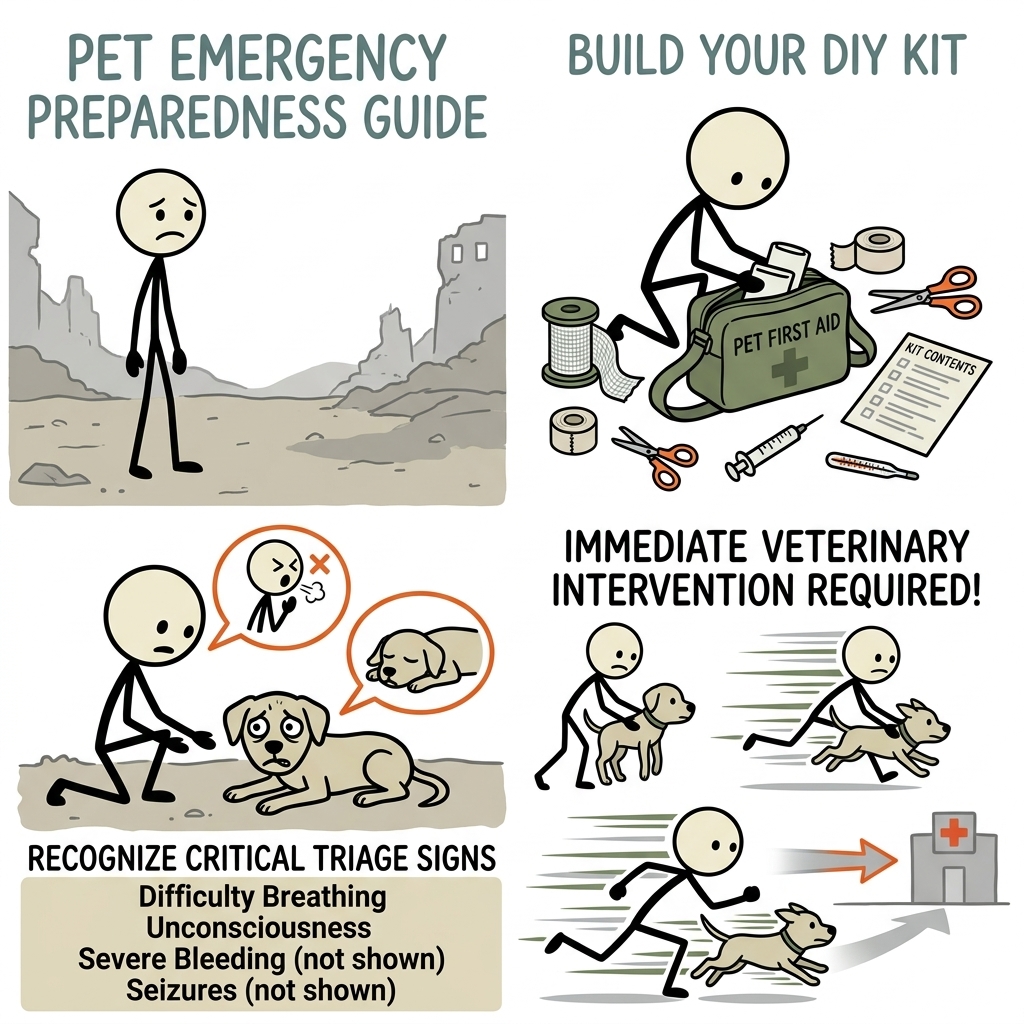
The Philosophy of Pet Emergency Preparedness: Beyond Human First Aid
Pet emergency preparedness is often misunderstood as simply packing extra kibble and an extra leash into a standard household duffel. In reality, veterinary trauma requires specialized equipment tailored to animal anatomy, fur-covered dermis, and unpredictable survival instincts. A wounded animal does not process good intentions; under acute pain, even the gentlest family dog or cat will bite down with full force. For the practical checklist side, use the neighborhood preparedness network.
Furthermore, human medical supplies cannot simply be swapped into veterinary treatment. Adhesive band-aids stick painfully to animal fur and fail to secure wounds, while standard human medications like ibuprofen, acetaminophen, and naproxen can cause acute renal failure or fatal gastric perforation in companion animals. A true field kit must address biological vulnerabilities specific to quadrupeds. For the practical checklist side, use the emergency communication plan.
Emergency field care focuses on stabilization, not definitive surgery. Your tactical goal during any domestic crisis or outdoor emergency is clear: secure the animal, stem massive hemorrhage, protect airway integrity, stabilize core body temperature, and rapidly transport them to an advanced care facility.
Canine vs. Feline: Distinct Physiological Realities
A fatal mistake in multi-pet households is treating a cat emergency kit as a miniature version of dog first aid supplies. Feline physiology is exquisitely sensitive to chemical compounds, physiological stress, and respiratory compromise. While a stressed dog pants to regulate heat and express anxiety, open-mouthed breathing in a feline is an immediate, red-alert medical crisis indicating catastrophic respiratory failure or severe cardiovascular collapse.
Pharmacological differences are just as critical. Common canine antiseptics and flea/tick interventions containing synthetic pyrethroids or permethrin cause fatal neurotoxicity in cats. Similarly, while a 3% hydrogen peroxide solution can safely induce vomiting in dogs under remote veterinary direction, administering it to a cat causes severe, often hemorrhagic gastritis. Your emergency pack must separate dog-safe protocols from feline-specific supplies.
The Ultimate DIY Pet First Aid Kit Blueprint
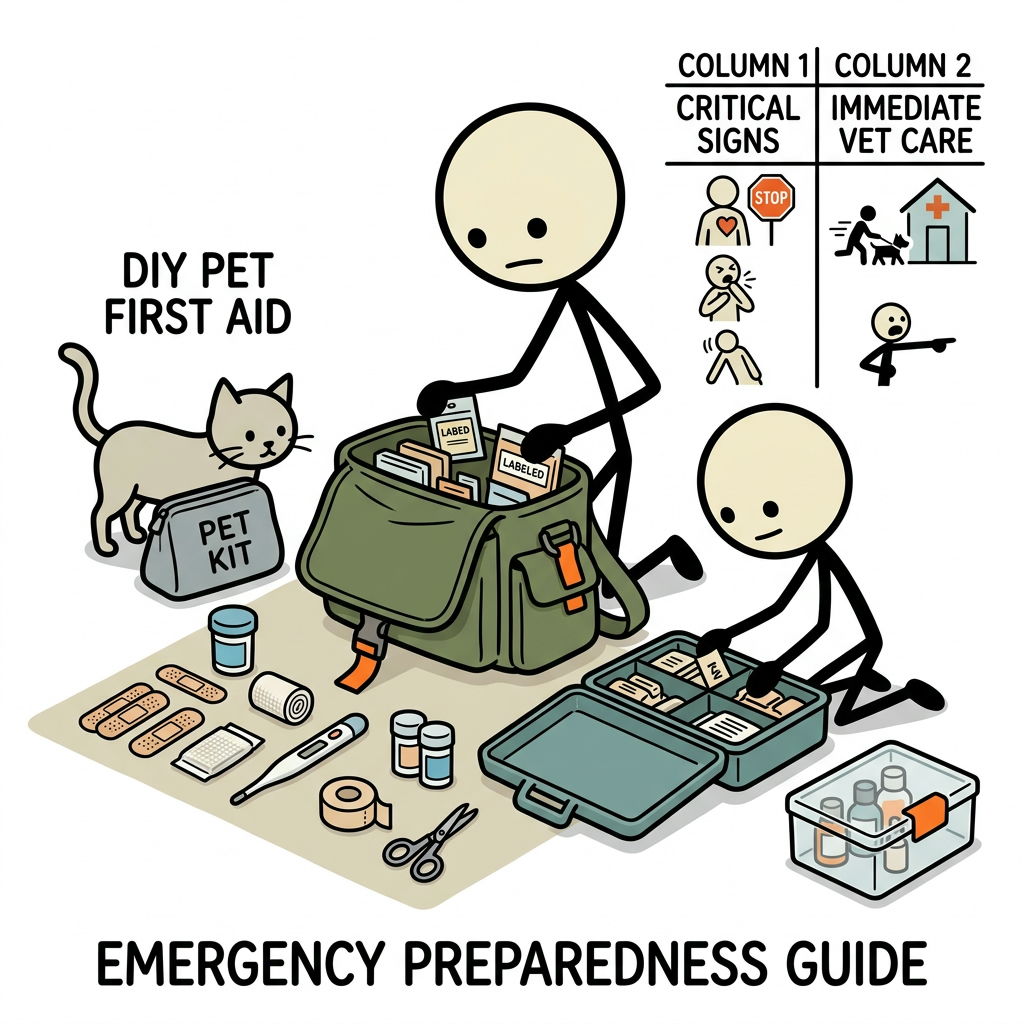
Commercial pet kits sold in big-box retail stores are frequently under-stocked, relying on flimsy plastic tweezers and standard human adhesive strips that slide right off fur. Assembling your own DIY pet first aid kit ensures every item is trauma-grade, species-appropriate, and built for harsh field environments. Build your loadout across the following five critical supply tiers.
Tier 1: Hemorrhage Control & Wound Management
Trauma sustained from broken glass, flash flooding debris, predator attacks, or vehicle impacts demands rapid, layered wound dressing. Fur complicates traditional adhesive bandages, making self-adherent wraps your primary stabilization tool.
- Self-Adherent Cohesive Bandages (Vet Wrap): Pack 2-inch and 4-inch rolls. These adhere exclusively to themselves without pulling fur, providing consistent, scalable compression over wounds.
- Sterile Non-Stick Gauze Pads (3x3 and 4x4 inch): Critical contact layer dressings that will not adhere to raw granulation tissue or open lacerations.
- Rolled Conforming Gauze: Used to secure underlying non-stick dressings before finishing with outer cohesive wraps.
- Styptic Powder or Cautery Sticks: Immediate topical hemostats for torn dewclaws, avulsed nails, or superficial pad lacerations.
- 0.9% Sodium Chloride Irrigation Solution: Multi-pack 100ml sterile squeeze bottles for flushing grit, sand, and hazardous contaminants out of deep lacerations or irritated eyes.
- Chlorhexidine Gluconate Solution (2% Diluted): The veterinary gold standard for field antisepsis. It is significantly gentler and more effective on open tissue than drying alcohol or tissue-damaging hydrogen peroxide.
Tier 2: Immobilization, Restraint & Physical Protection
Pain strips away domestic training. When an animal suffers a fractured pelvis, crushed paw, or deep puncture, natural flight-or-fight reflexes take over. You cannot administer life-saving field care if you are incapacitated by a defensive bite.
- Nylon Basket or Quick-Fit Fabric Muzzle: Sized specifically for your dog's snout. Note: Never muzzle a dog that is actively vomiting, in respiratory distress, or suffering heatstroke.
- Feline Restraint Bag or Thick Canvas Towel: Essential for executing a secure "cat burrito" wrap. This safely immobilizes sharp claws while granting access to injured limbs or ears.
- Heavy-Duty Leather Handling Gloves: Provides bite protection when extracting your own or unfamiliar pets from disaster rubble, vehicles, or collapsed structures.
- Rigid Splinting Material (SAM Splint): Pliable aluminum-foam splints that can be molded to immobilize fractured canine or feline limbs prior to transport.
- Heavy-Duty Slip Lead: Bypasses lost or broken collars instantly, giving you immediate physical control over an animal trying to run from danger.
Tier 3: Diagnostic & Specialized Field Instruments
Accurate field triage requires measurable baseline data. Guesswork delays proper stabilization and wastes vital minutes when speaking with an emergency veterinary dispatcher.
- Digital Rectal Thermometer: Axillary (armpit) readings are notoriously inaccurate in furred animals. Use a rapid-read flexible-tip digital thermometer dedicated exclusively to your pet kit.
- Water-Soluble Lubricating Jelly: Essential for rectal temperature checks and coating open wounds near eyes before clipping dirty fur.
- Bandage Shears (Lister Scissors): Heavy-duty, blunt-tipped stainless steel shears designed to slice through thick bandage layers and fur without puncturing tense skin.
- Tick Removal Tool & Fine-Point Splinter Tweezers: Precision-milled steel tweezers for extracting venomous stingers, glass shards, cactus spines, or embedded ticks at the base of the mouthparts.
- High-Lumen Medical Penlight: For inspecting oral mucous membranes, checking pupillary light reflexes, and illuminating deep ear canals or paw pads in low light.
- Curved-Tip 10ml to 30ml Irrigation Syringes: Ideal for targeted, high-pressure mechanical wound flushing or slow oral fluid delivery during recovery.
Tier 4: Emergency Pharmaceuticals & Toxin Countermeasures
Administering systemic medications in the field is dangerous unless cleared by a veterinary professional or performed under clear, predefined protocols. Keep these critical compounds securely sealed in waterproof pouches.
- Diphenhydramine (Plain Benadryl, 25mg tablets or liquid): Crucial for systemic allergic reactions to snake, insect, or spider bites. *Crucial:* Ensure it contains zero xylitol (birch bark sweetener), an artificial sugar that triggers fatal hypoglycemia and liver failure in dogs.
- Activated Charcoal Suspension (Toxiban or similar): Used to bind ingested poisons within the gastrointestinal tract. Only administer if specifically directed by animal poison control, as improper use can lead to deadly pulmonary aspiration.
- Fresh 3% Hydrogen Peroxide: Solely for inducing emesis in dogs that have ingested non-caustic toxins within a two-hour window, and only under direct guidance from the ASPCA APCC or a licensed veterinarian. Never administer to felines.
- Sterile Artificial Tears / Ophthalmic Ointment: Simple, preservative-free eye lubricants designed to flush away caustic chemicals and debris, or protect eyes during transport.
- Medical-Grade Honey (Manuka) or Sterile Hydrogel: Safe, non-toxic topical dressings that keep open burn or avulsion wounds hydrated while discouraging bacterial colonization.
Tier 5: Administrative Documents & Survival Provisions
In high-stress regional evacuations—such as wildfires, hurricanes, or floods—emergency animal shelters managed by FEMA or the Red Cross will require proof of ownership and vaccination records before accepting your pet.
- Laminated Medical & Vaccination Records: Especially rabies certificates, microchip registry numbers, and documentation of existing chronic conditions.
- High-Resolution Waterproof Photos: Physical prints of you with your pet to definitively prove ownership if you are separated during an evacuation.
- Emergency Contact Card: Contact info for your primary veterinarian, the nearest 24/7 emergency veterinary hospital, and the ASPCA Animal Poison Control hotline (888-426-4435).
- A 72-Hour Supply of Maintenance Medications: Rotate daily medications every 30 days to avoid carrying expired, ineffective compounds in your bug-out gear.
Vital Signs Baseline: How to Read Animal Biometrics
During an emergency, panic skews your perception. You cannot determine if your dog or cat is going into cardiovascular shock unless you know what their stable vitals look like. Take the time to measure and log your pet's baselines during calm, resting conditions at home.
| Biometric Parameter | Canine (Dog) Range | Feline (Cat) Range | Assessment Method |
|---|---|---|---|
| Core Body Temperature | 100.5°F – 102.5°F (38.0°C – 39.2°C) | 100.5°F – 102.5°F (38.0°C – 39.2°C) | Lubricated digital rectal thermometer inserted 1–2 inches. |
| Resting Heart Rate | 60 – 140 bpm (size-dependent) | 140 – 220 bpm | Count femoral artery pulses on the inner high thigh over 15 seconds; multiply by 4. |
| Respiratory Rate | 15 – 30 breaths per min (at rest) | 20 – 30 breaths per min (at rest) | Watch flank movement while resting. Chest excursions should be smooth and effortless. |
| Capillary Refill Time (CRT) | 1.0 – 2.0 seconds | 1.0 – 2.0 seconds | Press firmly on the gum above canine tooth until blanched, release, and time return to pink. |
Evaluating Mucous Membrane Color
Your pet's gums are a direct window into their circulatory system and oxygen levels. Lift the upper lip and inspect the non-pigmented areas of the tissue. If an animal has dark or mottled gums naturally, pull down the lower eyelid to inspect the conjunctiva instead.
Healthy tissue appears bubblegum pink and feels moist to the touch. Tacky or dry gums indicate advancing dehydration. If the tissue appears pale or chalky white, the animal is experiencing severe vasoconstriction, hemorrhagic shock, or internal bleeding.
Brick-red gums point to systemic sepsis, severe heat exhaustion, or early carbon monoxide poisoning. Blue, purple, or cyanotic membranes show catastrophic hypoxia, requiring emergency airway intervention. Yellow or icteric membranes indicate hepatic breakdown or massive red blood cell destruction.
Critical Triage Signs: When to Call the Emergency Vet Immediately
Field first aid has clear limits. You must quickly recognize conditions that cannot be stabilized with field dressings alone. In these situations, your only viable move is targeted stabilization followed by immediate transport to an emergency facility.
1. Gastric Dilatation-Volvulus (GDV / Bloat)
Predominantly striking large, deep-chested dog breeds like German Shepherds, Great Danes, and Standard Poodles, GDV is a rapid killer. The stomach fills with gas and twists on its mesenteric axis, cutting off return blood flow through the vena cava and causing gastric wall necrosis.
Watch for non-productive retching—where the dog attempts to vomit every two minutes but only produces white, foamy saliva—along with a distended, drum-like abdomen, pacing, and severe agitation. Without surgical decompression, death can follow in under two hours. Skip all home remedies and transport immediately.
2. The "Orthopneic Stance" and Open-Mouth Breathing
When an animal cannot transfer oxygen, it assumes the orthopneic stance: neck extended, elbows rotated outward from the rib cage, and the head pointed forward to straighten the airway. Cats breathing through an open mouth or panting heavily are in advanced respiratory distress from conditions like asthma, pleural effusion, or congestive heart failure.
Minimize handling immediately. Severe respiratory patients can experience fatal cardiac arrest from the simple stress of being restrained. Skip bandaging non-critical issues, keep the cabin air cool, minimize external noise, and drive to the nearest oxygen-equipped trauma center.
3. Intractable Seizure Activity (Status Epilepticus)
While an isolated seizure lasting under two minutes is typically non-fatal, cluster seizures or continuous seizing lasting over three minutes is a medical emergency known as status epilepticus. Sustained, uncontrolled muscle contractions drive internal core body temperatures past 106°F (41.1°C), causing irreversible brain damage and multi-organ failure.
Do not hold the tongue or put your fingers in the pet's mouth; animals do not swallow their tongues, and they will bite reflexively. Move hard furniture and sharp objects away to prevent secondary blunt trauma. Wrap cold, damp towels around their paws to mitigate heat spikes, dim all lights, and move them onto a flat transport board.
4. Suspected Feline Urethral Obstruction ("Blocked Cat")
Male felines possess a narrow, easily obstructed urethra. Minerals, mucus plugs, or inflammatory debris can completely block urine flow, leading to acute post-renal azotemia, hyperkalemia, and cardiac arrest within 24 to 48 hours.
Owners frequently mistake this for constipation. The cat will enter the litter box repeatedly, strain painfully, vocalize loudly, and lick obsessively at the prepuce. If you palpate the lower abdomen and feel a hard, painful mass the size of a lemon or golf ball that does not yield to gentle pressure, you are facing a critical blockage requiring immediate catheterization.
Step-by-Step Field Stabilization Protocols
When a crisis occurs far from immediate clinical support, applying disciplined field medicine will stabilize your pet and preserve tissue viability for the journey ahead.
Protocol A: Arterial and Deep Venous Hemorrhage Management
- Secure the Jaw: Apply a soft muzzle or loop a slip lead over the snout, unless the pet shows head trauma, vomiting, or breathing issues. Painful wound dressing will trigger defensive bites.
- Direct Layered Pressure: Place a sterile, non-adherent pad directly over the bleeding site. Apply firm, continuous pressure with your palm for a full five minutes without lifting the gauze to check the wound.
- Apply Cohesive Bandaging: Secure the gauze pad with conforming stretch gauze, then finish with an elastic wrap (Vet Wrap). Wrap from the distal extremity upward toward the body to prevent fluid pooling, maintaining even, tensioned pressure.
- Manage Bleed-Through: If blood soaks through the initial layer, do not remove it. Stripping it away tears open developing clots. Lay additional sterile gauze over the saturated wrap and apply a second, firmer compression layer over the top.
- Avoid Improvising Tourniquets: Improperly applied cord or narrow tourniquets permanently crush peripheral nerve bundles and cause limb necrosis. Rely on layered compression dressings instead.
Protocol B: Treating Hypothermia and Hyperthermia
Severe environmental exposure quickly overwhelms a pet's internal thermoregulation. Intervene early using measured, controlled temperature adjustments:
Hyperthermia (Heatstroke): If the animal's rectal temperature exceeds 104°F (40°C), begin active cooling immediately. Move them to shade or an air-conditioned vehicle. Apply cool, running tap water over their paw pads, groin, and neck, and direct airflow from a fan across their damp coat.
Never use ice packs, freezing water baths, or total submersion. Sudden extreme cold causes peripheral vasoconstriction, trapping blazing-hot blood inside the core organs while triggering violent shivering that drives internal temperatures even higher. Halt active cooling once the rectal temperature drops to 103°F (39.4°C) to prevent an uncontrolled downward rebound.
Hypothermia (Cold Exposure): When core temperatures drop below 99°F (37.2°C), wrap the animal in a multi-layered thermal sandwich: an inner dry towel, a space blanket to reflect radiated heat, and an outer windproof canvas layer. Place warm water bottles wrapped in cloth against the chest and groin. Avoid direct, uninsulated contact with hot packs, which easily burns fragile, vasoconstricted skin.
Protocol C: Suspected Spinal or Pelvic Fractures and Safe Transport
- Keep the Spine Aligned: If the pet was struck by a vehicle or fell from a height, assume a spinal fracture. Minimize all flexion, twisting, or rotation of the neck and back during handling.
- Rigid Stretcher Extraction: Do not carry a large, injured dog draped in your arms; this bends the spine and risks severing the spinal cord. Slide a rigid board, firm plywood sheet, or heavy plastic tote lid beneath them.
- Improvised Blanket Lift: For locations where hard boards won't fit, roll a thick wool blanket lengthwise beside the animal. Gently slide the pet onto the fabric, gather the corners with a partner, and lift them while keeping the spine straight and level.
- Side-Lying Position: Position the animal in lateral recumbency with their uninjured side facing down. Secure them to the board with wide cohesive bandages or soft straps across the shoulders and hips, keeping clear of the throat and chest.
Integrating Your Pet into Broader Disaster Plans
A complete pet first aid kit is only one component of a broader emergency posture. Disasters like wildfires, flash floods, or extended grid failures require integrated family family emergency plans that account for companion animals from start to finish.
FEMA guidelines emphasize that public emergency shelters may not always accommodate pets due to municipal public health codes. Research pet-friendly evacuation centers, emergency-capable boarding facilities, and hotels outside your immediate danger zone well before an event forces your hand. Keep a dedicated pet go-bag essentials guide packed right alongside your household survival gear.
Every pet should have a durable identification tag alongside an updated, registered microchip. During sudden evacuations, collars can tear free under falling debris; a sub-dermal microchip remains the single most reliable way to reunite with displaced animals once the crisis subsides.
Review and audit your supplies every six months when checking smoke detector batteries. Replace expired eye washes, check the seal on sterile dressings, verify that liquid medications have not separated or degraded, and confirm that your pet's logged resting vitals still match their age and physical conditioning.
Preparedness Precedes Survival
When an emergency unfolds, your pet cannot evaluate options, dial for help, or improvise field solutions—they rely entirely on your tactical skill and clearheaded action. Assembling a tailored, species-specific DIY pet first aid kit and understanding how to read shifting vital signs turns panic into methodical, life-saving care. Take the time to build your kit, study baseline vitals, and train regularly; you will be the trained first responder your companion needs when disaster strikes.
Frequently Asked Questions
What are the core essentials for a DIY pet first aid kit?
Essential supplies include self-adhesive wrap (vet wrap), sterile gauze pads, saline flush for eye or wound irrigation, blunt-end bandage scissors, tick removal tweezers, a digital rectal thermometer with petroleum jelly, styptic powder to stop minor bleeding, and emergency contact numbers.
Can I give over-the-counter human pain medication to my pet?
No. Never administer human pain medications like ibuprofen, acetaminophen, or naproxen to dogs or cats without explicit veterinary instruction, as even small doses can cause fatal organ failure or severe internal bleeding.
What are normal vital signs for dogs and cats?
Normal body temperature ranges between 100.0°F and 102.5°F for both dogs and cats. Normal resting heart rates typically range from 60 to 140 beats per minute for dogs (varying by size) and 140 to 220 bpm for cats, with resting respiratory rates between 15 and 30 breaths per minute.
When should I bypass home first aid and take my pet straight to an emergency vet?
Seek immediate veterinary care for persistent difficulty breathing, severe bleeding that does not stop after 5 minutes of direct pressure, loss of consciousness, repeated seizures, suspected ingestion of toxins, sudden inability to walk, or visible bloating accompanied by retching.
How often should a pet first aid kit be inspected and refreshed?
Inspect your kit at least every six months to replace expired medications, ointments, and sterile saline flushes, verify that batteries in thermometers and flashlights work, and update printed copies of vaccination records and emergency phone numbers.