Key Takeaways
- Plantain is a highly resilient, globally distributed wild plant that serves as both a nutritional and first-aid resource in survival situations.
- The two most common varieties, broadleaf plantain (Plantago major) and narrowleaf plantain (Plantago lanceolata), are easily identified by their parallel veins and elastic fibers.
- Safe harvesting requires avoiding urban runoff, roadside pollutants, and areas treated with herbicides or pesticides.
- While excellent for minor skin irritations and insect bites, field poultices must be used conservatively and never applied to deep or infected wounds.
- Integrating local wild foraging into your emergency preparedness plan adds a critical layer of self-reliance that complements stored rations.
In a prolonged emergency scenario, self-reliance is built on layers of redundancy. While a robust home pantry and a well-stocked emergency kit are foundational, true resilience includes the ability to identify, harvest, and utilize the natural resources immediately surrounding your home. When grocery store shelves empty and conventional supply chains collapse, wild plants transition from simple garden weeds to critical survival assets.
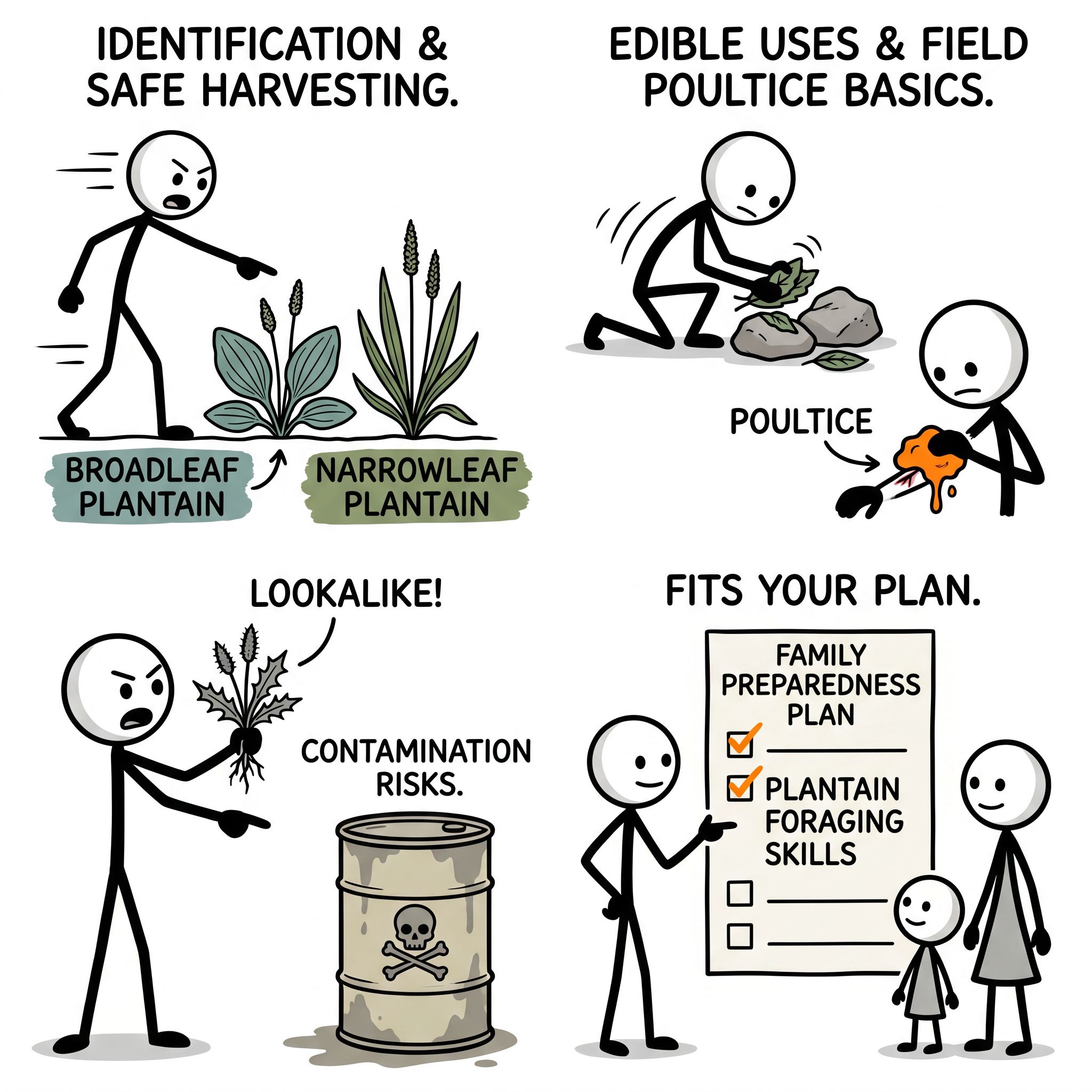
Among the most ubiquitous and useful of these botanical resources is the plantain weed. Found in lawns, cracked driveways, forest edges, and disturbed soils across the globe, this resilient plant has sustained human populations for centuries. Unlike many rare or highly localized wild edibles, plantain is likely growing within steps of your back door right now. By learning to identify and utilize both broadleaf plantain and narrowleaf plantain, you equip your family with a dual-purpose survival tool capable of providing both emergency nutrition and basic, field-expedient first aid.
This guide will detail everything you need to know about integrating this remarkable plant into your family preparedness strategy, from botanical identification and safe harvesting to culinary preparation and first-aid applications.
Understanding the Genus Plantago
To effectively utilize this plant, it is important to understand its botanical context. The plants commonly referred to as "plantains" in temperate regions belong to the genus Plantago. It is critical to distinguish these low-growing herbaceous perennials from the cooking plantains of the genus Musa, which are starchy, banana-like fruits native to tropical regions. The wild herbs we are discussing here are entirely unrelated to those tropical fruits.
The two most common species you will encounter in North America, Europe, and many other parts of the world are broadleaf plantain (Plantago major) and narrowleaf plantain (Plantago lanceolata). Both species are incredibly hardy, capable of thriving in compacted, nutrient-poor soils where other plants fail to grow. This durability is precisely what makes them so reliable during a crisis. Whether you are navigating the immediate aftermath of a natural disaster or managing long-term resource scarcity, these plants remain accessible throughout the growing season.
Historically, European settlers brought these species to North America, where they spread so rapidly along footpaths and wagon trails that Native American communities referred to them as "white man's footprint." This historical detail highlights the plant's affinity for human-disturbed environments. Wherever humans live, travel, or cultivate land, plantain is almost guaranteed to follow, making it a premier species to study in any foraging wild edibles guide.
Botanical Profiles and Identification
Accurate identification is the first and most critical rule of wild foraging. Fortunately, the genus Plantago possesses several distinct anatomical features that make identification relatively straightforward, even for beginners. However, you must always verify multiple botanical markers before consuming any wild plant or applying it to your skin.
Broadleaf Plantain (Plantago major)
Broadleaf plantain is characterized by its low-growing rosette of large, oval to egg-shaped leaves. The leaves typically grow close to the ground, radiating outward from a central taproot. Key identification features include:
- Leaf Shape: Broad, smooth, and slightly oval, resembling a miniature shoe sole or spoon. The margins (edges) are generally smooth or slightly wavy, but lack sharp teeth.
- Venation: The most defining feature of Plantago major is its parallel venation. Unlike most broadleaf plants, which feature a net-like pattern of veins branching out from a central rib, broadleaf plantain has 3 to 9 prominent, parallel veins that run continuously from the base of the leaf stem (petiole) all the way to the leaf tip. These veins are highly raised and fibrous on the underside of the leaf.
- The Elastic Fiber Test: If you gently snap the leaf stem of a broadleaf plantain and pull the two halves apart slowly, you will see strong, elastic, thread-like vascular bundles remaining intact, looking very much like the strings in a celery stalk. This is an excellent diagnostic test.
- Seed Spikes: From late spring through autumn, the plant sends up long, narrow, leafless stalks that terminate in a dense, pencil-like spike of tiny, greenish-brown flowers. These flowers eventually mature into small, dark brown seed capsules.
Narrowleaf Plantain (Plantago lanceolata)
Narrowleaf plantain, also known as English plantain or ribwort plantain, shares many characteristics with its broadleaf cousin but features a distinctly different leaf shape. Key features include:
- Leaf Shape: Long, narrow, and lance-shaped (lanceolate). The leaves are much more upright than those of broadleaf plantain and can grow up to 12 inches in length, though they are rarely more than an inch or two wide.
- Venation: Like the broadleaf variety, narrowleaf plantain features prominent, parallel veins. Typically, 3 to 5 deep, rib-like veins run the entire length of the leaf, giving the plant a ribbed or corrugated texture.
- Seed Spikes: The flowering stalks of narrowleaf plantain are long, wiry, and deeply ridged. Instead of the long, continuous seed spike seen in Plantago major, narrowleaf plantain features a short, dense, egg-shaped or cylindrical seed head at the very tip of the stalk. When in bloom, tiny white stamens emerge from this dark cone, resembling a miniature ring of Saturn.
Safe Harvesting Practices
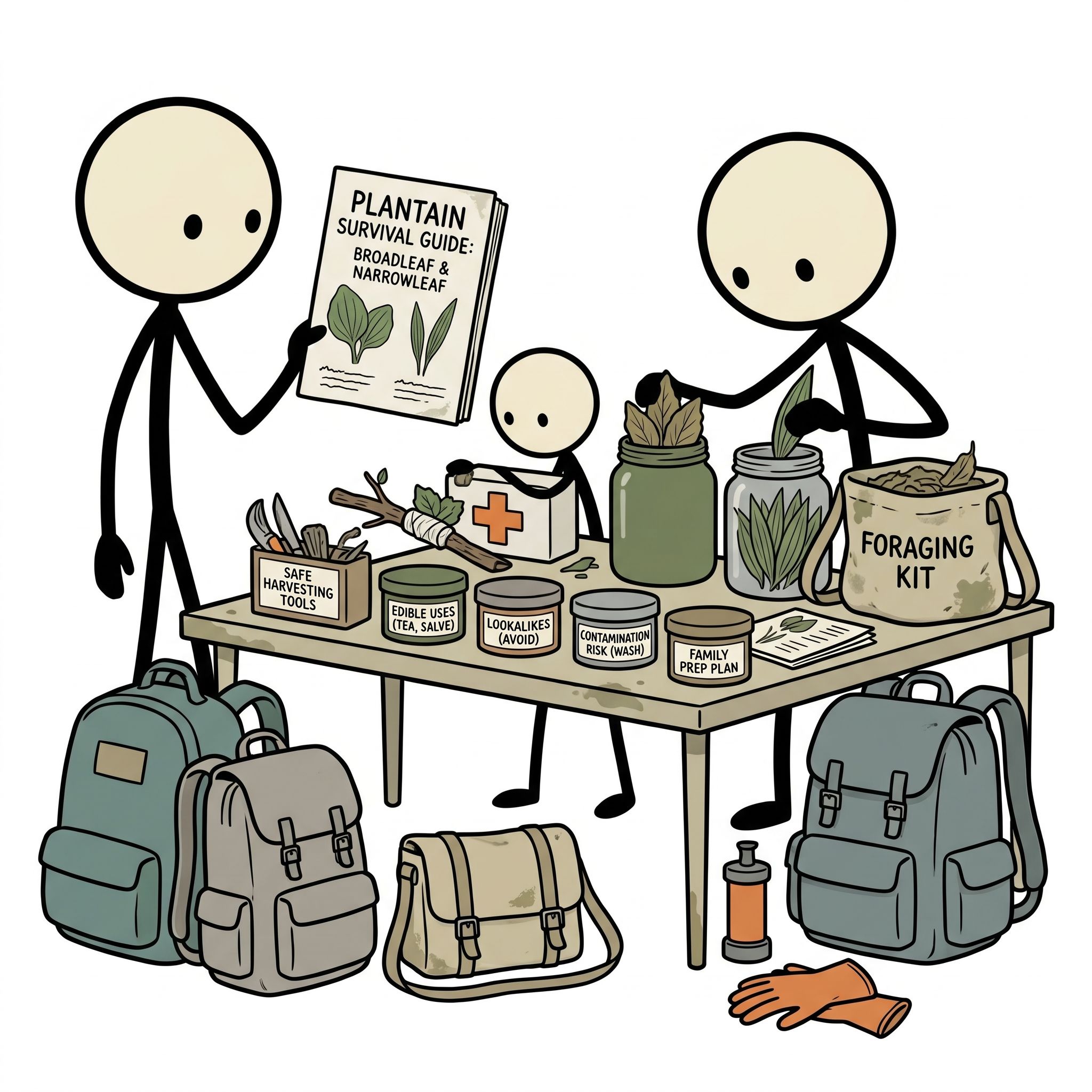
Foraging in a survival context requires a disciplined approach to safety. While plantain itself is non-toxic, the environment in which it grows can introduce significant hazards. Implementing strict protocols for Catastrophe Survival 101 course applications means understanding how to source plants that are free from chemical and biological contamination.
Selecting the Right Location
Because plantain thrives in disturbed soils, it frequently grows in areas heavily impacted by human activity. This habit makes it highly susceptible to environmental pollutants. When harvesting, adhere to the following safety guidelines:
- Avoid Roadside Areas: Never harvest plants growing within 50 feet of paved or heavily trafficked dirt roads. Roadside soils often contain high concentrations of heavy metals (such as lead from historical fuel emissions), petroleum residues, and chemical runoff from asphalt.
- Steer Clear of Treated Lawns: Avoid suburban lawns, golf courses, and public parks unless you are absolutely certain they have not been treated with chemical fertilizers, herbicides, or pesticides. Systemic weed killers are designed to eliminate broadleaf weeds like plantain, and plants that have absorbed these chemicals can be highly toxic if consumed.
- Identify Agricultural Runoff Zones: Do not harvest from the edges of commercial agricultural fields. These areas are frequently exposed to pesticide drift and fertilizer runoff, which can contaminate wild greens.
- Watch for Animal Contamination: Avoid harvesting from dog parks, low-lying pastures, or areas frequent by livestock. These locations carry a high risk of biological contamination from fecal pathogens, including harmful strains of E. coli and parasites.
Harvesting Techniques
Once you have identified a clean, safe patch of plantain, use sustainable harvesting methods to ensure the resource remains viable for future use. For edible purposes, always select the youngest, most tender leaves from the center of the rosette. Older leaves, particularly those on plants that have already sent up flowering stalks, become incredibly tough, fibrous, and bitter.
Use a clean knife or shears to cut the leaves at the base of the stem, leaving the central root system intact. This allows the plant to regenerate quickly, providing a continuous harvest throughout the growing season. If you are harvesting the seeds, wait until late summer or autumn when the seed spikes have turned completely brown and dry. Simply slide your closed fingers up the stalk to strip the dry seed pods into a container.
Lookalikes and How to Avoid Them
One of the greatest risks in survival foraging is misidentification. While plantain is relatively unique, there are a few common plants that beginners might confuse with it. Understanding these lookalikes is essential for preventing accidental poisoning or gastrointestinal distress.
Hostas (Hosta spp.)
Young hosta leaves can sometimes resemble broadleaf plantain due to their broad shape and prominent veins. While hostas are generally non-toxic to humans (and are actually consumed in some cultures), they lack the distinct, tight rosette growth pattern of plantain and do not possess the tough, elastic vascular threads within their leaf stems. Additionally, hostas grow much larger and prefer shady, moist garden environments rather than the compacted, sun-drenched soils favored by plantain.
Lily of the Valley (Convallaria majalis)
This is a highly dangerous lookalike. Lily of the Valley contains potent cardiac glycosides that can cause severe illness or death if ingested. While the mature plants are easily distinguished by their delicate, bell-shaped white flowers, the emerging spring leaves can superficially resemble broadleaf plantain to an untrained eye.
To differentiate them, look closely at the growth habit and venation. Lily of the Valley leaves grow from an underground rhizome and wrap around each other at the base, rather than forming a flat, ground-hugging rosette. Furthermore, Lily of the Valley leaves lack the highly raised, parallel ribs on the underside of the leaf and do not contain the elastic, celery-like fibers found in the leaf stems of Plantago major.
Foxglove (Digitalis purpurea)
Another highly toxic plant containing cardiac glycosides, young foxglove leaves form a basal rosette that can be mistaken for plantain. However, foxglove leaves have a distinctly soft, fuzzy, or hairy texture, and their margins are noticeably scalloped or toothed. The veins on a foxglove leaf form a net-like, reticulated pattern rather than the clean, unbroken parallel lines characteristic of the plantain weed.
Always remember the golden rule of foraging: If you cannot identify the plant with 100% certainty based on multiple botanical features, do not consume it or use it.
Edible Uses in a Survival Scenario
In a long-term survival situation, maintaining proper nutrition can be just as challenging as securing caloric intake. Wild greens like plantain provide a vital source of vitamins and minerals that are often lacking in dry storage rations. Integrating fresh, wild-harvested greens with your emergency emergency food storage guide guide strategy helps prevent nutritional deficiencies and adds variety to a monotonous diet.
Nutritional Profile
Both broadleaf and narrowleaf plantain are highly nutritious. They are exceptionally rich in:
- Vitamin K: Essential for blood clotting and bone health.
- Vitamin A: Crucial for maintaining healthy vision, immune function, and skin integrity.
- Vitamin C: A powerful antioxidant that supports immune health and tissue repair.
- Minerals: Plantain leaves contain notable amounts of calcium, iron, magnesium, and potassium.
Culinary Preparation
While plantain is highly nutritious, its culinary appeal depends heavily on how it is prepared. Because of the tough, elastic fibers running through the leaves, older foliage can be incredibly difficult to chew and digest. Here is how to prepare plantain for consumption:
Raw Consumption
Only the youngest, smallest leaves (typically less than two inches long) found at the very center of the spring rosette should be eaten raw. These can be chopped finely and added to salads. They have a mild, slightly bitter, and earthy flavor, occasionally described as having a subtle mushroom-like undertone.
Cooking Mature Leaves
For larger, more mature leaves, cooking is mandatory to break down the fibrous veins. First, strip the largest fibrous strings from the leaf stems, much like you would peel celery. Next, boil the leaves in water for 5 to 10 minutes. This boiling process serves two purposes: it softens the tough plant fibers and leaches out some of the bitter compounds (tannins) present in the older leaves. After boiling, drain the water, squeeze out the excess moisture, and sauté the greens in a small amount of oil, butter, or animal fat with salt and garlic if available. This preparation makes an excellent substitute for spinach or kale.
Utilizing the Seeds
The seeds of the plantain weed are also a valuable food source. They are closely related to psyllium seeds (which come from another member of the Plantago genus) and are highly rich in soluble fiber and essential fatty acids. Once harvested and thoroughly dried, the seeds can be parched in a hot, dry pan to improve their flavor, which is pleasantly nutty. You can grind the parched seeds into a coarse meal to supplement commercial flour, or stir them directly into soups and stews as a nutrient-dense thickening agent.
Field Poultice Basics
Beyond its nutritional value, plantain is widely recognized in traditional wilderness self-care for its ability to soothe minor skin irritations. In a Survival Scenarios, minor injuries like insect bites, bee stings, nettle rashes, and small scrapes can quickly become painful distractions or, worse, vectors for infection. Understanding how to construct a basic field poultice is a valuable skill that complements your family medical preparedness guide.
How the Poultice Works
Plantain leaves contain several naturally occurring compounds, including allantoin, aucubin, and tannins. Allantoin is a mild skin-conditioning agent that supports natural tissue recovery, while tannins act as mild astringents, helping to temporarily tighten skin tissue and draw out minor impurities. When applied topically, a plantain poultice can help cool the burning sensation of a sting, reduce minor localized swelling, and soothe itching.
Step-by-Step Field Preparation
In an emergency, you can prepare and apply a plantain poultice using basic field methods:
- Clean the Plant: Select several clean, healthy leaves of either broadleaf or narrowleaf plantain. Thoroughly rinse them with clean, filtered water to remove any dirt, dust, or potential pathogens. Do not use leaves from areas suspected of chemical contamination.
- Crush the Leaves: To release the beneficial juices, the plant cells must be ruptured. In a controlled environment, you can do this using a clean mortar and pestle or by finely chopping the leaves. In a true field emergency, you can bruise and crush the leaves thoroughly between your fingers, or crush them between two clean, flat stones.
Note on Safety: While survival folklore often recommends chewing the leaves to create a "spit poultice," this practice is not recommended. Human saliva contains a wide array of oral bacteria that can introduce pathogens into an open scratch or wound, increasing the risk of infection. Always prefer mechanical crushing with clean water. - Apply to the Skin: Place the crushed, juicy green pulp directly over the affected area (such as a bee sting or mosquito bite).
- Secure the Poultice: Cover the plant material with a clean bandage, sterile gauze, or a clean strip of cloth to hold it in place.
- Monitor and Remove: Leave the poultice in place for 15 to 30 minutes. If you experience any increased redness, itching, or irritation, remove the poultice immediately and wash the area with clean water. Remove and discard the plant material after use; do not reuse a poultice.
Conservative Safety Guidelines
It is critical to maintain a realistic, conservative approach to wilderness first aid. A plantain poultice is only appropriate for minor, superficial skin irritations, such as mosquito bites, bee stings, stinging nettle contact, and very minor surface scrapes.
Never apply a wild plant poultice to deep puncture wounds, severe burns, animal bites, or actively infected tissue. Deep wounds require sterile medical dressings and professional treatment to prevent systemic infections like tetanus or sepsis. Additionally, always monitor the individual for signs of an allergic reaction to the plant itself, although such reactions are rare.
Contamination Risks and Environmental Safety
While foraging offers incredible self-reliance benefits, it is not without environmental risks. One of the most significant dangers associated with harvesting wild plants in populated areas is bioaccumulation.
Many plants in the genus Plantago are known to be hyperaccumulators of heavy metals. This means their root systems are exceptionally efficient at drawing heavy metals, such as lead, cadmium, arsenic, and zinc, out of the surrounding soil and concentrating them within their leaves. While this characteristic makes them useful for environmental cleanup projects (a process known as phytoremediation), it poses a direct hazard to foragers.
If you harvest plantain from soil that has been contaminated by industrial waste, historical leaded gasoline emissions, or pesticide applications, you will ingest those concentrated heavy metals. Over time, heavy metal accumulation can lead to serious neurological and physiological health issues.
To mitigate this risk, prioritize harvesting from remote wilderness areas, national forests (where permitted), or your own property if you are certain of its agricultural and chemical history. If you are foraging in an urban or suburban setting during an emergency, prioritize plants growing in raised beds filled with clean soil, or focus on areas far removed from historical building footprints (which may contain lead paint residue) and old industrial zones.
Integrating Plantain into Your Family Preparedness Plan
Knowledge is only useful if it is practiced. To ensure your family can reliably utilize plantain during a crisis, you should integrate wild plant identification into your ongoing emergency preparedness drills. This practical training helps bridge the gap between theoretical knowledge and real-world application, ensuring your family can navigate the critical window described in our 72-hour rule guide.
Practical Steps for Families
- Conduct a Backyard Survey: Spend an afternoon with your family mapping the plant species growing on your property. Challenge your children to locate and identify both broadleaf and narrowleaf plantain. This is an excellent, low-stress way to build situational awareness and botanical literacy.
- Practice the Elastic Fiber Test: Show your family members how to gently break the leaf stem of a plantain leaf to reveal the celery-like threads. This hands-on experience builds confidence and ensures everyone can distinguish plantain from toxic lookalikes.
- Prepare a Trial Meal: Do not wait for a crisis to try eating wild greens. Harvest a small batch of young broadleaf plantain leaves from a guaranteed clean source, prepare them using the boiling and sautéing method described above, and serve them alongside a standard family dinner. Familiarizing your family with the taste and texture of wild foods beforehand reduces food anxiety during an actual emergency.
- Incorporate Foraging into Camping Trips: Use family camping trips or hiking excursions as opportunities to practice safe harvesting techniques in cleaner, more remote environments.
By treating wild foraging as an active, practical skill rather than a theoretical backup plan, you ensure that your family can quickly and calmly adapt to resource scarcity. To further expand your family's self-reliance skills, consider enrolling in a structured program like our Catastrophe Survival 101 course, which covers comprehensive wilderness survival, navigation, and emergency resource management.
Conclusion
The true strength of a family preparedness plan lies in its versatility. While commercial emergency supplies provide a vital safety net, the ability to supplement those resources with wild-harvested assets creates a level of adaptability that cannot be bought off a shelf.
The plantain weed is a testament to the abundance of the natural world. Often stepped on, mowed over, and dismissed as an unsightly nuisance, this incredibly resilient plant stands ready to provide vital vitamins, minerals, and basic first-aid relief when you need it most. By mastering the identification of broadleaf and narrowleaf plantain, adhering to strict safe harvesting protocols, and practicing preparation techniques with your family, you transform a common weed into a powerful tool for survival and self-reliance.
Frequently Asked Questions
Is plantain weed edible?
Yes. Young broadleaf plantain leaves can be eaten raw, while older tougher leaves are usually better cooked. Only harvest from clean areas that have not been sprayed or contaminated.
How do I identify broadleaf plantain?
Look for a low rosette of oval leaves with strong parallel veins and a thin seed spike rising from the center. Broadleaf plantain is Plantago major, not the banana-like fruit.
Can plantain weed replace medical care?
No. It has a long history of field use, but it should not replace cleaning wounds, sterile dressings, allergy care, or professional medical help.
Where should I avoid harvesting plantain?
Avoid roadsides, dog-walking areas, industrial sites, sprayed lawns, flood-contaminated soil, and anywhere you cannot confirm the plant and site are clean.
Why does plantain matter for preparedness?
It is common, easy to identify with practice, and useful for teaching safe foraging discipline before a crisis forces harder decisions.