⚡ Key Facts
- Supply Chain Fragility: FEMA recommends a minimum 72-hour supply of food and water calculator, but extended regional disasters can disrupt grocery supply chains for weeks, making supplementary food sources vital.
- High Poisoning Risks: According to the Centers for Disease Control and Prevention (CDC), poison control centers receive tens of thousands of calls annually regarding toxic plant exposures, underscoring the absolute necessity of 100% positive identification.
- Nutrient Density: The USDA has documented that many common wild "weeds," such as dandelion and purslane, contain significantly higher concentrations of vitamins A, C, and E, as well as essential minerals, than cultivated store-bought greens.
- Caloric Reality: While wild greens provide crucial micronutrients to prevent deficiencies, the Department of Defense survival manuals emphasize that roots, nuts, and seeds are the primary sources of wild caloric energy needed to sustain human life in an emergency.
Food Backup Skills That Support the First 72 Hours
After water and a basic 72-hour kit, close the food-access gaps that break real emergency plans. Learn how to open a can without a can opener, compare whether a home freeze dryer is worth it for preppers, and add safe wild-food awareness with the plantain weed identification guide.
When a severe natural disaster strikes, the modern conveniences we rely on can vanish in a matter of hours. History and recent events have repeatedly shown that grocery store shelves are stripped bare almost immediately preceding and following a crisis. While a well-stocked pantry is the foundation of any solid emergency preparedness guide, true resilience requires the ability to adapt when those supplies dwindle. This is where the ancient, empowering skill of foraging wild edibles becomes a critical layer of your emergency safety net. For a quick definition, see foraging.
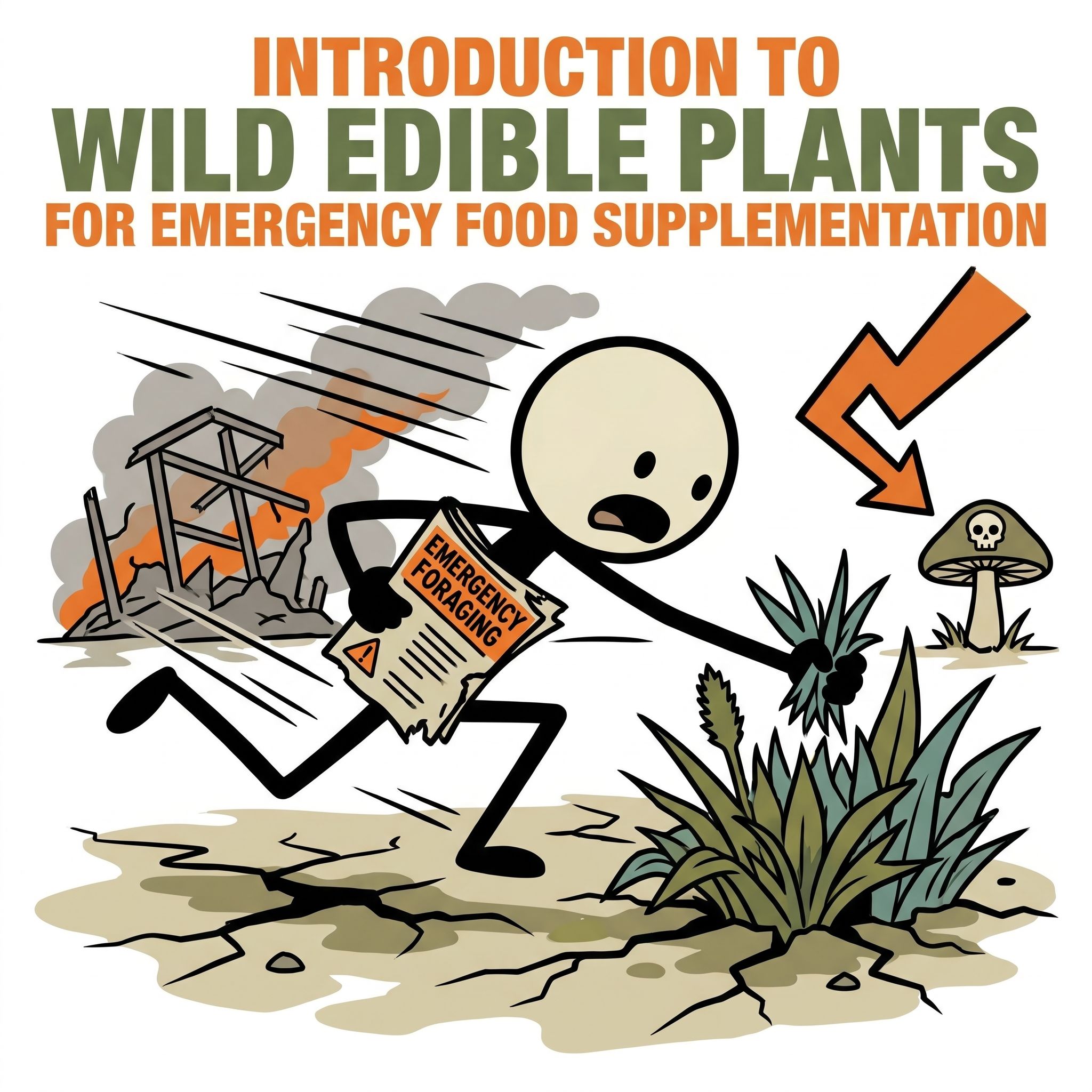
Foraging is not about wandering aimlessly into the woods and eating whatever looks appetizing. It is a precise, science-based discipline that requires observation, knowledge, and respect for nature. In an emergency, your goal is not to forage for gourmet flavors, but to safely source supplementary calories, hydration, and vital micronutrients that can keep your body functioning and your morale high. By learning to identify the natural abundance growing in your own environment, you transform the unknown wilderness-and even your own overgrown lawn-from a place of scarcity into a supplementary pantry.
This comprehensive guide will introduce you to the core principles of wild plant identification, the most reliable and common plants to look for, the dangerous lookalikes you must avoid, and how to safely integrate foraging into your broader survival strategy.
The Realities of Emergency Food Foraging
Before stepping outside to harvest, it is crucial to understand the realistic role of emergency food foraging. A common misconception in survival media is that you can easily sustain a 2,000-calorie-per-day diet simply by eating handfuls of wild leaves. In reality, wild leafy greens are incredibly low in calories. Digesting massive quantities of wild greens without accompanying fats or carbohydrates can actually lead to a caloric deficit, as your body expends more energy digesting the fibrous plant matter than it absorbs.
Instead, foraging wild edibles during a crisis serves three primary purposes. First, it provides critical micronutrients. In a prolonged grid-down scenario where you are relying entirely on freeze-dried meals, rice, and beans, vitamin deficiencies-such as scurvy (Vitamin C deficiency)-become a very real threat. Wild edibles are nature's multivitamins. Second, foraging stretches your existing emergency water and food storage guide guide. Adding wild greens, roots, and nuts to a base of stored rice or oats can make your rations last twice as long. Finally, foraging provides a massive psychological boost. The ability to actively provide for yourself and your family emergency planning guide when systems fail fosters a proactive, survival-oriented mindset.
To succeed at emergency food foraging, you must shift your focus from leaves to calorie-dense plant parts. Roots, tubers, nuts, and seeds are where plants store their energy. These are the elements that will actually sustain you. However, accessing these parts often requires more effort to harvest and process, making your knowledge of safe identification and preparation all the more critical.
Core Principles of Wild Plant Identification
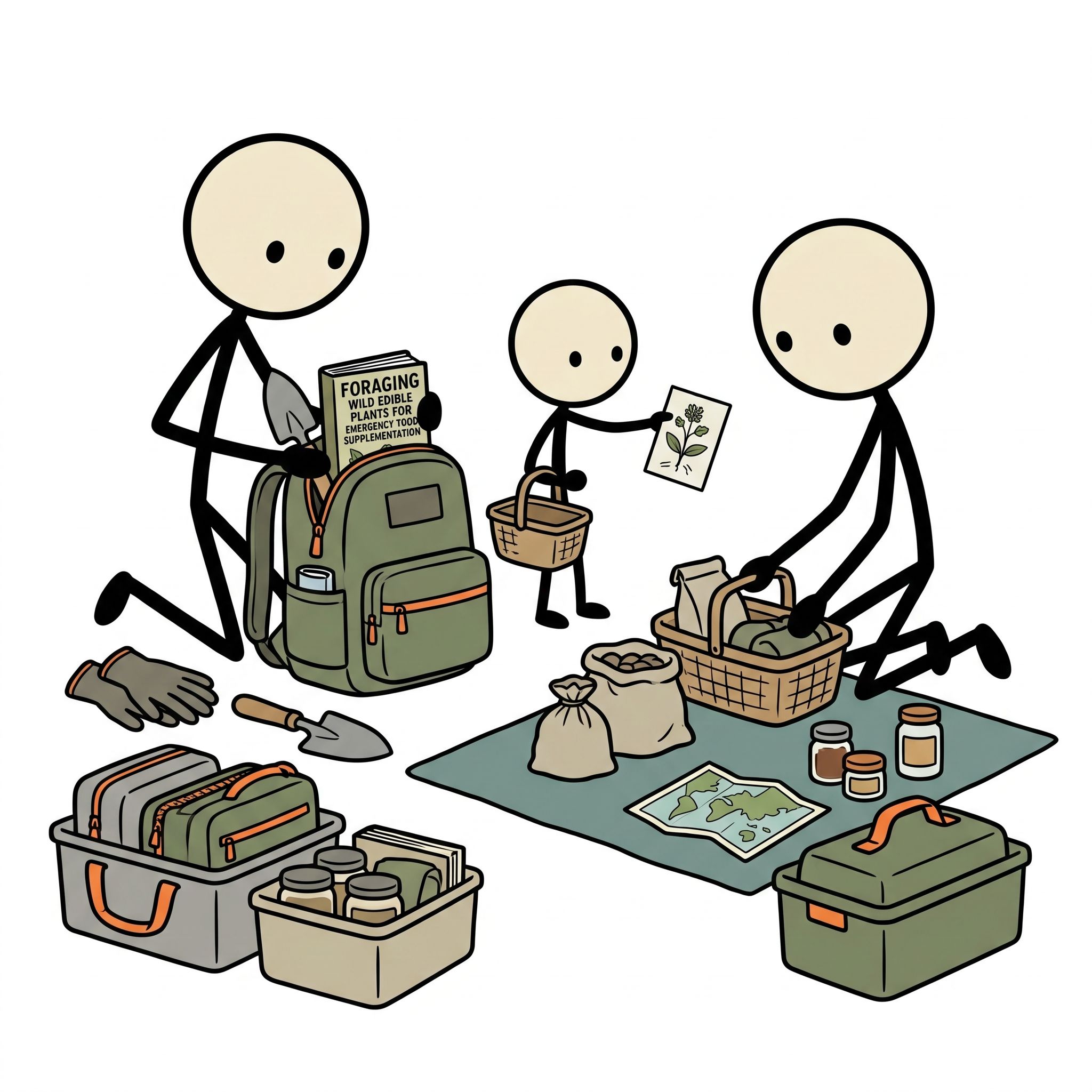
The golden rule of wild plant identification is simple: Never consume a plant unless you are 100% certain of its identity. 99% certainty is not enough when the remaining 1% could result in severe organ failure. To achieve this level of certainty, you must learn the basic vocabulary of botany. Identifying a plant relies on cross-referencing multiple characteristics, not just glancing at the shape of a leaf.
Understanding Botanical Characteristics
When assessing a wild plant, you must examine several distinct features to confirm its identity. A reliable survival foraging guide will always ask you to check the following:
- Leaf Arrangement: How do the leaves attach to the stem? Are they alternate (staggered along the stem), opposite (growing directly across from one another in pairs), or whorled (three or more leaves radiating from a single point)?
- Leaf Margins: Look at the edge of the leaf. Is it entire (smooth), serrated (toothed like a saw), or lobed (having deep indentations, like an oak leaf)?
- Stem Structure: Roll the stem between your fingers. Is it round, square, or triangular? Is it smooth, hairy, or covered in thorns? Does it secrete a milky sap or a clear liquid when broken?
- Flowers and Seed Pods: Flowers are the most definitive identification marker for any plant. Note the number of petals, the color, the shape (e.g., bell-shaped, umbrella-like), and the type of seed pod it produces.
- Root Structure: Does the plant have a deep, single taproot (like a carrot), or a sprawling, shallow fibrous root system? Does it grow from a bulb or a rhizome?
The Universal Edibility Test
Outlined in official Department of Defense survival manuals, the Universal Edibility Test is a systematic process used to determine if an unknown plant is safe to eat. This test must only be used in absolute, life-or-death starvation scenarios where no known food sources are available. It is a last resort, not a shortcut for skipping proper plant identification.
The test requires fasting for 8 hours prior and testing only one part of one plant at a time (e.g., only the leaves, or only the roots). The steps are as follows:
- Contact: Crush the plant part and rub it on the inside of your wrist or elbow. Wait 15 minutes. If there is a reaction (redness, itching, burning), discard the plant.
- Lip: If there is no skin reaction, touch a small portion of the plant to the outer surface of your lip to test for burning or itching. Wait 3 minutes.
- Tongue: Place a small piece on your tongue without chewing. Wait 15 minutes.
- Chew: Chew the piece thoroughly but do not swallow. Hold it in your mouth for 15 minutes. If you experience a soapy, bitter, or burning sensation, spit it out.
- Swallow: Swallow the small chewed piece. Wait 8 hours. If you feel nauseous or sick during this time, induce vomiting and drink copious amounts of water.
- Consume: If you experience no adverse effects after 8 hours, eat a quarter cup of the plant part and wait another 8 hours. If you are still fine, the plant part is generally safe to eat.
The Most Common and Reliable Wild Edibles
When building your knowledge base, start with plants that are geographically widespread, highly recognizable, and have few or no dangerous lookalikes. These are the ultimate backyard edible plants emergency resources. They thrive in disturbed soils, meaning they are likely growing in your lawn, local parks, and along the edges of woodlands right now.
1. Dandelion (Taraxacum officinale)
Often despised by gardeners, the common dandelion is a nutritional powerhouse and one of the most recognizable plants on earth. Every part of the dandelion is edible. The young leaves, best harvested in early spring before the plant flowers, are highly nutritious and can be eaten raw or boiled to reduce bitterness. The yellow flowers are sweet and can be eaten raw, made into fritters, or brewed into tea. In a survival situation, the thick taproot is the most valuable part. It can be boiled and eaten like a carrot, or roasted and ground to create a robust, chicory-like coffee substitute that provides warmth and morale.
2. Broadleaf Plantain (Plantago major)
Not to be confused with the banana-like fruit, broadleaf plantain weed is a low-growing weed found in lawns, cracks in sidewalks, and along hiking trails worldwide. It features broad, oval leaves with prominent, parallel veins running from the base to the tip. The young leaves are edible raw, while older leaves become tough and stringy, requiring boiling. Beyond its use as food, plantain is a renowned first-aid plant. Chewing the leaves into a poultice and applying it to insect bites, stings, or minor scrapes draws out toxins and promotes rapid healing, making it a dual-purpose survival asset.
3. Cattail (Typha species)
Often referred to as the "supermarket of the swamp," cattails are among the most versatile and calorie-dense wild edibles available. Found along the edges of ponds, lakes, and slow-moving streams, they are easily identified by their brown, cigar-shaped flower heads. In the spring, the young shoots can be pulled from the stalks and eaten raw or boiled; they taste similar to cucumber. In early summer, the green flower spikes can be boiled and eaten like corn on the cob. The most crucial part for emergency calories, however, is the rhizome (root system). The starchy roots can be harvested year-round, mashed, and processed in water to extract a highly nutritious flour.
4. Wood Sorrel (Oxalis species)
Wood sorrel is frequently mistaken for clover, but it is easily distinguished by its heart-shaped leaves (clover leaves are round or oval) and small yellow, white, or pink flowers. This delicate plant has a bright, tart, lemony flavor due to its high oxalic acid and Vitamin C content. It is an excellent thirst quencher and scurvy preventative. While highly nutritious, wood sorrel should be eaten in moderation, as consuming massive quantities of raw oxalic acid over a prolonged period can inhibit calcium absorption. It makes an excellent addition to wild salads or boiled into a refreshing tea.
5. Acorns (Quercus species)
If you need serious, sustaining calories in the wild, look to the oak tree. All acorns are edible, and they are packed with complex carbohydrates, fats, and proteins. However, they cannot be eaten straight off the ground. Acorns contain high levels of tannic acid, which is extremely bitter and can cause severe gastrointestinal distress and kidney damage if consumed in large amounts. To make them edible, they must be leached. Shell the acorns, crush the nutmeat, and either boil them in multiple changes of water until the water no longer turns brown, or place them in a porous bag in a clean, running stream for a few days. Once leached, the nutmeat can be dried and ground into a high-calorie flour.
6. Pine (Pinus species)
Pine trees are a year-round survival staple. The easiest and most common use is pine needle tea. Steeping a handful of chopped, fresh green pine needles in hot (not boiling) water creates a tea that contains up to five times the Vitamin C of an orange, making it a critical winter survival drink. In dire starvation scenarios, the inner bark (the cambium layer) of the pine tree can be harvested, dried, and ground into flour, or eaten raw or boiled. Caution: Ensure you are identifying a true pine (Pinus). Avoid the Yew tree (Taxus), which is highly toxic and often confused with safe evergreens.
Dangerous Lookalikes: Navigating the Hazards
The primary reason foraging wild edibles requires strict discipline is the presence of highly toxic plants that mimic safe ones. The CDC and various poison control centers constantly monitor botanical poisonings, many of which occur because amateur foragers make assumptions rather than utilizing a proper survival foraging guide.
Water Hemlock vs. Wild Carrot
Water Hemlock (Cicuta maculata) is widely considered the most toxic plant in North America. Ingesting even a small amount of its root can cause violent convulsions and death within hours. Unfortunately, it bears a striking resemblance to Wild Carrot (also known as Queen Anne's Lace), which has an edible root. Both plants feature lacy, fern-like leaves and umbrella-shaped clusters of white flowers.
To tell them apart, examine the stem. Wild Carrot has a solid, green stem covered in fine white hairs (remember the mnemonic: "The Queen has hairy legs"). Water Hemlock has a smooth, hairless stem that is hollow and often features purple splotches or streaks near the base. If you cannot definitively identify the hairy stem and the distinct carrot smell of the root, leave the plant alone.
Death Camas vs. Wild Onion/Garlic
Wild onions and garlic are excellent, flavorful wild edibles. However, they grow in similar environments to the Death Camas (Toxicoscordion venenosum), a highly toxic plant that grows from a similar-looking bulb. Both have grass-like leaves. The definitive test here is scent. All parts of a true wild onion or garlic will possess a strong, unmistakable alliaceous (onion/garlic) odor. If you find a bulb that looks like an onion but smells like nothing, or smells like grass, it is likely Death Camas. Do not eat it.
The Rule of Wild Mushrooms
When discussing emergency food foraging, the rule regarding wild mushrooms is absolute: Ignore them. While there are many delicious and safe wild mushrooms, the margin for error is razor-thin, and the consequences of a mistake are often fatal liver or kidney failure (such as with the Death Cap mushroom). Furthermore, mushrooms are composed mostly of water and offer very few calories. In a survival situation, the minimal caloric reward is never worth the lethal risk. Leave mycology to experts and focus your energy on calorie-dense plants and nuts.
Safe Foraging Practices and Environmental Hazards
Identifying the correct plant is only half the battle; you must also ensure the environment it grows in is safe. In Survival Scenarioss, particularly following floods, hurricanes, or industrial accidents, environmental contamination is a severe threat. Agencies like the EPA and USGS frequently issue warnings about soil and water toxicity following disasters.
When foraging, adhere to these environmental safety rules:
- Avoid Roadsides and Railways: Plants growing near busy roads accumulate heavy metals from exhaust, rubber dust from tires, and toxic runoff. Railways are frequently sprayed with aggressive, long-lasting herbicides to keep the tracks clear.
- Beware of Agricultural Runoff: Do not forage in or immediately downstream from commercial agricultural fields. These areas are heavily treated with pesticides and synthetic fertilizers that accumulate in the soil and water.
- Understand Floodwater Risks: The CDC explicitly warns that floodwaters often contain raw sewage, agricultural chemicals, and industrial waste. Do not eat wild plants that have been submerged in recent floodwaters. If you must harvest near a recently flooded area, focus on the new growth of tall trees, well above the high-water mark.
- Follow the 10% Rule: Foraging sustainably ensures the resource will be there tomorrow. Never harvest more than 10% of a plant patch. If you find ten cattails, take only one. Leave the rest to reproduce and sustain the local ecosystem.
Integrating Foraging into Your Protocol Survival app
Foraging is a perishable skill. You cannot buy a book, put it on a shelf, and expect to safely identify plants when a hurricane knocks out the power grid. Integrating this skill into your emergency preparedness plan requires active, ongoing practice.
Start by acquiring a highly rated, region-specific field guide. A book on the edible plants of the Pacific Northwest will be useless if you live in the American Southeast. Look for guides that feature high-resolution color photographs, detailed botanical descriptions, and clear warnings about local toxic lookalikes.
Next, begin mapping your local area. Take walks through your neighborhood, local parks, and nearby woodlands during different seasons. A plant that is easily identifiable by its flowers in the spring may look like a generic green weed in the fall. Keep a journal of where you find specific backyard edible plants emergency resources. Note where the oak trees are for autumn acorn harvesting, and where the cattails grow for year-round root access. By mapping these resources now, you create a mental (and physical) map of supplementary food sources that you can rely on if supply chains fail.
Finally, practice processing these foods while you still have the safety net of a modern kitchen. Try leaching acorns, boiling dandelion roots, or making pine needle tea. Understanding the time, effort, and fuel required to process wild edibles will give you a realistic perspective on how to manage your energy during an actual crisis.
Empowerment Through Knowledge
The wilderness, and even the overgrown edges of our urban environments, are not barren landscapes waiting to starve us; they are abundant systems that have sustained human life for millennia. By taking the time to study wild plant identification and practicing the disciplined rules of safe harvesting, you strip away the fear of the unknown. Foraging wild edibles transforms you from a passive consumer reliant solely on fragile supply chains into an active, capable provider. Whether you are dealing with a localized power outage or a long-term emergency, the ability to step outside and safely gather nutrition from the earth is one of the most profound and empowering survival skills you can master.
Frequently Asked Questions
Is foraging a reliable emergency food source?
Foraging is a supplement, not a primary emergency food strategy. Wild edibles are seasonal and location-specific. A skilled forager in the right environment can gather meaningful calories, but beginners should practice extensively before relying on it in an emergency.
What are the safest wild edibles for beginners?
Focus on species with no dangerous lookalikes: dandelion (entire plant edible), blackberries and raspberries (distinctive fruit), cattail (pollen and shoots), lamb's quarters, and wood sorrel. These can be found in most of North America and are difficult to misidentify.
What are the most dangerous foraging mistakes?
Misidentifying hemlock as Queen Anne's lace (the most deadly mistake in North America), confusing death camas for wild onion, and mistaking amanita mushrooms for edible species. The rule: if you can't positively identify a plant to species with 100% certainty, do not eat it.
Sources & Further Reading
- USDA Forest Service Wild Edible Plants
- Samuel Thayer Field Guides Nature's Garden
- Peterson Field Guides to Edible Wild Plants
- CDC Poisonous Plants