⚡ Key Facts
- Billion-Dollar Realities: According to the National Oceanic and Atmospheric Administration (NOAA), the United States experienced a historic 28 separate billion-dollar weather and climate disasters in 2023 alone, leaving hundreds of thousands of households facing sudden financial destabilization. For the practical checklist side, use the community emergency preparedness guide.
- The SBA Myth: The Small Business Administration (SBA) is the federal government's primary source of long-term rebuilding money for homeowners and renters, not just businesses, offering low-interest loans up to $500,000 for primary residence repairs. For the practical checklist side, use the emergency communication plan.
- FEMA is Not Insurance: FEMA disaster assistance is designed to meet basic needs and make a home safe, sanitary, and functional; it is not intended to restore your property to its pre-disaster condition or replace all lost items. For the practical checklist side, use the family emergency planning guide.
- Post-Disaster Fraud Surge: The Federal Trade Commission (FTC) reports that identity theft and contractor scams spike by up to 40% in ZIP codes declared federal disaster areas within the first six months following an event.
- Tax Relief Options: Under IRS Section 165(i), taxpayers can deduct casualty losses from a federally declared disaster on either the current year’s tax return or the prior year's return, potentially generating an immediate tax refund.
When the sirens fall silent and the floodwaters recede, the immediate physical threat of a natural disaster transitions into a quiet, complex, and often overwhelming financial crisis. Surviving the storm is only the first step; surviving the aftermath requires a structured, strategic approach to economic stabilization. According to the American Red Cross, the timeline for physical recovery from a major disaster is measured in weeks, but the timeline for financial recovery is measured in months, and sometimes years. For families navigating this difficult terrain, securing immediate cash flow, negotiating with creditors, filing meticulous insurance claims, and accessing federal aid are not just administrative tasks—they are the foundational pillars of preserving your livelihood. This guide provides an authoritative, step-by-step blueprint for navigating your post disaster financial recovery, ensuring you protect your assets, secure every dollar of aid you are entitled to, and rebuild your financial foundation with confidence.
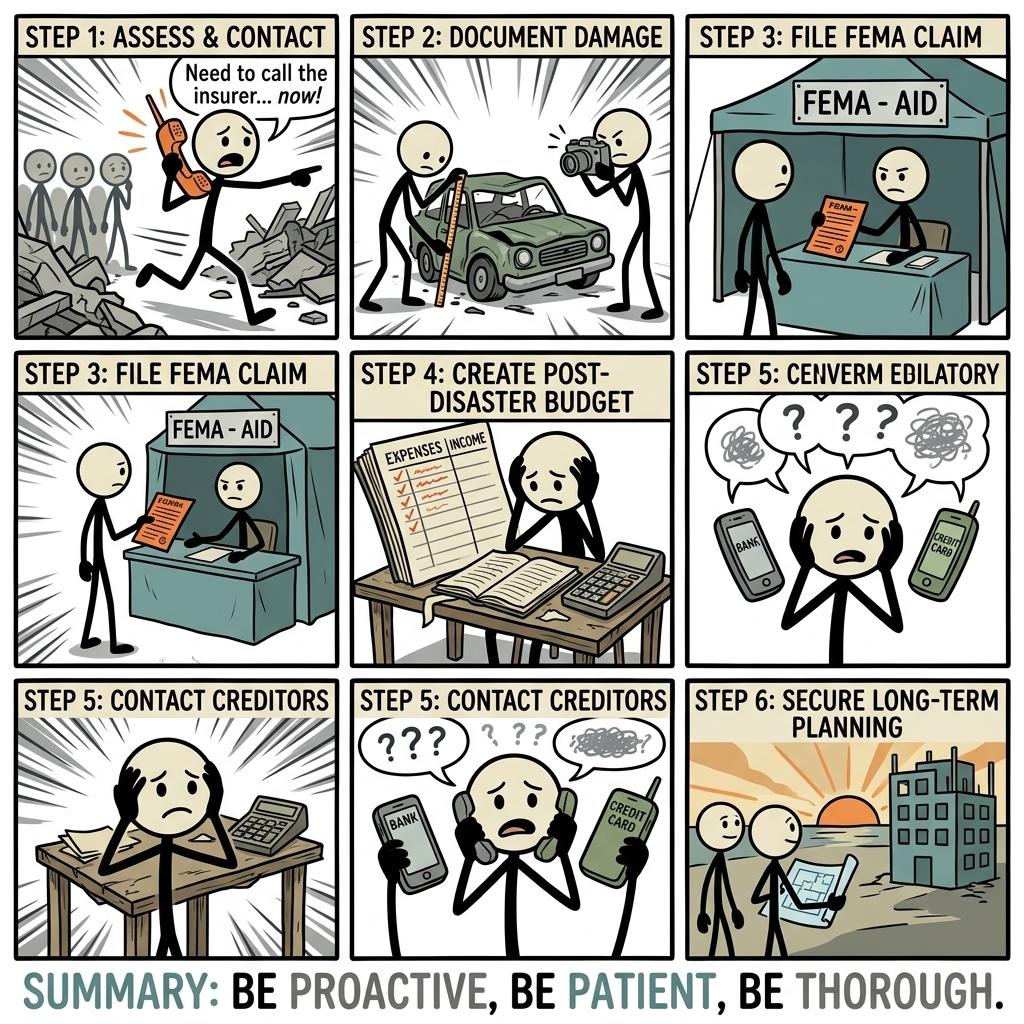
Step 1: Navigating the FEMA Disaster Assistance Application Process
Federal Emergency Management Agency (FEMA) assistance is often the first lifeline survivors look to after a major catastrophe. However, accessing these funds requires strict adherence to federal protocols. To qualify for FEMA's Individuals and Households Program (IHP), your primary residence must be located in an area declared a major disaster by the President, and you must exhaust your private insurance options first. FEMA is legally prohibited from duplicating benefits; they will only step in to cover uninsured or underinsured losses.
To begin, you must submit your application to DisasterAssistance.gov, use the FEMA mobile app, or call their toll-free helpline. When you prepare to file your FEMA disaster assistance apply protocol, ensure you have the following documentation organized in a single digital folder:
- Social Security Number (SSN): Your own, or that of a minor child in your household who is a U.S. citizen, non-citizen national, or qualified alien.
- Annual Household Income: Your total gross income at the time of the disaster.
- Contact Information: A reliable phone number and a mailing address where you can receive physical mail, even if it is a temporary shelter or PO box.
- Insurance Information: The policy numbers and names of all insurance providers covering your home, auto, or personal property.
- Bank Account Details: Your routing and account numbers for direct deposit, which is significantly faster than waiting for a paper check.
Surviving the FEMA Home Inspection
Once your application is submitted, FEMA will typically assign an inspector to verify the damage to your home. This inspection is not an assessment of cosmetic damage; the inspector is strictly evaluating whether your home meets the federal definition of "safe, sanitary, and functional." Before the inspector arrives, take comprehensive photographs of every room, structural element, and damaged item. Keep a detailed inventory log. When walking through the property with the inspector, clearly point out structural foundation cracks, water lines on walls, roof damage, and compromised electrical systems. Do not minimize the damage out of pride or shock.
How to Successfully Appeal a FEMA Denial
It is incredibly common to receive an initial determination letter from FEMA that states you are "ineligible" or that your application has been denied. In many cases, this is not a final rejection, but rather a request for more information. You have exactly 60 days from the date of the determination letter to file a written appeal. Your appeal must include a detailed, signed letter explaining why you believe the decision is incorrect, along with supporting documentation such as contractor repair estimates, structural engineer reports, utility bills proving residency, or insurance settlement/denial letters. Send your appeal via certified mail to ensure you have proof of delivery, or upload it directly to your account on DisasterAssistance.gov.
Step 2: Mastering the Insurance Claim Process After a Disaster
Your private insurance policies represent your most significant resource for financial recovery. Whether you are dealing with homeowners, renters, auto, or specialized flood insurance, the speed and accuracy of your insurance claim after disaster depend heavily on how you document your losses and communicate with your carrier.
Your first action should be to request a complete copy of your insurance policy, including the "Declarations Page," which outlines your coverage limits, deductibles, and exclusions. Immediately contact your insurance agent to file a "Notice of Loss." Do not delay this step; many policies have strict time limits (often within 30 to 90 days) for reporting damage after an event occurs.
The Golden Rule of Claims: Document Everything
Before you throw away waterlogged furniture, ruined drywall, or broken appliances, you must document them thoroughly. If local health officials order you to discard items immediately for safety reasons (such as mold or biohazard contamination), take clear, high-resolution photographs of the items, record their serial numbers, and cut out a small fabric swatch or take a picture of the manufacturer’s label if possible. Create a master spreadsheet containing:
- A description of each damaged or destroyed item.
- The date of purchase and original cost (estimate if you do not have receipts).
- The estimated replacement cost in today's market.
- The brand name, model number, and serial number.
Navigating the National Flood Insurance Program (NFIP)
It is vital to understand that standard homeowners insurance policies explicitly exclude damage caused by flooding or rising surface water. Flood coverage is typically written through the National Flood Insurance Program (NFIP), managed by FEMA, or through private specialty insurers. NFIP claims have unique, rigid requirements. You must submit a formal "Proof of Loss" statement to your insurer within 60 days of the flood event. This document is a official, notarized statement detailing the cost to repair the damage, supported by photos, repair estimates, and itemized inventories. Missing this deadline can result in the automatic denial of your entire claim.
Working with Adjusters: Company vs. Public
Your insurance company will send an adjuster to evaluate your property. This adjuster is employed by, or contracted with, your insurance carrier; their job is to settle the claim within the strict legal parameters of your policy. While most company adjusters are professional, they may overlook hidden damage, such as mold behind walls or structural shifts in the foundation. If you feel your insurer's payout offer is significantly lower than the actual cost of repairs, you have the option to hire a Licensed Public Adjuster. Public adjusters work independently on your behalf and charge a fee (typically 10% to 15% of the final settlement). They can be invaluable for complex, high-value claims, but always verify their licensing with your state's Department of Insurance before signing a contract.
Step 3: Utilizing SBA Disaster Loans for Long-Term Rebuilding
One of the most misunderstood aspects of disaster financial help is the role of the Small Business Administration (SBA). Many homeowners and renters ignore SBA outreach because they assume these loans are reserved exclusively for commercial enterprises. In reality, the SBA is the federal government’s primary vehicle for providing long-term, low-interest rebuilding loans to private individuals after a declared disaster.
In fact, FEMA often requires applicants to apply for an SBA loan before they can be considered for certain categories of FEMA's Other Needs Assistance (ONA) program, such as personal property replacement or vehicle repair. If you are approved for an SBA loan, you are under no obligation to accept it. However, if you apply and are declined, the SBA refers you back to FEMA, which can open the door to additional grant money that does not have to be repaid. Applying is a critical strategic step in your post disaster financial recovery.
| SBA Loan Type | Maximum Limit | Eligible Uses |
|---|---|---|
| Home Disaster Loan | Up to $500,000 | Repairing or replacing real estate (primary residence only). |
| Personal Property Loan | Up to $100,000 | Replacing furniture, appliances, clothing, and vehicles. |
| Business Physical Disaster Loan | Up to $2 Million | Repairing machinery, equipment, fixtures, and real estate. |
| Economic Injury Disaster Loan (EIDL) | Up to $2 Million | Operating capital for businesses to meet financial obligations. |
SBA disaster loans offer highly competitive interest rates (often below 4% for applicants who cannot obtain credit elsewhere) and long repayment terms of up to 30 years. This makes them an exceptionally affordable way to bridge the gap between your insurance settlement and the actual cost of rebuilding your home and life.
Step 4: Protecting Your Credit and Managing Debt During Disruption
When a disaster strikes, your normal cash flow is often interrupted. You may face temporary job loss, business closures, or sudden, unexpected expenses for temporary housing and food. During this chaotic period, protecting your credit score and managing your existing debt obligations must remain a high priority. A damaged credit profile can severely hinder your ability to secure rental housing, obtain low-interest rebuilding loans, or purchase a replacement vehicle in the months ahead.
Activating Disaster Forbearance
Do not simply stop making payments on your mortgage, auto loans, or credit cards. Unilateral non-payment will trigger late fees, penalty interest rates, and negative credit reporting. Instead, contact each of your creditors immediately to explain your situation and request formal "disaster forbearance."
For homeowners with mortgages backed by federal entities (such as Fannie Mae, Freddie Mac, FHA, VA, or USDA), the Stafford Act and federal regulations mandate specific relief options. Lenders can grant mortgage forbearance for up to 12 months, during which time foreclosure proceedings are halted, and late fees are waived. Ensure you clarify how the missed payments will be handled at the end of the forbearance period. You want to avoid a "balloon payment" structure, where all missed payments are due at once. Instead, negotiate a loan modification that tacks the missed payments onto the end of your loan term or amortizes them over the remaining life of the mortgage.
Securing Your Credit File
To prevent automatic credit scoring algorithms from damaging your credit during a crisis, take active control of your credit profile. The Fair Credit Reporting Act (FCRA) provides protections for consumers impacted by natural disasters. When you contact the three major credit bureaus (Equifax, Experian, and TransUnion), request that a "natural disaster" comment be placed on your credit file. This alert notifies future lenders that any recent payment disruptions were the result of an extraordinary, localized emergency rather than chronic financial mismanagement.
Additionally, take advantage of the free weekly credit reports available through AnnualCreditReport.com. Monitor your credit reports closely to ensure that lenders who agreed to forbearance are not mistakenly reporting your accounts as delinquent or past due. If you spot an error, dispute it immediately in writing, providing copies of your signed forbearance agreement as evidence.
Step 5: Warding Off Post-Disaster Identity Theft and Financial Scams
Disaster zones are magnets for predatory actors. While communities rally together to help one another, bad actors exploit the confusion, physical displacement, and emotional vulnerability of survivors. The Federal Trade Commission (FTC) warns that post-disaster financial scams can take many forms, from fraudulent contractors to identity theft rings targeting FEMA applicants.
Defending Against Contractor Fraud
The "contractor scam" is the most prevalent form of post-disaster exploitation. Fraudulent contractors sweep through impacted neighborhood preparedness networks offering rapid repairs, often demanding a substantial upfront deposit or your entire insurance payout before work begins. Once paid, they either perform substandard, non-code-compliant work or vanish entirely. Protect yourself by adhering to these strict rules:
- Never pay in cash. Use a credit card or a check so you have a traceable paper trail.
- Only work with licensed, bonded, and insured contractors. Verify their credentials directly with your state or local licensing board.
- Obtain at least three written, itemized bids for any major repair work.
- Never sign over your insurance check directly to a contractor. Pay in increments based on completed, inspected milestones of work.
- Ensure a written contract is in place that clearly defines the scope of work, materials to be used, and a firm completion date.
Preventing Identity Theft and Imposter Scams
Identity thieves frequently use the personal information of disaster victims to apply for fraudulent FEMA grants, SBA loans, or unemployment benefits. To safeguard your identity, consider placing a temporary "security freeze" on your credit files with Equifax, Experian, and TransUnion. A credit freeze is free and prevents anyone from opening new credit accounts in your name. You can easily lift the freeze temporarily when you need to apply for legitimate recovery loans.
Be highly suspicious of unsolicited phone calls, emails, or home visits from individuals claiming to be FEMA representatives, insurance adjusters, or utility workers. Legitimate FEMA inspectors will always carry official photo identification badges and will have your unique 9-digit FEMA application number. They will never ask you for money, fees, or bank account details to process your application. If someone demands a fee to help you secure FEMA disaster assistance apply protocols, report them immediately to the National Center for Disaster Fraud (NCDF) at 866-720-5721.
Step 6: Long-Term Financial Rebuilding and Resilience Planning
Once immediate cash flow is stabilized, insurance claims are underway, and credit protections are active, you must pivot toward rebuilding finances after emergency. This phase of recovery requires adjusting your financial habits, leveraging tax relief programs, and hardening your financial infrastructure against future disruptions.
Leveraging IRS Casualty Loss Deductions
The Internal Revenue Service (IRS) offers substantial tax relief to individuals and businesses located within federally declared disaster areas. Under IRS Section 165(i), you may deduct casualty losses—the damage, destruction, or loss of property from any sudden, unexpected, or unusual event—on your federal income tax return. This deduction applies to losses not covered by insurance or other forms of reimbursement.
Importantly, the tax code allows you to choose whether to claim the disaster loss on the tax return for the year the disaster occurred, or on the return for the prior tax year. If you claim the loss on your prior year’s return, you can file an amended return (Form 1040-X) immediately. This strategy can generate a rapid tax refund, providing critical liquidity when you need it most. Consult a certified public accountant (CPA) or tax professional to calculate your casualty loss deduction accurately, as the rules surrounding adjusted gross income (AGI) thresholds and fair market value calculations are complex.
Re-establishing Your Emergency Reserves
The traditional financial advice of maintaining a three-to-six-month emergency fund is often insufficient in an era of escalating natural disasters. When rebuilding your savings, aim to establish a tiered emergency reserve system:
- The Immediate Cash Reserve: Keep $1,000 to $2,000 in physical cash stored in a high-quality, fireproof, and waterproof home safe. Power grids and banking networks can remain offline for days or weeks following a severe storm, rendering ATMs and credit cards useless.
- The Liquid Recovery Fund: Maintain three months of basic living expenses in a high-yield savings account (HYSA) at an online-only bank separate from your primary checking account. This money should be reserved strictly for covering insurance deductibles, temporary relocation costs, or immediate repair deposits.
- The Long-Term Stability Fund: Build an additional three to six months of expenses in a highly liquid money market account or short-term Certificates of Deposit (CDs) to protect against prolonged income loss or business interruption.
Creating a Digital "Grab-and-Go" Financial Safe
Physical paper documents are highly vulnerable to fire, water, and wind. To ensure you can instantly access your critical financial data during any future emergency, build a digital "Grab-and-Go" financial safe. Scan and digitize the following documents:
- Government-issued IDs (passports, driver's licenses, military IDs).
- Property deeds, mortgage statements, and vehicle titles.
- Insurance policies (home, auto, life, health, flood).
- Estate planning documents (wills, trusts, powers of attorney).
- The last two years of tax returns and recent pay stubs.
- An active inventory of your home's contents (photos, videos, and receipts).
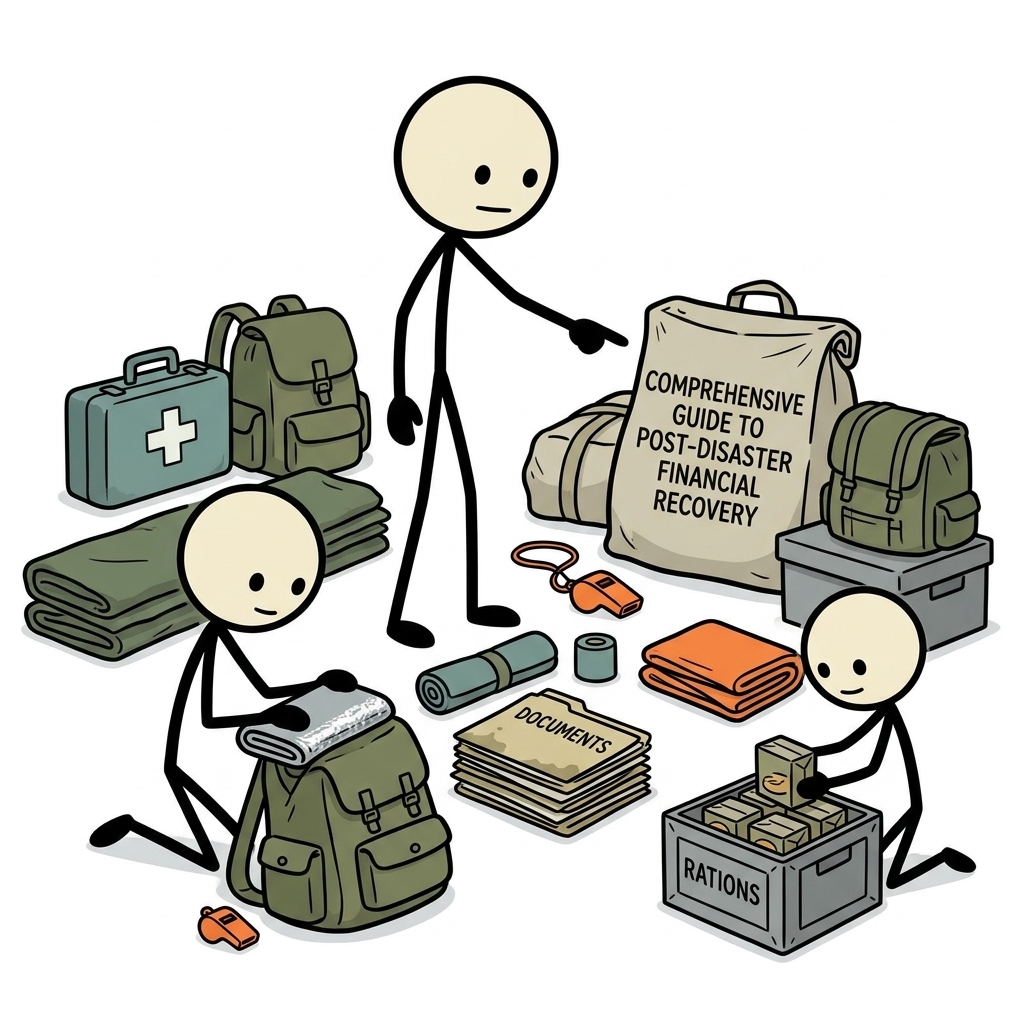
Encrypt these files using strong, modern encryption protocols and store them on a rugged, password-protected USB flash drive kept in your physical emergency go-bag essentials guide. Additionally, upload a secure, encrypted copy to a trusted cloud storage provider. This ensures that even if your home is completely lost, your financial identity and records remain fully intact and accessible from any internet-connected device in the world.
Forging Your Path Forward
Navigating the financial aftermath of a disaster is undeniably exhausting, but it is a challenge you are entirely capable of managing. By methodically coordinating your insurance claims, utilizing federal resources like FEMA and the SBA, proactively communicating with your lenders, and protecting your identity from opportunistic predators, you take active control of your recovery. Remember that financial rebuilding is a marathon, not a sprint. Each document you organize, each call you log, and each strategic decision you make brings you one step closer to restoring your security and peace of mind. Stay focused on the immediate, actionable steps before you, leverage the systems designed to support you, and build back a stronger, more resilient financial future.
Frequently Asked Questions
How do I apply for FEMA disaster assistance?
Visit DisasterAssistance.gov or call 1-800-621-3362 after a presidential disaster declaration. Apply as quickly as possible — there are application deadlines. Have your Social Security number, insurance information, damage description, and financial information ready. FEMA assistance is not a substitute for insurance but supplements recovery.
What does FEMA assistance actually cover?
FEMA Individuals and Households Program (IHP) provides grants for housing repair/replacement, rental assistance while your home is uninhabitable, medical and dental expenses, and other essential needs. Maximum amounts change annually ($43,900 as of 2024). FEMA does not cover full property damage — that's what homeowner's insurance is for.
How should I handle insurance claims after a disaster?
Document all damage with photos and video before cleaning up. File your claim immediately — don't wait. Keep all receipts for emergency expenses (hotel, meals) as these may be covered under ALE (Additional Living Expenses). If your claim is denied, you have the right to appeal or hire a public adjuster (typically 10-15% of claim settlement) for complex claims.
What is the SBA disaster loan and do I qualify?
SBA disaster loans are low-interest loans (not grants) available to homeowners, renters, and businesses in declared disaster areas regardless of whether you have a business. Homeowners can borrow up to $500,000 for real property and $100,000 for personal property. Interest rates start at 2.938% — significantly lower than commercial credit. Apply at SBA.gov/disaster.
How do I protect my identity and credit after a disaster?
Disasters create ideal conditions for identity theft — scammers target disaster victims with fake charity solicitations and impersonation schemes. Place a security freeze on your credit with all three bureaus (free). Monitor your credit report monthly at AnnualCreditReport.com. Only provide SSN information to verified official sources. Report suspicious contacts to FEMA's fraud hotline.