⚡ Key Facts
- Highly Specific Protection: Potassium iodide (KI) only protects the thyroid gland from radioactive iodine-131; it offers 0% protection against external gamma radiation, dirty bombs, or other dangerous isotopes like Cesium-137 and Strontium-90. For the practical checklist side, use the community emergency preparedness guide.
- Critical Timing Window: To achieve maximum efficacy (up to 99%), KI must be administered within a narrow window—ideally 1 to 12 hours before exposure, or within a few hours post-exposure. Taking it 24 hours after exposure provides virtually no benefit. For the practical checklist side, use the neighborhood preparedness network.
- Age-Dependent Risk: Children, infants, and pregnant women are at the absolute highest risk for radiation-induced thyroid cancer and are the primary focus of official KI distribution guidelines. For the practical checklist side, use the emergency communication plan.
- Massive Dosage Differences: A single standard adult dose of potassium iodide (130 mg) contains approximately 1,000 times more iodine than the daily nutritional requirement. For the practical checklist side, use the family emergency planning guide.
- Not a Standalone Shield: Federal agencies (FEMA, CDC, and the NRC) emphasize that evacuation, sheltering in place, and food/water control remain the primary and most effective countermeasures in a nuclear emergency.
In the quiet lexicon of emergency preparedness, few items are as widely misunderstood—or as frequently purchased under false pretenses—as potassium iodide (KI). During periods of heightened geopolitical tension or in the wake of minor anomalies at nuclear power facilities, global sales of KI tablets routinely skyrocket. Images of empty pharmacy shelves and frantic online buyers reflect a deep-seated public anxiety: the fear of invisible, ionizing radiation. However, this rush to acquire KI often stems from a fundamental misconception that these tablets act as a universal "anti-radiation pill." In reality, potassium iodide is a highly specialized, biochemically limited countermeasure. To rely on it as a general shield against nuclear fallout is not only scientifically incorrect, but it can also lead to a false sense of security that compromises actual survival protocols.
To build a truly resilient family emergency plan, one must look past the sensationalized headlines and understand the precise biophysics of radiation protection. This comprehensive guide will demystify potassium iodide radiation protocols, clarify the strict FDA and CDC timing guidelines, outline medical contraindications, and explain exactly where KI fits within a broader, multi-layered potassium iodide radiation emergency preparedness strategy. By understanding the science, the limitations, and the official state and federal guidance, you can transform anxiety into actionable, life-saving readiness.
---Understanding the Target: What is Potassium Iodide (KI)?
To understand what potassium iodide is, we must first understand what it is not. Potassium iodide is a stable, non-radioactive salt of iodine. Under normal physiological conditions, the human body requires minute amounts of iodine to synthesize thyroid hormones (thyroxine and triiodothyronine), which regulate metabolism, brain development, and body temperature. Because the body cannot manufacture iodine internally, it absorbs it from dietary sources—such as iodized salt, seafood, and dairy—and concentrates it in the thyroid gland via a highly specialized cellular pump called the sodium-iodide symporter (NIS).
In a severe nuclear reactor accident or the detonation of a nuclear weapon, uranium or plutonium atoms undergo fission, splitting into a wide array of highly unstable, radioactive isotopes. Among these fission products is Iodine-131 ($^{131}\text{I}$), a highly volatile gas that can be carried over vast distances by wind currents. If radioactive iodine is inhaled or ingested through contaminated food and water, the human thyroid gland cannot distinguish between the stable iodine it needs and the radioactive iodine drifting through the air. It rapidly absorbs the $^{131}\text{I}$, concentrating it within thyroid tissue. Once settled there, the isotope emits beta and gamma radiation, damaging cellular DNA and drastically increasing the long-term risk of thyroid nodules and thyroid cancer, particularly in children and young adults.
The Mechanism of Thyroid Blocking
This is where potassium iodide enters the equation. Administering KI during a radiological emergency is a process known as "thyroid blocking" or "thyroid saturation." By flooding the bloodstream with a massive, safe dose of stable iodine (KI), the sodium-iodide symporters in the thyroid gland become completely saturated.
Think of the thyroid as a sponge with a limited capacity to hold water. If the sponge is already completely saturated with clean, fresh water, it cannot absorb any contaminated water poured over it. By filling every available molecular "seat" in the thyroid with stable iodine, the ingested or inhaled radioactive Iodine-131 has nowhere to bind. Unable to find a home in the thyroid, the radioactive isotope is safely excreted from the body through the kidneys and urinary tract over the subsequent hours.
- Stable Iodine (KI): Floods the thyroid, blocking absorption sites.
- Radioactive Iodine ($^{131}\text{I}$): Rejected by the saturated thyroid and safely flushed from the system.
- The Result: Significant reduction in the localized radiation dose delivered to thyroid tissue.
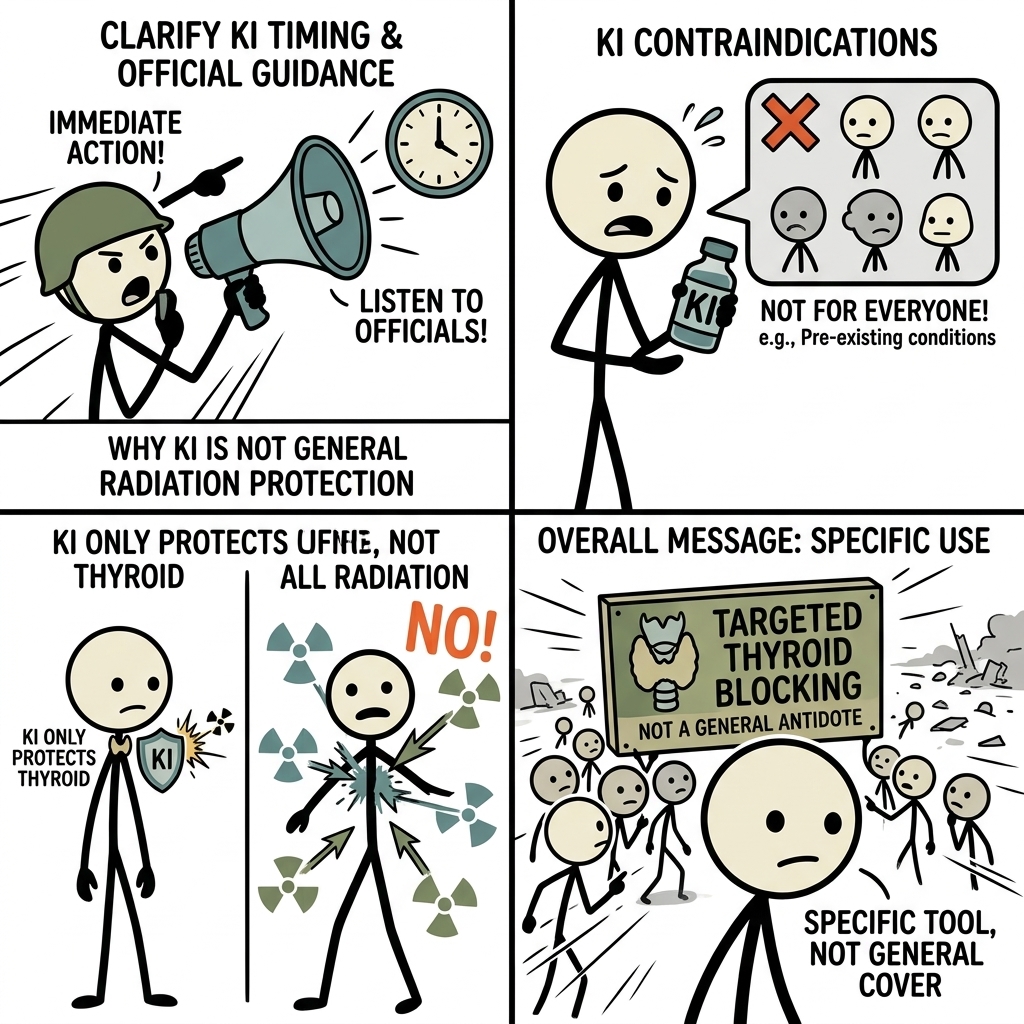
However, this elegant biochemical shield is incredibly narrow. It does not protect the lungs from inhaling radioactive dust, it does not prevent bone marrow damage from radioactive strontium, and it does not shield the muscles from radioactive cesium. It protects one organ, and one organ only: the thyroid gland.
---The Critical Importance of Timing: The Efficacy Window
In the field of potassium iodide radiation emergency preparedness, timing is not just an important factor—it is the single most critical variable determining whether the countermeasure succeeds or fails. The window of biological efficacy for thyroid blocking is remarkably narrow, requiring precise adherence to official emergency broadcasts.
The Food and Drug Administration (FDA) and the World Health Organization (WHO) have analyzed extensive epidemiological and clinical data to map the efficacy curve of KI administration relative to the time of exposure. The findings are stark: taking KI too early renders it ineffective when the plume arrives, while taking it too late offers virtually no protection at all.
The Optimal Window (1 to 12 Hours Before Exposure)
The absolute peak of protection occurs when potassium iodide is ingested between 1 and 12 hours before the radioactive plume arrives. This allows the gastrointestinal tract sufficient time to absorb the stable salt, circulate it through the bloodstream, and achieve complete saturation of the thyroid's NIS receptors before any radioactive isotopes enter the respiratory or digestive systems. Under these optimal conditions, KI blocks more than 99% of radioactive iodine uptake.
The Immediate Post-Exposure Window (Up to 2 Hours After)
If advance warning is not possible, KI should be administered as soon as safely directed by local public health officials. If taken within 2 hours of exposure to $^{131}\text{I}$, the blocking efficacy remains highly protective, preventing approximately 80% to 90% of thyroid uptake. This is because the thyroid absorbs iodine over several hours, and introducing stable iodine quickly can still displace a significant portion of the radioactive isotopes before they are fully organified into thyroid tissue.
The Declining Window (3 to 8 Hours Post-Exposure)
By 3 to 4 hours post-exposure, the protective value of KI drops significantly, hovering around 50% efficacy. By 8 hours post-exposure, the thyroid has already absorbed the vast majority of the inhaled or ingested radioactive iodine. Introducing stable iodine at this stage offers minimal benefit, as the "sponge" is already saturated with the radioactive isotope, and the stable iodine will simply be excreted without displacing the trapped $^{131}\text{I}$.
The Point of Diminishing Returns (24+ Hours Post-Exposure)
Administering KI 24 hours or more after exposure is not only completely ineffective at preventing thyroid damage, but it is also actively discouraged by health authorities. At this juncture, the physiological risks of administering a massive dose of iodine outweigh any non-existent protective benefits, particularly for vulnerable populations whose thyroids are already processing the radiation damage.
Why Pre-Medicating Weeks in Advance is Dangerous
A common mistake among concerned citizens is to begin taking daily low doses of KI or dietary iodine supplements when a distant geopolitical crisis begins to dominate the news. This is highly counterproductive. The human body cannot store an infinite reserve of iodine; excess iodine is rapidly cleared by the kidneys. Daily, unguided administration of high-dose KI can trigger the Wolff-Chaikoff effect—a physiological phenomenon where temporary high levels of circulating iodide cause the thyroid gland to shut down hormone production entirely. This can lead to acute hypothyroidism, goiter, and severe metabolic imbalances, all while failing to provide any protection when an actual radiological event occurs weeks later.
---Dosage and Administration Guidelines
When public health officials issue a formal directive to take potassium iodide, the dosage must be carefully calibrated based on age, weight, and developmental stage. Because infants, children, and pregnant women are highly sensitive to both radiation and excess iodine, a "one-size-fits-all" approach does not work.
The FDA has established clear, standardized dosing guidelines for potassium iodide radiation emergencies. These dosages are designed to provide maximum thyroid blocking while minimizing the risk of adverse side effects.
| Age Group / Population | KI Dose (mg) | Fraction of 130 mg Tablet | Fraction of 65 mg Tablet | Equivalent Liquid Volume (approx.) |
|---|---|---|---|---|
| Adults (18–40 years) | 130 mg | 1 tablet | 2 tablets | 2 mL (65 mg/mL) |
| Pregnant or Lactating Women | 130 mg | 1 tablet | 2 tablets | 2 mL (65 mg/mL) |
| Adolescents (12–18 years, >150 lbs) | 130 mg | 1 tablet | 2 tablets | 2 mL (65 mg/mL) |
| Adolescents (12–18 years, <150 lbs) | 65 mg | 1/2 tablet | 1 tablet | 1 mL (65 mg/mL) |
| Children (3–12 years) | 65 mg | 1/2 tablet | 1 tablet | 1 mL (65 mg/mL) |
| Infants (1 month to 3 years) | 32 mg | 1/4 tablet | 1/2 tablet | 0.5 mL (65 mg/mL) |
| Neonates (Birth to 1 month) | 16 mg | 1/8 tablet | 1/4 tablet | 0.25 mL (65 mg/mL) |
Special Considerations for Pediatric and Infant Dosing
Administering solid tablets to infants and toddlers is a choking hazard and logistically difficult. For this reason, FDA-approved liquid formulations of KI (such as ThyroSafe or IOSAT liquid) are highly recommended for family kits. If only tablets are available, they can be crushed into a fine powder and thoroughly mixed with breast milk, infant formula, water, orange juice, or chocolate milk. The strong, salty-bitter taste of KI can be highly unpalatable to young children, and mixing it with a sweet, dense liquid helps ensure they swallow the entire dose.
The Rule of Single Dosing
For the vast majority of radiological scenarios, a single dose of potassium iodide is all that is required. A single dose provides active thyroid blocking for approximately 24 hours. In most emergency management plans, the population will either be evacuated out of the contaminated area or the radioactive plume will have dispersed within this 24-hour window, eliminating the need for further administration.
Repeated daily dosing should only occur under the direct instruction of public health officials. This is particularly critical for pregnant women, lactating mothers, and neonates under one month of age. In these vulnerable groups, repeated exposure to high-dose iodine can cause neonatal hypothyroidism, which can impair brain development and require immediate medical intervention.
---Contraindications: Who Should NOT Take KI?
While potassium iodide is generally safe when administered correctly, it is a potent pharmacological agent that carries significant risks for individuals with specific pre-existing medical conditions. Before adding KI to your potassium iodide radiation checklist, it is vital to understand these medical contraindications.
The human body's tolerance for massive doses of iodine varies widely. If you or a family member falls into any of the following categories, taking KI could result in severe, life-threatening medical complications that far outweigh the risk of potential thyroid exposure.
1. Known Iodine Allergy
This is the most straightforward contraindication. Individuals who have experienced severe allergic reactions (anaphylaxis, hives, bronchospasm, or severe swelling) to iodine-containing products or medications must not take KI. Note, however, that a mild localized reaction to topical iodine antiseptics or a sensitivity to seafood (which is often caused by proteins, not iodine itself) does not necessarily constitute a true systemic iodine allergy. Consult a physician for precise diagnostic guidance.
2. Dermatitis Herpetiformis (Duhring's Disease)
Dermatitis Herpetiformis (DH) is a chronic, intensely itchy, blistering skin condition closely linked to celiac disease. In individuals with DH, the ingestion of even small amounts of inorganic iodide can trigger an acute, catastrophic flare-up of painful, burning skin lesions across the body. Because of this extreme sensitivity, KI is strictly contraindicated for anyone diagnosed with this condition.
3. Hypocomplementemic Urticarial Vasculitis (HUV)
HUV is a rare, autoimmune form of vasculitis characterized by recurrent hives, inflammation of the blood vessels, and low complement levels in the blood. In patients with HUV, administration of potassium iodide can trigger severe systemic inflammatory reactions, potentially leading to organ damage or severe cardiovascular complications.
4. Pre-Existing Thyroid Disorders
Individuals with a history of multinodular goiter, Graves' disease, thyroid nodules, or autoimmune thyroiditis (such as Hashimoto's) must exercise extreme caution. In these patients, the thyroid gland may have areas of autonomous function that do not respond to normal hormonal feedback loops. Flooding these damaged or overactive glands with massive doses of iodine can trigger severe hyperthyroidism (thyrotoxicosis), causing dangerous cardiac arrhythmias, extreme hypertension, and thyroid storm—a medical emergency with high mortality rates.
5. Adults Over the Age of 40
According to the FDA, CDC, and WHO, adults over the age of 40 are generally advised not to take potassium iodide unless they are facing an exceptionally high radiation dose (greater than 500 centigrays or rads) that threatens to destroy thyroid function entirely.
The reasoning behind this guideline is twofold:
- Low Risk: The risk of developing radiation-induced thyroid cancer in adults over 40 is extremely low, bordering on non-existent, as adult thyroid tissue is highly stable and less susceptible to oncogenic mutation.
- High Side Effect Rate: Adults over 40 have a significantly higher prevalence of undiagnosed thyroid nodules, cardiovascular disease, and subclinical thyroid disorders, making them far more vulnerable to the dangerous side effects of high-dose iodine.
Why KI is NOT General Radiation Protection
The single most dangerous misconception surrounding potassium iodide radiation emergency preparedness is the belief that these tablets are a universal shield against all forms of nuclear hazard. This myth is frequently perpetuated by survivalist forums, sensationalized media, and unscrupulous retailers selling "anti-radiation survival kits."
To understand why this is false, we must examine the physics of a nuclear detonation or a reactor meltdown. Iodine-131 is only one of over a hundred different radionuclides released in such events. To assume KI protects you from a nuclear emergency is equivalent to wearing a bulletproof vest and assuming you are immune to poison gas.
The Radionuclides KI Ignores
When a nuclear event occurs, several highly dangerous isotopes are dispersed into the environment. Potassium iodide offers absolutely zero protection against any of them:
- Cesium-137 ($^{137}\text{Cs}$): With a half-life of 30.17 years, Cesium-137 is a major long-term contaminant. Because its chemical structure mimics potassium, the human body absorbs it readily, distributing it throughout the muscles and soft tissues. This results in whole-body internal radiation exposure, drastically increasing the risk of various cancers. KI does not block Cesium-137.
- Strontium-90 ($^{90}\text{Sr}$): With a half-life of 28.8 years, Strontium-90 chemically mimics calcium. Once inhaled or ingested via contaminated food, it is absorbed directly into the bones and teeth, where it remains for decades. This localized exposure leads to bone cancer and leukemia. KI does not block Strontium-90.
- Plutonium-239 ($^{239}\text{Pu}$) and Uranium Isotopes: These heavy metals are alpha-emitters. If inhaled as fine dust, they lodge permanently in the lung tissue, delivering intense, highly localized doses of alpha radiation that lead to severe pulmonary fibrosis and lung cancer. KI does not block heavy metal inhalation.
The Threat of External Radiation
Furthermore, potassium iodide provides absolutely no protection against external radiation. If you are standing in an area contaminated by fallout, or if you are exposed to the initial prompt radiation of a nuclear detonation, highly penetrating gamma rays and high-energy beta particles will pass directly through your body. This external exposure damages DNA, destroys bone marrow, and causes Acute Radiation Syndrome (ARS).
Taking potassium iodide will not prevent your white blood cell count from plummeting, it will not prevent radiation burns on your skin, and it will not stop the systemic cellular damage caused by penetrating gamma radiation.
The Real Pillars of Radiological Defense
Because KI is so limited, federal agencies like FEMA, the EPA, and the Department of Homeland Security emphasize that the true core of radiological defense relies on three classic, non-pharmaceutical pillars:
- Time: Minimizing the time spent in areas of high radiation. The intensity of fallout radiation decays rapidly over time (following the "rule of sevens"—radiation levels drop by a factor of ten for every sevenfold increase in time after detonation).
- Distance: Maximizing the physical distance between yourself and the radioactive source. Evacuating perpendicular to the wind direction of the plume is the most effective way to reduce exposure.
- Shielding: Putting dense materials between yourself and the radiation. Thick concrete, brick, packed earth, and water are highly effective at absorbing penetrating gamma rays. Sheltering in a basement or the interior core of a large building is infinitely more protective than taking a KI tablet while remaining exposed.
Official Guidance and Sourcing
Because of the logistical complexities and medical risks associated with potassium iodide, federal and international agencies have established strict guidelines regarding its stockpiling, distribution, and use.
In the United States, the Nuclear Regulatory Commission (NRC) works in tandem with the Federal Emergency Management Agency (FEMA) to manage the distribution of KI to populations living within the 10-mile Emergency Planning Zone (EPZ) surrounding active commercial nuclear power plants. Under this program, state and local health departments are provided with federally funded stockpiles of KI to distribute proactively to residents, schools, and emergency workers within these zones.
The Strategic National Stockpile (SNS)
The Department of Health and Human Services (HHS) maintains a vast repository of potassium iodide within the Strategic National Stockpile. In the event of a large-scale radiological emergency, these stockpiles are designed to be rapidly deployed to affected regions. However, shipping and distributing these supplies during a chaotic emergency can take precious hours or days—potentially missing the critical timing window for optimal thyroid blocking. This logistical reality is why many emergency preparedness experts recommend maintaining a personal supply of KI if you live anywhere near a nuclear facility, major transportation corridor, or potential strategic target.
Sourcing Approved KI
If you choose to purchase potassium iodide for your personal emergency kit, it is vital to source it correctly. The FDA strictly regulates KI as an over-the-counter (OTC) drug. When purchasing, look specifically for products that have received formal FDA approval.
The three most common FDA-approved brands manufactured under strict Current Good Manufacturing Practice (cGMP) guidelines are:
- IOSAT: Typically comes in 130 mg tablets, individually sealed in foil blisters to protect against moisture and air degradation.
- ThyroSafe: Typically comes in 65 mg tablets, which makes pediatric dosing significantly easier to calculate and administer without crushing tablets into tiny fractions.
- ThyroShield: An FDA-approved liquid formulation, highly ideal for pediatric and infant administration.
Avoid buying unregulated "dietary iodine," "kelp tablets," or "liquid nascent iodine" from online marketplaces. These supplements contain highly variable, often microscopic amounts of iodine that are completely useless for thyroid saturation. Conversely, some industrial-grade chemical solutions of iodine (like Lugol's solution) are highly toxic if ingested in the large quantities required for thyroid blocking and can cause severe gastrointestinal burns and systemic poisoning.
---Your Potassium Iodide Radiation Checklist
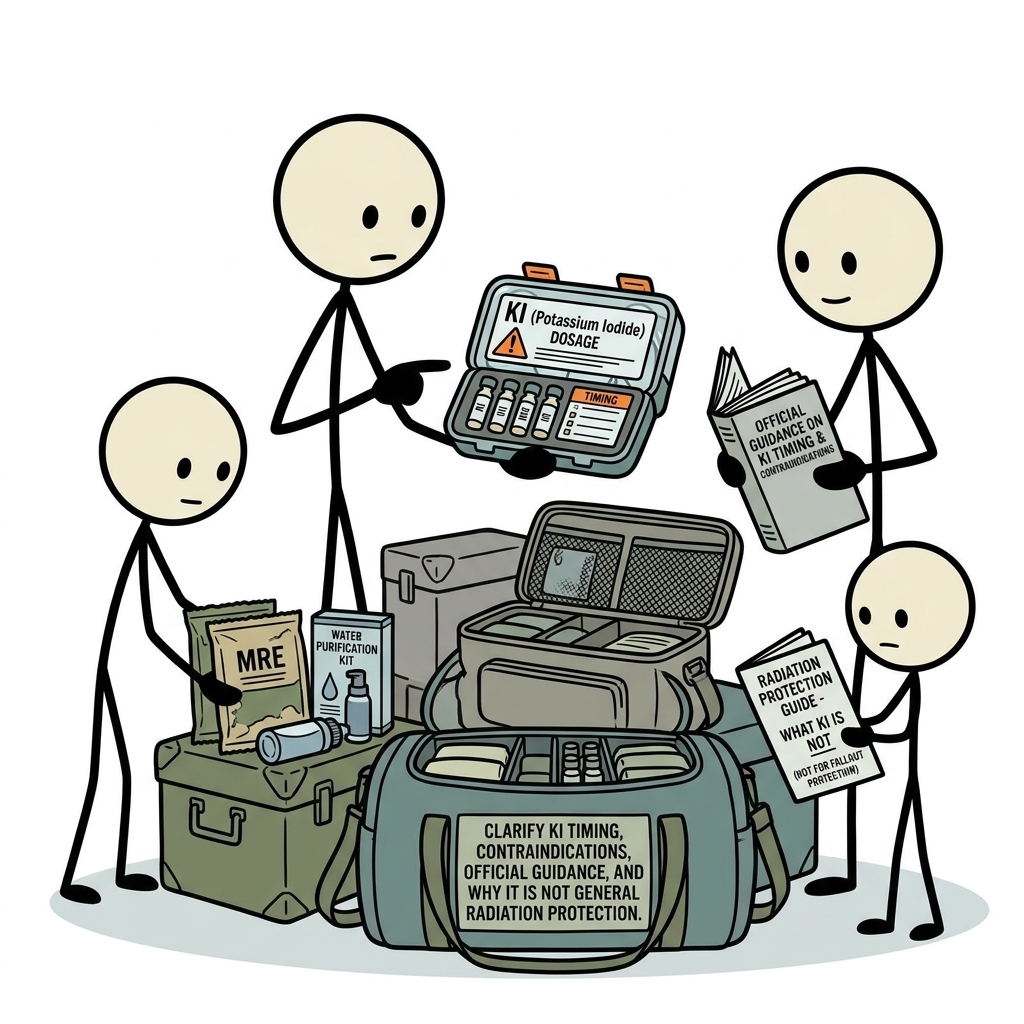
Integrating potassium iodide into your family's emergency plan requires more than just buying a box of tablets and throwing them into a drawer. To ensure your preparedness is practical, safe, and effective, use this structured checklist to guide your planning.
📋 Potassium Iodide Radiation Checklist
- Verify FDA Approval: Ensure your stored KI is explicitly FDA-approved (e.g., IOSAT, ThyroSafe, or ThyroShield). Avoid unverified dietary supplements or raw chemical compounds.
- Check the Expiration Dates: While studies by the FDA's Shelf-Life Extension Program have shown that high-quality, foil-sealed KI tablets can remain stable and effective for up to 10-20 years if stored in cool, dry, and dark conditions, you should routinely inspect your inventory and replace any damaged, discolored, or compromised packaging.
- Stockpile the Correct Quantities: Store at least a 3-to-5-day supply of KI for each member of your household. While a single dose is usually sufficient, localized evacuation delays may require subsequent daily doses under public health direction.
- Pre-Calculate Pediatric Dosages: Do not try to calculate complex fractions of a tablet in a dark, high-stress emergency. Print out the dosage chart provided in this guide, highlight the exact dose required for each member of your family based on their current age/weight, and tape it directly to your KI storage container.
- Include a Tablet Crusher and Mixing Liquid: Keep a small plastic tablet crusher and a small, shelf-stable bottle of chocolate syrup, juice, or condensed milk in your emergency kit. This ensures you can rapidly prepare a palatable liquid dose for infants or young children.
- Document Medical Contraindications: Ensure every adult in your household knows who *cannot* take KI (e.g., those with iodine allergies, DH, HUV, or pre-existing severe thyroid disorders). If a family member has a contraindication, consult their primary care physician *now* to discuss alternative sheltering-in-place strategies.
- Integrate with a NOAA Weather Radio: KI should *never* be taken on a hunch. Keep a functional, battery-operated or hand-crank NOAA Weather Radio in your kit to receive official, real-time broadcasts from local public health officials instructing you when to ingest your KI.
Summary: Empowered, Not Afraid
True emergency preparedness is built on the foundation of accurate, scientific knowledge, not fear. Potassium iodide is a remarkably effective, life-saving tool when used for its specific, intended purpose: protecting the thyroid gland from radioactive iodine-131 during a narrow physiological window. It is a vital asset for families living near nuclear facilities or those building comprehensive emergency kits. However, it is not a magic shield against the wide-ranging hazards of a nuclear event. It cannot replace the absolute necessity of shelter, distance, and time. By understanding the science of
Frequently Asked Questions
What should a potassium iodide radiation plan include?
Start with the immediate safety steps, the supplies and records your household needs, a communication plan, and a regular review schedule. Follow local official guidance during an active emergency.
How often should I review potassium iodide radiation preparations?
Review them at least twice a year and whenever your household, medication, location, or local risks change. Replace expired supplies and practice key steps.
Where can I find reliable emergency guidance?
Use local emergency management alerts and established public-health or emergency-management agencies. A blog guide should support, not replace, official real-time instructions.