⚡ Key Facts
- High-Frequency Zone: Tornado Alley—spanning Texas, Oklahoma, Kansas, Nebraska, South Dakota, Iowa, and Missouri—experiences an average of over 500 tornadoes annually, representing some of the highest concentrations of tornadic activity in the world. For the practical checklist side, use the community emergency preparedness guide.
- Gold Standard Protection: According to the Federal Emergency Management Agency (FEMA), a safe room built to FEMA P-361 standards provides near-absolute protection, surviving wind speeds up to 250 mph (equivalent to an EF5 tornado). For the practical checklist side, use the neighborhood preparedness network.
- The Leading Danger: The Centers for Disease Control and Prevention (CDC) reports that flying debris is the primary cause of injury and death during a tornado, making head protection (such as helmets) a critical, low-cost safety asset.
- Extreme Vulnerability: Over 40% of all tornado-related fatalities occur in mobile or manufactured homes, despite these structures making up a small fraction of regional housing, highlighting the absolute necessity of pre-planned evacuation protocols.
- Crucial Lead Time: While the National Weather Service (NWS) has improved average warning lead times to approximately 9 to 15 minutes, having a dedicated, battery-backed NOAA Weather Radio is the only guaranteed way to receive life-saving alerts when local power grids fail.
For generations, the vast, sweeping plains of the American Heartland have been defined by their beauty, agricultural productivity, and a dramatic atmospheric phenomenon: severe convective storms. For families residing in the heart of Tornado Alley—spanning Texas, Oklahoma, Kansas, Nebraska, South Dakota, Iowa, and Missouri—the arrival of spring and summer brings a familiar shift in vigilance. The sky can transition from a brilliant blue to an eerie, bruised green-black in a matter of hours, signaling the birth of supercell thunderstorms capable of producing destructive tornadoes. However, living in this meteorologically active region does not mean living in a state of perpetual anxiety. True tornado alley preparedness is rooted in science, engineering, and structured planning. By understanding the mechanics of these storms, investing in certified physical protection, establishing redundant alert systems, and addressing specific housing vulnerabilities, families can transform fear into empowering, systematic readiness.
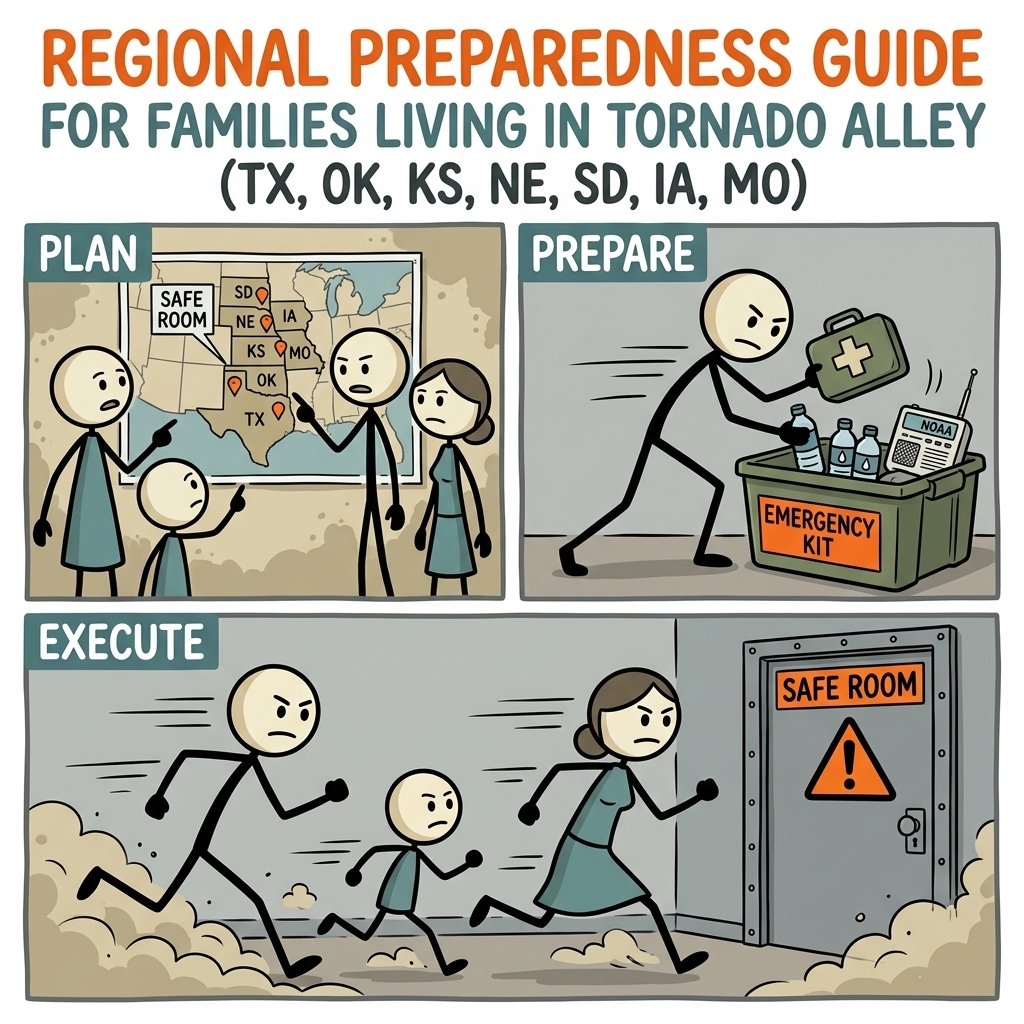
Understanding the Atmospheric Engine of Tornado Alley
To prepare effectively, it is essential to understand why this specific corridor of the United States is uniquely prone to extreme weather. Tornado Alley is not a formally defined geographic boundary, but rather a climatological reality shaped by a collision of contrasting air masses. To the west lie the high, arid plains and the Rocky Mountains; to the south lies the warm, moisture-rich basin of the Gulf of Mexico; and to the north lies the cold, dry expanse of Canada.
During the spring and summer months, these three distinct air masses collide over the central United States. Warm, moist air from the Gulf flows northward near the surface, while cold, dry air from the Rockies pushes eastward aloft. When a strong jet stream moves over this unstable environment, it creates a powerful "dryline" or cold front. This atmospheric boundary acts as a trigger, forcing the warm, buoyant air rapidly upward. As this rising air encounters winds changing speed and direction with height—a phenomenon known as wind shear—it begins to rotate, creating the rotating updrafts (mesocyclones) that spawn supercells and tornadoes.
The Regional Calendar of Severe Weather
While severe storms can occur during any month of the year, **tornado season preparedness** requires understanding the distinct temporal peaks across different states:
- Southern Plains (Texas and Oklahoma): The peak season arrives earliest here, typically running from late March through May. The dryline is highly active in this region, often producing rapid-onset, violent tornadoes.
- Central Plains (Kansas and Nebraska): Peak activity shifts northward into May and June, where wide-open agricultural land allows supercells to travel long distances.
- Northern Plains and Midwest (South Dakota, Iowa, and Missouri): The peak window generally spans June through July. However, Missouri and Iowa also face a significant risk of late-autumn secondary outbreaks in October and November, driven by strong cold fronts pushing south.
Furthermore, geography influences storm behavior. While the flat plains of Kansas and Oklahoma often allow for early visual detection of storms, the rolling hills, dense foliage, and higher humidity of Missouri and Iowa frequently result in "rain-wrapped" tornadoes. These storms are invisible to the naked eye, hidden behind sheets of torrential downpours, making reliance on physical sight impossible and technical alert systems non-negotiable.
The Lifesaving Alert Hierarchy: Watches, Warnings, and Redundant Tech
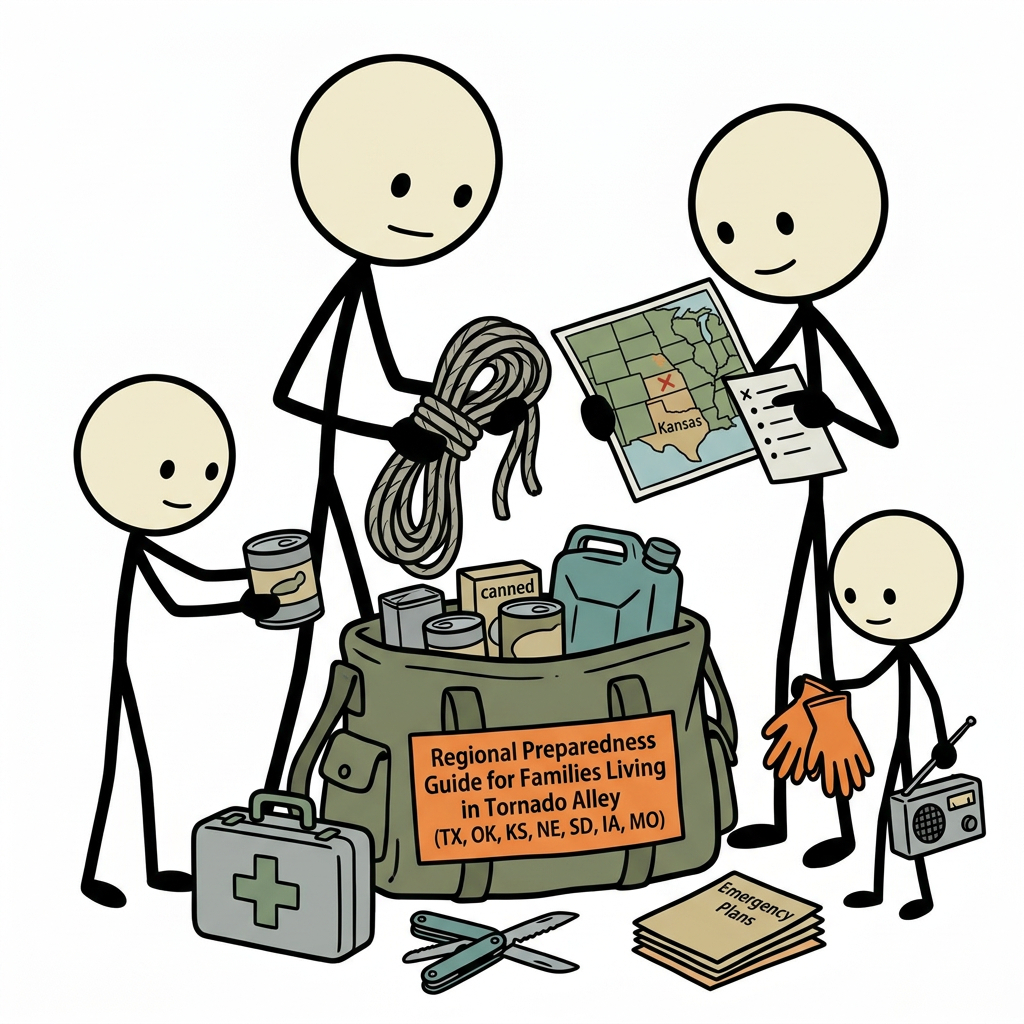
A cornerstone of **midwest tornado prep** is understanding how weather alerts are generated and disseminated. Survival often depends on the minutes between receiving an alert and taking shelter. The National Weather Service (NWS) issues two primary types of alerts, and confusing the two can be a fatal mistake.
Tornado Watch vs. Tornado Warning
The distinction between a watch and a warning is best understood through the lens of preparation versus immediate action:
- Tornado Watch: This means atmospheric conditions are favorable for the development of tornadoes over a broad geographic area. A watch is typically issued hours in advance. Your Action: Review your family emergency plan, check your shelter space, ensure your mobile devices are charged, and monitor local weather reports.
- Tornado Warning: This means a tornado has either been sighted by trained spotters or indicated by meteorological Doppler radar. Danger is imminent. Your Action: Seek shelter immediately in a designated safe room, basement, or interior room. Do not wait to see the tornado or hear the siren.
Establishing a Redundant Alert System
Relying on a single source for emergency alerts is a dangerous single point of failure. If the power grid goes down, your home Wi-Fi and television alerts disappear. If cellular towers are overwhelmed or damaged, mobile networks can fail. To ensure your family receives life-saving information 24/7, implement a redundant system utilizing at least three independent channels.
1. NOAA Weather Radio (All Hazards)
A dedicated NOAA Weather Radio is the most critical piece of alert technology you can own. These devices operate on dedicated VHF radio frequencies broadcast directly from local NWS offices, independent of cellular networks and the commercial power grid. Ensure your radio features S.A.M.E. (Specific Area Message Encoding) technology, which allows you to program the device to alert you only for your specific county, preventing "alert fatigue." Keep the radio plugged into the wall but ensure it has fresh backup batteries installed so it can wake you up with a loud siren in the middle of the night if a warning is issued while you sleep.
2. Wireless Emergency Alerts (WEAs)
WEAs are emergency messages sent by authorized government agencies directly to compatible mobile devices within a targeted geographic area. These alerts bypass normal cellular congestion and emit a distinct, high-pitched tone and vibration. Never disable emergency alerts in your smartphone’s settings. While they are highly effective, remember that they depend on functioning cell towers, which can be knocked offline by the very storm system heading your way.
3. Outdoor Warning Sirens
Perhaps the most misunderstood tool in the alert system is the outdoor warning siren. Sirens are designed strictly to warn people who are outdoors to seek shelter indoors. They are not designed, engineered, or intended to penetrate the walls of a modern, well-insulated home, nor are they meant to wake you up at night. If you rely on sirens while sleeping or watching television inside, you are operating with a dangerous blind spot.
Storm Shelter Options: Engineered Safety for the Plains
When a tornado warning is issued, your destination determines your survival. In areas prone to EF4 and EF5 storms, standard residential construction is often insufficient to withstand the extreme wind loads and localized pressure drops. To achieve "near-absolute protection," families should invest in a dedicated **storm shelter tornado alley** option that meets or exceeds federal standards.
The Crucial Standards: FEMA P-361 and ICC 500
Before purchasing or constructing any shelter, verify that it is certified to meet FEMA P-361 or ICC 500 standards. These specifications are not arbitrary; they are the result of decades of forensic engineering research conducted by organizations like the Texas Tech University Wind Science and Engineering Research Center. To earn these certifications, shelter designs must pass rigorous debris-impact testing, which involves firing a 15-pound 2x4 wooden board at 100 mph directly at the shelter walls and doors to simulate the impact of flying missiles in a 250-mph wind storm. If a manufacturer cannot provide documented proof of compliance with these standards, do not trust them with your family's lives.
| Shelter Type | Primary Benefits | Key Considerations | Ideal For |
|---|---|---|---|
| Underground Garage/Yard Shelter | Complete protection from wind loads; out of sight; space-saving. | Risk of water accumulation; potential for debris to block the exit hatch. | Homes without basements; properties with limited indoor space. |
| Above-Ground Steel/Concrete Safe Room | Easily accessible; no stairs; highly resistant to debris impact; easily relocated. | Requires a certified, reinforced concrete slab for proper anchoring. | Families with mobility challenges; homes built on concrete slabs. |
| In-Home Reinforced Basement Safe Room | Maximum protection; convenient access without leaving the home's interior. | High installation cost; risk of structure collapsing above the shelter. | New home constructions; homes with existing, dry basements. |
Underground vs. Above-Ground: Dispelling the Myth
A common misconception in **oklahoma kansas tornado safety** is that a shelter must be underground to be safe. Decades of post-storm damage assessments have proven that above-ground safe rooms engineered to FEMA P-361 standards perform flawlessly, even in EF5 tornadoes. While the home surrounding the safe room may be completely swept away, the reinforced steel or concrete safe room remains standing, anchored securely to the foundation slab.
Above-ground safe rooms are particularly beneficial for elderly family members, individuals with physical disabilities, or those with limited mobility who cannot safely navigate steep, slippery stairs into an underground pit during a rapid-onset emergency. They are also immune to the flooding issues that can plague underground shelters during the torrential downpours that accompany tornadic supercells.
The Critical Step: Registering Your Shelter
Once your shelter is installed, you must register its exact GPS coordinates with your local emergency management agency or fire department. If a severe tornado strikes your property, the structure of your home may collapse on top of your shelter, trapping you inside under tons of heavy debris. By registering your shelter, local search-and-rescue teams will have your exact location on their maps, allowing them to rapidly locate and excavate your shelter's exit door immediately after the storm passes.
Mobile Home Vulnerabilities and Proactive Evacuation Protocols
There is no sugarcoating the reality: manufactured and mobile homes are highly vulnerable to tornado damage. Even modern manufactured homes built after the 1994 Department of Housing and Urban Development (HUD) wind safety standards are not designed to withstand the rotational forces, uplifting winds, and heavy flying debris of a tornado.
Why Mobile Homes Fail in High Winds
Unlike site-built homes, which are anchored deep into concrete foundations, mobile homes rely on steel straps and ground anchors to resist wind forces. High-velocity winds can easily get underneath the structure, creating massive upward aerodynamic lift. This lift can pull the ground anchors clean out of the soil or snap the tie-down straps, causing the home to roll, disintegrate, or become airborne. Furthermore, the lightweight aluminum or thin wood siding of mobile homes offers virtually zero resistance to heavy flying missiles, such as tree limbs, fence posts, or building materials from neighboring structures.
The "Plan B" Evacuation Trigger
If you live in a mobile home, your shelter plan cannot be to remain in your home. Waiting until a Tornado Warning is issued is too late. By the time the warning sounds, high winds and heavy debris may already make it impossible to safely walk to an alternative shelter. Instead, your emergency plan must rely on a proactive, early-stage trigger:
- The "Watch" is Your Trigger: When the NWS issues a Tornado Watch for your area, this is your signal to pack your emergency supplies and proactively relocate to a pre-identified, sturdy structure. Do not wait for the storm to develop.
- Identify Community Shelters: Know ahead of time where you will go. This could be a nearby public storm shelter, a brick-and-mortar clubhouse within your community, a local church, a commercial building (like a 24-hour grocery store with a designated storm area), or the home of a nearby friend or family member who has a basement or certified safe room.
- Vehicle Safety Fallacies: Never plan to ride out a storm in your vehicle, and never attempt to outrun a tornado in a car once the storm has begun. Vehicles are easily tossed by moderate tornadic winds. Seek shelter in a permanent building. If you are caught in your vehicle with no sturdy building nearby, park the car safely out of the traffic lanes, keep your seatbelt buckled, press your head below the window level, and cover yourself with a blanket or coat to protect against flying glass.
Seasonal Preparation and Home Hardening Strategies
True resilience is built during the calm winter months, long before the first supercell forms on the horizon. By systematically preparing your property and your household, you can significantly reduce the risk of property damage and ensure your family can act without hesitation when severe weather strikes.
1. Structural Reinforcements (Home Hardening)
While you cannot make a standard wood-frame home completely tornado-proof, you can take concrete steps to reinforce its structural integrity, helping it withstand the peripheral winds of weak-to-moderate tornadoes (EF0 to EF2), which make up over 90% of all recorded events.
- Reinforce the Garage Door: The garage door is historically the weakest structural point of a house. If high winds blow the garage door inward, the garage becomes pressurized, pushing upward on the ceiling and outward on the walls, which often leads to the catastrophic loss of the entire roof. Install a wind-load-rated garage door (capable of withstanding winds up to 130 mph) or purchase a temporary vertical bracing kit that you can manually install when severe weather is forecast.
- Install Hurricane Clips and Straps: During construction or a roof replacement, ensure your contractor installs metal hurricane ties (clips or straps) that securely connect the roof rafters to the wall plates, and the wall plates to the foundation. This creates a continuous load path, helping the house resist the immense uplift forces of high winds.
- Maintain Surrounding Vegetation: Dead, dying, or overhanging tree limbs pose a massive threat during high-wind events. Hire a certified arborist to regularly trim deadwood and remove large branches that could fall directly onto your roof or windows. Secure loose outdoor items—such as patio furniture, trampolines, charcoal grills, and potted plants—which can quickly transform into deadly, window-shattering projectiles.
2. The Family Emergency Plan and the "Ten-Minute Drill"
A written emergency plan is useless if it has never been practiced. Establish a family emergency communication plan plan that outlines how you will contact one another if cell service is down, and designate a specific out-of-area contact (such as a relative in another state) who can act as a central coordinator for check-ins.
Conduct regular "Ten-Minute Drills" with your children. Start a timer without warning and have everyone practice dropping what they are doing, grabbing the emergency kits, putting on their protective gear, and gathering in the designated shelter space. Practicing this routine builds muscle memory, reducing panic and confusion when a real warning is issued.
3. The Ultimate Go-Bag & Shelter Kit Checklist
Do not wait until a warning is issued to gather your survival supplies. Keep a dedicated, waterproof container permanently stored inside your storm shelter or designated safe room. Your kit should contain the following items, designed to sustain your family during the critical 72 hours following a disaster:
- Helmets for the Entire Family: This is the single most overlooked safety item. Keep bicycle, motorcycle, or athletic helmets in your shelter. Put them on immediately during a warning. Research from the CDC indicates that the vast majority of tornado-related fatalities and severe injuries are caused by blunt-force trauma to the head from flying debris.
- Sturdy, Closed-Toe Shoes: If your home is damaged, the ground will be littered with shattered glass, exposed nails, and splintered wood. Keep a pair of heavy boots or sturdy sneakers for every family member inside the shelter. Do not seek shelter barefoot or in sandals.
- Water and Non-Perishable Food: Store at least one gallon of Water Calculator per day for three days, along with high-calorie, non-perishable foods (granola bars, canned meats, dried fruits) and a manual can opener.
- First-Aid Kit and Critical Medications: A comprehensive medical kit containing trauma dressings, gauze, antiseptic wipes, splints, and at least a seven-day supply of essential prescription medications.
- Flashlights, Lanterns, and Extra Batteries: Avoid using candles, which pose a severe fire hazard if gas lines are ruptured during the storm. Use high-quality LED flashlights or headlamps.
- Portable Power Banks: Keep multiple fully charged USB power banks in your kit to recharge your mobile devices and NOAA weather radios.
- Important Documents in a Waterproof Container: Store copies of your insurance policies, deed or lease agreements, birth certificates, passports, social security cards, and essential medical records. Additionally, take a video walkthrough of your home’s interior and exterior before storm season begins, uploading it to secure cloud storage to facilitate insurance claims if your home is damaged.
Embracing a Culture of Preparedness
Living in Tornado Alley is a rewarding experience, defined by tight-knit communities, stunning landscapes, and a resilient spirit. Severe storms are an undeniable part of the geography, but they do not have to dictate your peace of mind. By taking a proactive, systematic approach—understanding the science of these storms, investing in certified safe rooms, establishing redundant alert channels, and practicing emergency drills—you can protect your household from the unpredictable forces of nature. True preparedness is not about living in fear; it is about building the physical and mental infrastructure that allows your family to stand resilient, confident, and safe, no matter which way the wind blows.
Frequently Asked Questions
What is the best storm shelter option for tornado alley homes?
Below-ground is safest: a basement or in-ground storm shelter (Survive-A-Storm or FreedomSky brands) offers the highest protection. For homes without basements: a FEMA-rated above-ground safe room inside the home. Mobile homes: LEAVE immediately for a substantial building — mobile homes offer virtually no protection from even an EF1 tornado.
What alert systems should tornado alley residents use?
The NOAA Weather Radio with SAME (Specific Area Message Encoding) wakes you during nighttime tornado warnings — more reliable than apps when you're asleep. Supplement with a local emergency alert app (WeatherBug, NWS app), outdoor siren awareness (know your local system), and sign up for your county's emergency notification system.
What makes tornado alley tornadoes more dangerous than in other regions?
Tornadoes in tornado alley are statistically larger, longer-tracked, and more frequent. The flat terrain allows storms to travel without being disrupted by mountains or hills. Multiple tornadoes can occur from one storm system. The EF5 tornadoes that cause the highest casualties (Joplin 2011, Moore 2013) occur primarily in this region.