⚡ Key Facts
- Preventable Mortality Driver: According to the Centers for Disease Control and Prevention (CDC), non-fatal and fatal injuries—primarily motor vehicle collisions and drownings—are the leading cause of preventable death among international travelers, far outpacing infectious diseases.
- Gastrointestinal Vulnerability: CDC Travelers' Health surveillance reports that between 30% and 70% of international travelers experience traveler’s diarrhea depending on the destination, requiring immediate access to oral rehydration therapy and specific antimicrobials.
- Commercial Kit Inadequacy: Standard off-the-shelf first aid kits frequently allocate up to 70% of their volume to minor adhesive bandages and expired alcohol prep pads, completely omitting life-saving hemorrhage control items endorsed by the American College of Surgeons’ Stop the Bleed program.
- Regulatory Sharps Restrictions: The Transportation Security Administration (TSA) permits medical scissors in carry-on luggage only if the blade measures less than 4 inches from the pivot point; however, international aviation authorities across transit hubs like London Heathrow and Tokyo Haneda frequently confiscate all scissors regardless of length.
- Emergency Response Latency: In rural or developing regions, local Emergency Medical Services (EMS) response intervals can exceed several hours, demanding that a portable emergency first aid platform serve as a self-contained prolonged field care module rather than a 10-minute bridge to definitive care.
At 0200 hours on a switchback road outside Oaxaca, your colectivo brakes hard, slides across wet gravel, and flips onto its passenger side. The windshield shatters inward, leaving two travelers with deep glass lacerations, one with a compound radial fracture, and everyone dazed under a failing dome light. In moments like this, reaching into your daypack for a generic, store-bought plastic first aid kit will fail you. You do not need twenty identical neon-colored adhesive strips, plastic toy tweezers, or a single packet of expired burn cream. You need immediate, high-grade bleeding control, structural immobilization tools, sterile wound closure materials, and the pharmacological baseline to stabilize human physiology until regional help arrives. Designing an elite travel first aid kit is not about hoarding supplies for every theoretical scenario; it is about establishing a ruthless, modular, and lightweight capability matrix tailored to the realities of transit, overseas infrastructure deficits, and remote terrain. For the practical checklist side, use the community emergency preparedness guide.
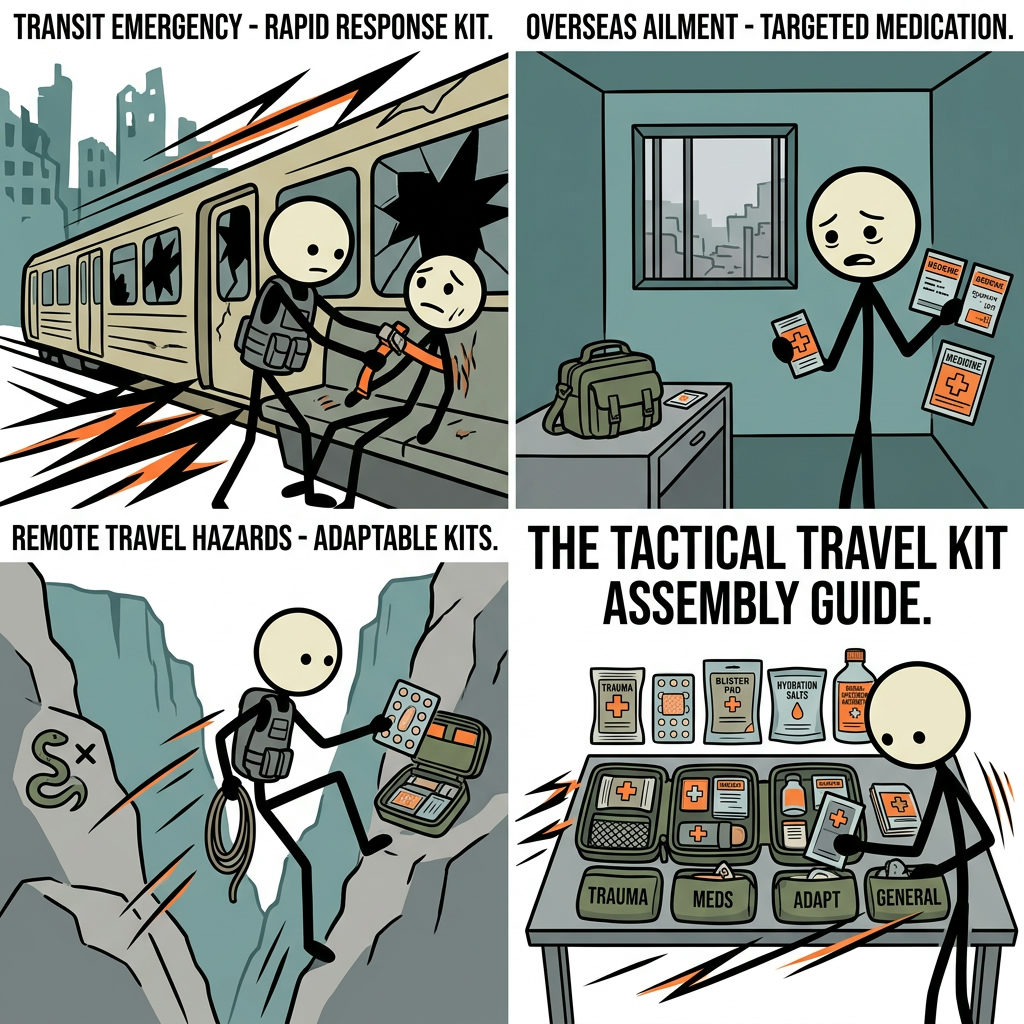
The Failure of Commercial Kits and the Tactical Philosophy of Modular Medicine
The vast majority of commercial first aid kits sold at retail outdoor stores are engineered for marketing appeal, not tactical efficacy. Manufacturers inflate "piece counts" to 100, 200, or 300 items by packing dozens of redundant adhesive strips, flimsy cotton applicators, and micro-dose medication sachets that leak under cabin pressure. These systems feature cheap nylon cases without organization, resulting in a chaotic mess when you need to deploy critical gear in the dark or under acute stress. When building a genuine DIY travel medical kit, you must abandon piece-count metrics and adopt a protocol-driven approach modeled after tactical combat casualty care (TCCC) and the Wilderness Medical Society (WMS). For the practical checklist side, use the neighborhood preparedness network.
A functional medical loadout relies on tiered access. If a passenger on a long-distance bus severs a radial artery, you have less than three minutes before irreversible shock sets in; you cannot afford to unpack dirty socks, battery banks, and laundry soap to locate a pressure bandage. Conversely, you should not occupy precious daypack space carrying three weeks of broad-spectrum antimicrobials that belong in your hotel basecamp lockbox. Modern travel preparedness dictates a three-tier modular architecture designed to scale with your distance from definitive medical facilities. For the practical checklist side, use the emergency communication plan.
Tier 1: On-Body EDC (Immediate Transit & Severe Trauma)
This micro-kit lives directly on your person or within an exterior quick-access pocket of your personal item. Its footprint is comparable to an index card pouch, weighing under 8 ounces. The Tier 1 kit addresses only two operational realities: life-threatening compressible hemorrhage and immediate physical stabilization. It contains zero pills, zero creams, and zero comfort items. If an improvised explosive device, vehicle collision, or violent encounter occurs, Tier 1 is what stops the clock on preventable exsanguination. For the practical checklist side, use the family emergency planning guide.
Tier 2: The Daypack Transit Module (En Route & Daily Excursions)
Sized roughly equivalent to a 1-liter pouch (such as a 500D Cordura zippered organizer), the Tier 2 module stays inside your daypack throughout train rides, border crossings, and mountain hikes. It expands capability to manage moderate lacerations, acute musculoskeletal sprains, aggressive gastrointestinal distress, allergic reactions, and environmental exposure. This is your primary working kit for everyday travel friction, designed to treat issues that disrupt travel without necessarily threatening life. For the practical checklist side, use the real-world emergency scenarios guide.
Tier 3: The Basecamp/Deep Luggage Reserve (Extended Stays & Re-Supply)
Stored in your checked roller bag or central expedition duffel, Tier 3 serves as the master medical depot. It houses secondary prescription reserves, prolonged field care supplies, diagnostic tools (like digital thermometers and pulse oximeters), specialized climate countermeasures (such as water purification tablets and rehydration reserves), and diagnostic testing kits. If local pharmacies are shuttered due to a national holiday or civil unrest, Tier 3 keeps your team self-sufficient for up to 14 days.
High-Consequence Trauma Management: The Transit Survival Core
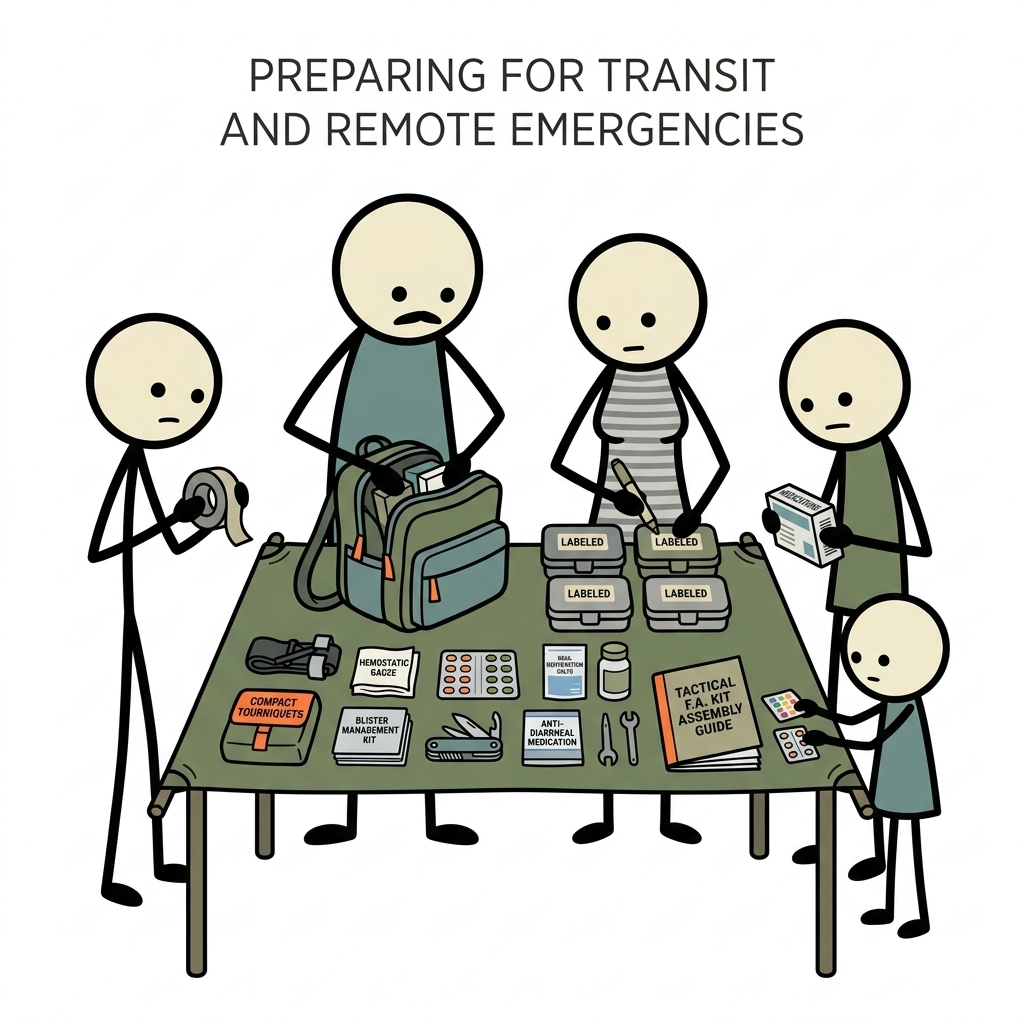
According to the American Red Cross and international trauma registries, the most preventable cause of death following traumatic mechanical injury is massive external bleeding. Remote transit hubs, developing-world roadways, and chaotic transit terminals are high-risk zones for vehicle impacts and blunt-force trauma. Your portable emergency first aid setup must incorporate proven trauma gear that performs under extreme conditions.
Every severe trauma protocol begins with a primary survey: the MARCH algorithm (Massive Hemorrhage, Airway, Respiration, Circulation, Hypothermia). Incorporating this tactical methodology into civilian travel transforms how you select and deploy supplies.
- Windlass Tourniquet: Carry exclusively a Committee on Tactical Combat Casualty Care (CoTCCC)-approved windlass tourniquet, such as the Combat Application Tourniquet (C-A-T) Gen 7 or the SOF Tactical Tourniquet-Wide (SOFTT-W). Counterfeit tourniquets flood online marketplaces; purchase directly from authorized medical distributors. Ensure the tourniquet is pre-staged (windlass secured, band routed through the buckle with the friction loop open) and vacuum-sealed or kept in a UV-protective sleeve to prevent mechanical failure.
- Hemostatic Gauze: Pack at least one z-folded strip of hemostatic dressing impregnated with kaolin (such as QuikClot Combat Gauze) or chitosan (such as Celox Rapid). Unlike loose powders that can blow into the eyes or rinse away in deep arterial wounds, z-folded gauze allows rapid, controlled mechanical wound packing directly against the bleeding vessel wall.
- Modular Compression Bandage: An authentic Israeli Emergency Bandage (4-inch) or an H&H Thin H-Bandage provides severe wound tamponade, securing packed wounds with upwards of 30 pounds of directed pressure while serving as an effective secondary dressing.
- Vented Chest Seals: Blunt chest trauma from steering wheel impacts or penetrating fragment wounds can compromise negative intrathoracic pressure, rapidly progressing to tension pneumothorax. A compact two-pack of vented chest seals (such as HyFin Vent Compact) ensures you can seal both entry and exit thoracic wounds without risking air entrapment.
- Nitrile Barrier Gloves: Always carry two pairs of 5-mil to 6-mil heavy-duty nitrile gloves in high-visibility blue or tan. In low-resource environments, bloodborne pathogens—including Hepatitis B, Hepatitis C, and HIV—present significant biological hazards to responders. Avoid clear vinyl gloves, which tear easily under tension and degrade quickly in humid climates.
When packing trauma hardware for commercial air transit, consider airport security screening regulations carefully. While pressure bandages, hemostatic gauze, and tourniquets pass through TSA checkpoints without issue, some foreign airport screeners mistake the metal windlass of a SOFTT-W for a weapon component. Opting for a C-A-T Gen 7 (which uses reinforced polymer components) reduces secondary screening friction during domestic and international departures.
The Internal Threat: Managing Infectious, Enteric, and Systemic Pathogens
While severe trauma represents the most critical immediate threat, systemic illness is statistically the most probable disruption to your travel itinerary. The World Health Organization (WHO) and CDC identify travel-acquired gastrointestinal infections, vector-borne illnesses, and acute systemic pain as the top drivers of unplanned medical visits overseas. When constructing a DIY travel medical kit, precision pharmaceuticals organized into waterproof, unit-dose packaging are essential.
Gastrointestinal Countermeasures: The Dehydration Defense
Traveler’s diarrhea is typically bacterial (caused by enterotoxigenic Escherichia coli, Campylobacter, or Salmonella species), viral (such as Norovirus), or parasitic (including Giardia and Cryptosporidium). The primary danger of acute gastroenteritis is not the stool volume itself, but severe hypovolemic dehydration and subsequent electrolyte collapse.
Pack a minimum of six to ten packets of modern Oral Rehydration Salts (ORS) formulated according to current WHO standards. These packets leverage the sodium-glucose cotransport mechanism in the small intestine, maximizing fluid uptake even during active vomiting and diarrhea. Pair this hydration strategy with a tiered medication approach:
- Bismuth Subsalicylate (Pepto-Bismol caplets): Provides anti-secretory, mild anti-inflammatory, and weak antimicrobial action. Ideal for mild traveler's diarrhea and broad abdominal discomfort without the systemic risks of motility suppressants.
- Loperamide (Imodium): A synthetic opioid agonist that reduces intestinal peristalsis. Crucial clinical note: Reserve loperamide strictly for emergency transit windows (such as an un-skippable 8-hour bus journey with no functional latrine). Never administer loperamide if the patient presents with a high fever or bloody stool (dysentery), as paralyzing bowel motility can cause toxic megacolon.
- Prescription Antimicrobial (Travel Clinic Consultation): Consult an accredited travel medicine physician for your destination. Many clinicians prescribe a single-dose regimen of Azithromycin (effective against fluoroquinolone-resistant Campylobacter prevalent in Southeast Asia and South America) or Rifaximin (a non-absorbed rifamycin derivative effective against non-invasive E. coli strains in select regions). Carry these strictly in compliance with professional medical guidance.
Systemic Symptom Control and Analgesics
Pain and inflammation impair situational awareness, sleep, and physical mobility. Your medical kit should feature dual-class analgesia to allow safe, staggered dosing without exceeding toxic limits. Pack blister strips of Ibuprofen (200 mg) for peripheral, musculoskeletal inflammation, alongside Acetaminophen/Paracetamol (500 mg) for central analgesia and antipyretic control.
Do not underestimate acute allergic triggers. Environmental pollens, unlisted ingredients in street foods, and insect stings can trigger sudden histamine reactions. Carry Cetirizine or Loratadine (10 mg) for non-drowsy daytime management of mild urticaria, paired with Diphenhydramine (25 mg to 50 mg) for severe evening reactions or to serve as a secondary sleep aid during severe circadian disruption. If you or any member of your travel party has a documented history of systemic anaphylaxis, pack two auto-injectable epinephrine units (0.3 mg) that remain on your person at all times, accompanied by a valid physician’s prescription in English and the destination language.
Minor Wound Architecture, Orthopedics, and Environmental Shielding
Minor skin insults represent secondary infection portals that quickly escalate in humid, tropical, or backcountry environments. Bacterial species like Staphylococcus aureus and Streptococcus pyogenes thrive in equatorial climates, turning a simple blister or neglected coral scratch into cellulitis within 48 hours. Proper packing first aid for travel demands medical supplies that protect skin integrity under persistent sweat, dirt, and friction.
Mechanical Irrigation and Wound Prep
Forget heavy, space-consuming 500 mL bottles of sterile saline. Pack a sterile 20 mL to 30 mL Luer-lock syringe paired with an 18-gauge blunt irrigation cannula or clean plastic irrigation tip. By drawing up clean, potable (or boiled and cooled) water through the syringe, you can generate 8 to 12 pounds per square inch (psi) of hydrodynamic pressure. This pressure level is clinically proven to wash away bacteria, gravel, and necrotic tissue without causing cellular trauma to exposed healthy margins.
Supplement your irrigation hardware with single-dose ampoules of Povidone-Iodine (10% solution) or chlorhexidine prep swabs. Allow antiseptics to dry completely on intact skin surrounding the wound margin; do not pour harsh antiseptics directly into deep, viable tissue beds, which delays wound healing and promotes tissue necrosis.
Advanced Blister and Laceration Closure
Standard cloth tape and cheap plastic bandages lose adhesion the moment skin begins sweating or encounters water. Construct an orthopedic and wound closure submodule utilizing high-tenacity, moisture-resistant components:
- Reinforced Skin Closures (Steri-Strips): Pack multiple packs of 1/4-inch by 3-inch Steri-Strips alongside a miniature ampoule of Tincture of Benzoin. Applying Benzoin to intact skin flanking a clean, linear laceration creates a tacky substrate that keeps closure strips secure for days, approximating margins that would otherwise require field sutures.
- Hydrocolloid Blister Dressings: Traditional moleskin acts primarily as a friction buffer, but hydrocolloid pads interact with wound exudate to form a protective gel bed that speeds re-epithelialization while remaining bonded through heavy sweat and swimming.
- Cohesive Elastic Wrap (Coban / Vet Wrap): A 2-inch or 3-inch roll of cohesive wrap clings to itself without adhering to skin or body hair. It serves as an exceptional secondary dressing to compress wounds, secure splints, and provide light joint support without requiring safety pins or medical tape.
- Structural Aluminum Splint: A 24-inch or 36-inch SAM Splint can be rolled or flat-folded to fit cleanly into the hydration sleeve of a tactical daypack. When folded into a structural C-curve or structural curve profile, this radiolucent, foam-covered aluminum core immobilizes fractured wrists, forearms, or ankles.
Legal Compliance, TSA Protocols, and Customs Strategy
Building the world’s most sophisticated travel first aid kit matters little if international border authorities confiscate your components at customs or detain you for carrying illicit compounds. Every country maintains unique pharmacological regulations, and ignorance of local legislation will not protect you from severe legal penalties.
The Blade Dilemma: Trauma Shears in Air Transit
Trauma shears are indispensable for rapidly slicing through heavy denim, technical outerwear, and seat belts to assess bleeding wounds. While TSA guidelines state that scissors with blades measuring 4 inches or less from the pivot point are acceptable in domestic carry-on baggage, field application reveals inconsistent enforcement. International aviation bodies—including those throughout the European Union, Australia, and East Asia—frequently enforce zero-blade tolerances.
If you travel carry-on only, carry a pair of trauma shears specifically certified with blunt, rounded ends and blades under 3.5 inches, or purchase an inexpensive pair you can sacrifice at a screening checkpoint without disrupting the rest of your kit. Alternatively, stow your premium 7.25-inch fluoropolymer-coated shears in checked baggage, or consider a dedicated rescue hook (such as the Benchmade 7 Hook), which often draws less negative scrutiny from security personnel while cutting seatbelts and clothing just as effectively.
Pharmaceutical Legality and Border Crossings
Narcotic analgesics, benzodiazepines, stimulants, and even common over-the-counter decongestants are subject to severe international restrictions. For example, pseudoephedrine and codeine are strictly banned in Japan under their Anti-Stimulants Control Act, carrying severe detention penalties. The United Arab Emirates (UAE) and Singapore maintain rigorous schedules of controlled substances that require pre-arrival digital permits even for transit passengers.
Protect your medical clearance by strictly following these international travel pharmacology protocols:
- Preserve Original Packaging: Carry all prescription medications in their original pharmacy-dispensed amber vials or labeled blister packs, clearly displaying your legal name, the prescribing physician's name, the drug’s generic identifier, and the specific dosage instructions.
- Carry an Official Medical Declaration: Request a signed, dated letter on formal clinic letterhead from your prescribing physician. The letter should list all ongoing medical conditions, alongside the generic chemical names, dosages, and daily administration schedules for every carried prescription drug.
- Minimize Quantities: Never travel overseas with more than a 30- to 90-day personal supply of any prescription pharmaceutical. Carrying large quantities raises suspicion of unauthorized commercial distribution among customs inspectors.
- Consult Official Embassy Portals: Always verify the legal status of your medications directly through the destination country's embassy website well in advance of departure, rather than relying on forum posts or commercial travel blogs.
The Compact First Aid Checklist (The Protocol Blueprint)
The following compact first aid checklist outlines a comprehensive, battle-tested baseline loadout. It is organized into clean functional modules, balancing total weight, spatial footprint, and tactical utility for global transit and remote travel.
Module A: Severe Trauma & Bleeding Control (Carry-On / Daypack Exterior)
- [ ] 1x C-A-T Gen 7 Tourniquet (or SOFTT-W, stowed and pre-staged)
- [ ] 1x QuikClot Combat Gauze (Z-folded, 3 in x 4 yd hemostatic strip)
- [ ] 1x 4-inch Israeli Emergency Bandage (or H&H Thin H-Bandage)
- [ ] 1x Pair HyFin Vent Compact Chest Seals (entry/exit pair)
- [ ] 2x Pairs Heavy-Duty Nitrile Examination Gloves (size Large, non-latex)
- [ ] 1x Mini Trauma Shears (sub-4-inch blade if carry-on; full-size in checked luggage)
- [ ] 1x Roll Surgical Paper Tape or Mini Gorilla Tape (1 in x 5 yd flat-fold)
Module B: Minor Wound Care & Orthopedics (Daypack Core)
- [ ] 1x SAM Splint (36-inch or 24-inch, flat-folded configuration)
- [ ] 1x Roll Cohesive Elastic Wrap (Coban, 3 in x 5 yd)
- [ ] 1x Irrigation Syringe (20 mL Luer-lock) with blunt plastic cannula
- [ ] 2x Packets Steri-Strips (1/4 in x 3 in, reinforced)
- [ ] 2x Ampoules Tincture of Benzoin (skin adherent for closures)
- [ ] 4x Hydrocolloid Blister Pads (assorted oval sizes)
- [ ] 4x Sterile Non-Adherent Gauze Pads (3 in x 4 in)
- [ ] 6x Povidone-Iodine or Chlorhexidine Antiseptic Prep Swabs
- [ ] 1x Tube Bacitracin or Polysporin Topical Antibiotic Ointment (travel-sized)
- [ ] 1x Fine-point Splinter Tweezers (surgical stainless steel)
Module C: Internal Medicine & Gastrointestinal Defense (Daypack Core)
- [ ] 6x World Health Organization (WHO) Oral Rehydration Salts (ORS) packets
- [ ] 16x Loperamide Tablets (2 mg, anti-diarrheal motility suppressant)
- [ ] 24x Bismuth Subsalicylate Caplets (Pepto-Bismol equivalent)
- [ ] 16x Ibuprofen Tablets (200 mg, NSAID)
- [ ] 16x Acetaminophen/Paracetamol Caplets (500 mg, analgesic/antipyretic)
- [ ] 10x Cetirizine or Loratadine Tablets (10 mg, non-drowsy antihistamine)
- [ ] 10x Diphenhydramine Caplets (25 mg, sedating antihistamine)
- [ ] 1x Destination-Specific Prescription Antibiotic (e.g., Azithromycin, physician-directed)
- [ ] 12x Antacid Chewable Tablets (calcium carbonate)
- [ ] 10x Ondansetron ODT (4 mg, prescription antiemetic, if clinically authorized)
Module D: Diagnostic, Environmental & Field Operations (Basecamp / Checked Luggage)
- [ ] 1x Compact Digital Clinical Thermometer
- [ ] 1x Fingertip Pulse Oximeter (evaluates respiratory illness and altitude adaptation)
- [ ] 1x Foil Emergency Space Blanket (mylar, preserves core body temperature)
- [ ] 1x Strip Chlorine Dioxide Water Purification Tablets (e.g., Aquatabs or Katadyn Micropur)
- [ ] 1x Small Broad-Spectrum Sunscreen (SPF 50+, Zinc Oxide preferred)
- [ ] 1x Insect Repellent (Picaridin 20% or high-concentration DEET)
- [ ] 1x Water-resistant write-in-the-rain notebook and tactical ballpoint pen
- [ ] 1x Heavy-duty, resealable waterproof storage bags (Aloksak or heavy Ziploc)
Maintenance Protocols: Kit Auditing and Practical Training
Assembling the right equipment is only half of the preparation equation. A medical kit is a perishable operational platform. Medications degrade under thermal cycling, moisture breaks down paper packaging, and adhesive compounds lose viscosity over time when exposed to high humidity and intense vibration during rugged travel.
Every six months—and strictly thirty days prior to departing on any major international or remote journey—perform a systematic teardown of your medical modules. Inspect every pharmaceutical blister pack for mechanical perforations or chalking tablets. Replace any liquid or topical ointment that shows signs of hardening, separation, or expired efficacy. Check your C-A-T tourniquet band to ensure lint, dirt, and pet hair have not accumulated inside the hook-and-loop fields, which drastically degrades the shear strength required to sustain arterial occlusion.
Most importantly, equipment without muscle memory leads to panic and hesitation during an emergency. Seek accredited training through American Red Cross First Aid/CPR programs, the American College of Surgeons' Stop the Bleed courses, or Wilderness First Responder (WFR) curricula developed by institutions like the Wilderness Medical Associates or NOLS. Familiarize yourself with applying your tourniquet single-handedly in total darkness, practice packing an improvised wound simulator with training gauze, and understand the indications and contraindications of every single pharmaceutical in your pouch.
True emergency preparedness requires moving past fear and wishful thinking to build genuine, tested capability. When transit systems break down, ocean currents turn hostile, or a travel partner suffers an acute illness thousands of miles from an English-speaking intensive care unit, your level of physical preparation determines the outcome. By selecting field-proven trauma components, targeting systemic gastrointestinal risks, respecting international regulatory frameworks, and running regular training drills, your custom travel kit becomes an indispensable life-safety system—protecting your health and ensuring your safe return home, no matter where your travels take you.
Frequently Asked Questions
What core supplies belong in a travel first aid kit?
A dependable kit should include assorted adhesive bandages, sterile gauze pads, medical tape, antiseptic wipes, blister treatments like moleskin, over-the-counter pain relievers, antihistamines, anti-diarrheal tablets, and compact tweezers.
Can I pack a travel first aid kit in my airplane carry-on?
Yes, but sharp instruments such as scissors with blades over four inches must go in checked bags, and all liquid antiseptics or ointments must comply with standard liquid limits unless declared as medically necessary.
How much prescription medication should I carry when traveling?
Pack enough prescription medication for the full trip duration plus an additional 3 to 7 days' supply for potential travel delays, keeping all drugs in original labeled bottles with copies of the prescriptions.
How should a travel kit differ for international or remote destinations?
Remote and international kits should add oral rehydration salts, water purification tablets, destination-specific medications like malaria prophylactics, pressure dressings for trauma, and documentation of essential medical history.
How often should a travel first aid kit be inspected and refreshed?
Inspect your kit at least every six months and prior to any trip to replace expired pharmaceuticals, replenish depleted items, and confirm that packaging seals remain airtight and dry.