⚡ Key Facts
- Abrasive Composition: Volcanic ash is not soft like wood ash; it consists of pulverized rock, minerals, and volcanic glass with a Mohs hardness of 5 to 6, making it highly abrasive and corrosive. For the practical checklist side, use the community emergency preparedness guide.
- Widespread Impact: According to the United States Geological Survey (USGS), volcanic ash can travel hundreds of miles downwind, meaning communities far from an active volcano must still prepare for heavy ashfall. For the practical checklist side, use the neighborhood preparedness network.
- Structural Threat: Just 4 inches of wet volcanic ash can weigh up to 120 pounds per square foot, a load that exceeds the structural capacity of many residential roofs and can trigger catastrophic collapses.
- Respiratory Hazard: The Environmental Protection Agency (EPA) warns that volcanic ash contains fine particulate matter (PM2.5 and PM10) that can bypass the body's natural filtration systems, leading to severe respiratory inflammation and long-term lung damage.
When a volcano erupts, the immediate dangers of lava flows and pyroclastic surges grab the headlines, but the most widespread, disruptive, and long-lasting hazard is volcanic ash. Unlike the soft, organic ash left behind by a campfire, volcanic ash is a mix of jagged particles of rock, minerals, and volcanic glass. It is heavy, highly abrasive, conducts electricity when wet, and does not dissolve in water. Whether you live in the shadow of Mount Rainier, near the active vents of Hawaii, or hundreds of miles downwind in a region prone to atmospheric ash transport, understanding the mechanics of volcanic hazards is essential. By implementing a rigorous, science-backed approach to volcano preparedness, you can safeguard your family’s health, protect your property, preserve your Water Calculator, and navigate the complex recovery process safely.
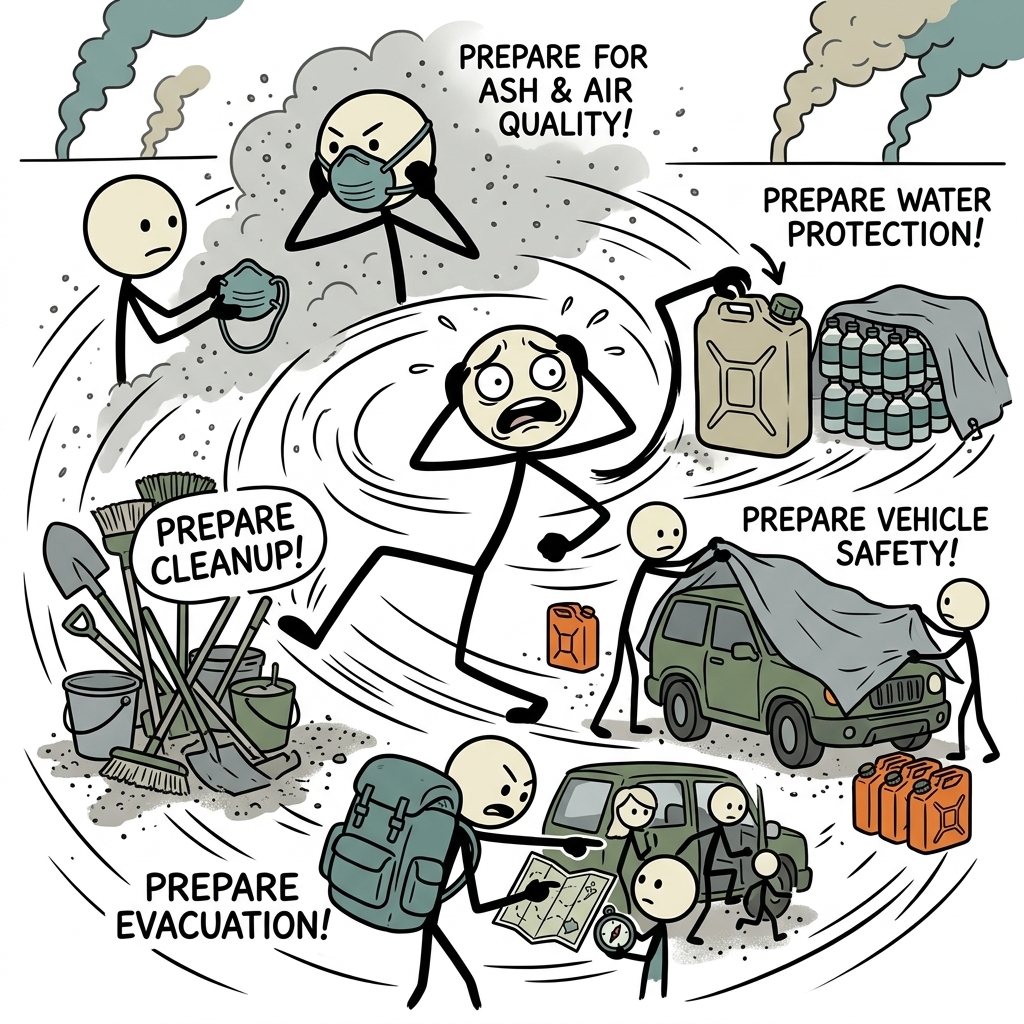
Understanding Volcanic Ash and Air Quality
Volcanic ash is a primary respiratory hazard. When ejected into the atmosphere, these microscopic, glass-like shards remain suspended for days or even weeks. The Federal Emergency Management Agency (FEMA) and the Centers for Disease Control and Prevention (CDC) emphasize that inhalation of these fine particulates can cause immediate respiratory distress, particularly for individuals with pre-existing conditions like asthma, bronchitis, or chronic obstructive pulmonary disease (COPD).
The danger lies in the size of the particles. Coarse particles irritate the eyes, nose, and throat, but fine particles (PM2.5) penetrate deep into the alveoli of the lungs. Over time, exposure to crystalline silica within the ash can lead to silicosis, a chronic and irreversible lung disease. To mitigate these risks, your volcano preparedness emergency preparedness plan must include high-efficiency respiratory protection for every member of your household.
Essential Personal Protective Equipment (PPE)
- N95 or P100 Respirators: Standard surgical masks or cloth face coverings do not provide adequate protection against fine volcanic particulates. Ensure you stock NIOSH-approved N95 or, ideally, P100 respirators, which filter out 99.97% of airborne particles.
- Form-Fitting Goggles: Volcanic ash can cause corneal abrasions. Stock non-vented or indirectly vented safety goggles. Avoid wearing contact lenses during ashfall, as particles can become trapped behind the lens, causing severe eye damage.
- Full-Body Coverage: Wear long-sleeved shirts, long pants, heavy gloves, and closed-toe boots when venturing outside to prevent skin irritation and chemical burns from acidic ash residue.
In addition to personal gear, you must secure your indoor air quality. Turn off all heating, ventilation, and air conditioning (HVAC) systems immediately upon receiving an ashfall advisory from the National Oceanic and Atmospheric Administration (NOAA). Seal all fresh-air intakes and close fireplace dampers. Use portable HEPA air purifiers inside designated clean rooms to scrub any particulates that migrate indoors through micro-fissures in doors and windows.
Safeguarding Your Water Supply
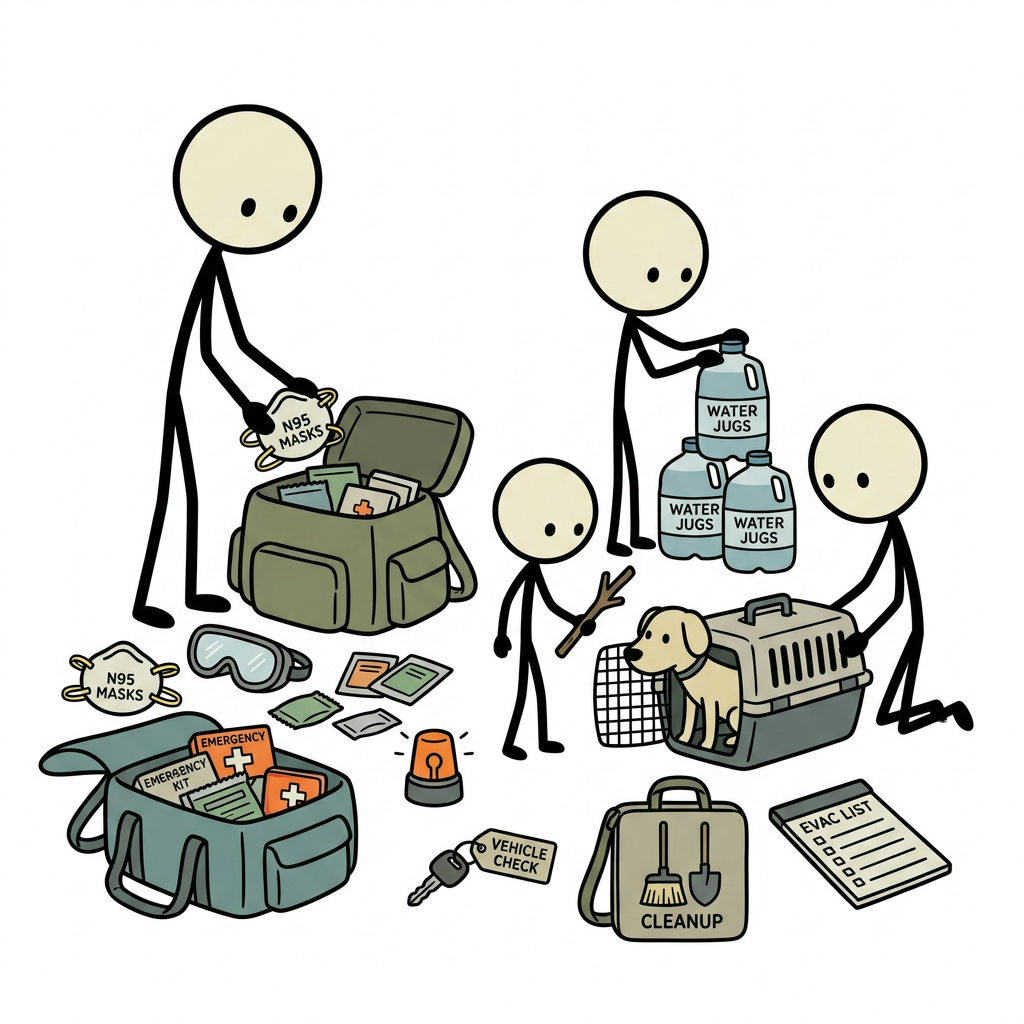
Volcanic ash poses a severe threat to municipal and private water systems. When ash falls onto open reservoirs, canals, and catchment systems, it increases turbidity, clogs filtration membranes, and alters water chemistry. The Environmental Protection Agency (EPA) notes that ash can leach acidic compounds and heavy metals—such as fluorine, arsenic, lead, and copper—into water sources, rendering them toxic to humans and livestock.
If you rely on a private well, your system is generally safer from direct atmospheric deposition, but it remains vulnerable to mechanical failure. Fine ash can penetrate pump seals and cause rapid wear on impellers. For those utilizing rainwater harvesting or cistern systems, the risk of immediate contamination is exceptionally high, requiring proactive physical intervention before the ashfall begins.
Water Protection and Storage Protocols
- Disconnect Rainwater Catchment Systems: If you harvest rainwater, immediately disconnect the downspouts from your cisterns or storage tanks. This prevents contaminated runoff from entering your primary water storage.
- Seal Wellheads and Storage Tanks: Ensure all well caps, cistern hatches, and vents are tightly sealed. Cover vents with fine-mesh screens and wrap them in heavy-duty plastic sheeting secured with duct tape to prevent airborne ash infiltration.
- Establish a 14-Day Emergency Water Reserve: While FEMA recommends a minimum of one gallon of water per person per day for three days, volcanic events can disrupt municipal infrastructure for weeks. Aim for a 14-day supply of bottled or purified water stored in food-grade, airtight containers.
- Avoid Boiling Contaminated Water: Boiling water kills biological pathogens, but it does not remove chemical contaminants, heavy metals, or dissolved volcanic ash. In fact, boiling can concentrate these toxins. Use reverse osmosis, activated carbon filtration, or certified chemical distillation systems if you must treat suspected water.
Vehicle Safety and Engine Protection
Vehicles are highly susceptible to the abrasive nature of volcanic ash. Because ash is composed of hard, angular rock fragments, it acts like liquid sandpaper on moving parts. If ash enters an internal combustion engine, it quickly destroys cylinders, pistons, and valves, leading to catastrophic engine failure. Furthermore, ash accumulation on roads reduces traction, obliterates lane markings, and creates near-zero visibility conditions when kicked up by other vehicles.
The Federal Highway Administration (FHWA) advises against driving during or immediately after an ashfall event unless it is an absolute emergency. If you must drive, you must adapt your driving style and maintenance schedule to accommodate the hazardous environment.
| Vehicle Component | Vulnerability to Volcanic Ash | Mitigation and Maintenance Action |
|---|---|---|
| Engine Air Filter | Clogs rapidly, starving the engine of air and pulling abrasive particles into cylinders. | Inspect and replace filters daily in ash conditions. Carry multiple spares in your vehicle. |
| Windshield and Wipers | Wipers drag highly abrasive ash across the glass, causing permanent scratching and ruin. | Do not use wipers. Clean windshields manually with copious amounts of water before driving. |
| Brake Assemblies | Ash penetrates brake calipers and drums, causing rapid wear and potential brake seizure. | Blow out brake assemblies with compressed air regularly. Avoid hard, sudden braking. |
| Electrical Systems | Wet ash conducts electricity, potentially short-circuiting alternators and ignition systems. | Keep engine bay clean by gently blowing away dry ash. Avoid driving through deep ash-slurry. |
When operating a vehicle in ash-affected areas, reduce your speed significantly—ideally below 25 mph. Maintain an extreme following distance from the vehicle ahead of you, as braking distances are severely compromised on ash-covered roads. Keep your headlights on low beam to avoid backscatter glare from suspended particulates, and keep your vehicle's ventilation system set to "recirculate" to prevent drawing ash into the cabin.
The Volcano Preparedness Checklist
A successful survival strategy requires a structured, easily executable plan. When a volcanic alert level is raised by the USGS, having a comprehensive volcano preparedness checklist ensures that no critical steps are missed during the high-stress window before an eruption. Your checklist should be divided into immediate survival gear, sheltering supplies, and evacuation assets.
Use the following checklist to audit your household's readiness. Each item should be packed, labeled, and easily accessible in rugged, waterproof go-bag essentials guides.
Volcano Preparedness Checklist
- Respiratory and Eye Protection:
- [ ] NIOSH-approved N95 or P100 respirators (minimum of 5 per family member).
- [ ] Sealed, non-vented safety goggles for every household member.
- [ ] Heavy-duty work gloves and protective leather gloves.
- Water and Nutrition (14-Day Supply):
- [ ] 1 gallon of water per person per day (stored in durable, BPA-free containers).
- [ ] Non-perishable, nutrient-dense food items (freeze-dried meals, canned meats, energy bars).
- [ ] Manual can opener and camping stove with extra fuel (for outdoor use only).
- Emergency Power and emergency communication plan:
- [ ] NOAA Weather Radio (hand-crank or battery-powered) with spare batteries.
- [ ] High-output LED flashlights and headlamps with extra lithium batteries.
- [ ] Portable power banks and solar chargers for mobile devices.
- Sanitation, Hygiene, and First Aid:
- [ ] Comprehensive first aid kit (including eye wash solution and saline drops).
- [ ] Heavy-duty contractor trash bags and plastic ties for waste disposal.
- [ ] Disinfecting wipes, hand sanitizer, and unscented household bleach.
- Property and Vehicle Protection:
- [ ] Heavy-duty plastic sheeting (4 mil or thicker) and high-tack duct tape.
- [ ] Spare vehicle air filters, cabin filters, and extra windshield washer fluid.
- [ ] Push brooms, plastic shovels, and a sturdy ladder for ash removal.
In addition to physical supplies, your volcano preparedness emergency preparedness efforts must include a pre-established communication plan. Identify out-of-area contacts, map out at least two distinct evacuation routes recommended by local emergency management, and ensure that every family member knows how to interpret local warning sirens and emergency broadcast alerts.
Evacuation Protocols vs. Sheltering-in-Place
Deciding whether to evacuate or shelter-in-place depends heavily on your proximity to the volcano and the specific hazards present. If you reside within a designated lahar hazard zone, immediate evacuation is your only viable option when an alert is issued. Lahars—rapidly flowing mixtures of rock debris and water—can travel at speeds exceeding 40 mph down river valleys, obliterating everything in their path. Pay close attention to USGS Volcano Hazard Assessments and evacuate immediately when ordered by local authorities.
If you are outside the immediate hazard zones for lahars, pyroclastic flows, and lava, but are facing heavy ashfall, sheltering-in-place is generally the safest course of action. Roads during ashfall are highly hazardous, and leaving the safety of a sealed structure increases your exposure to toxic gases and abrasive dust.
How to Safely Shelter-in-Place
To prepare your home for sheltering, you must create a physical barrier against the outdoor environment. Start by sealing all windows and exterior doors. Use weather stripping or place damp towels at the base of doors to block drafts. For areas with high draft potential, tape plastic sheeting over the entire window or door frame.
Minimize the entry and exit of occupants to prevent tracking ash inside. Designate a single "transition room" near your primary entrance where anyone returning from the outside can remove contaminated clothing, wipe down gear, and store dirty boots. This keeps the living quarters clean and prevents the re-suspension of settled particulates into the indoor air supply.
Post-Eruption Cleanup and Recovery
Once the eruption has ceased and the ashfall has stopped, the long process of recovery begins. Post-eruption cleanup is a hazardous undertaking that requires patience, physical stamina, and strict adherence to safety protocols. The primary goal during cleanup is to remove the ash without re-suspending it into the air or causing physical damage to your property.
Before beginning any cleanup activities, put on your PPE, including your N95/P100 respirator, goggles, long sleeves, and gloves. Keep children, pets, and anyone with respiratory vulnerabilities indoors during the entire cleanup process.
Safe Ash Removal Techniques
- Dampen the Ash: Dry ash is easily airborne. Before sweeping or shoveling, lightly mist the ash with water using a garden hose. Do not soak the ash, as wet ash becomes a heavy, cement-like slurry that is difficult to move and can clog storm drains.
- Clean from the Top Down: Begin by clearing ash from your roof, gutters, and elevated surfaces before cleaning ground-level areas. This prevents cleaned areas from being re-contaminated.
- Protect Your Roof: Volcanic ash is incredibly heavy. A one-inch layer of dry ash weighs approximately 5 to 10 pounds per square foot, while wet ash can double that weight. Clear roofs incrementally using plastic shovels to avoid exceeding the load-bearing capacity of your home. Use extreme caution, as ash makes roofs highly slippery.
- Do Not Use Leaf Blowers: Avoid using leaf blowers, dry brooms, or high-pressure power washers, as these tools force fine ash back into the breathing zone and can blast abrasive particles into delicate mechanical and electrical systems.
- Dispose of Ash Properly: Place collected ash in heavy-duty contractor bags and coordinate with local waste management for specific disposal instructions. Do not dump ash into household drains, toilets, or storm sewers, as it will solidify and cause catastrophic plumbing blockages.
After clearing the exterior of your home, focus on your indoor environment. Vacuum carpets and upholstery with a HEPA-filter vacuum cleaner. Wipe down hard surfaces with damp microfiber cloths, washing the cloths frequently in a bucket of clean water. Replace all HVAC and cabin air filters immediately to ensure that any trapped particulates are permanently removed from your air circulation systems.
Empowered and Prepared for Volcanic Hazards
While the scale of a volcanic eruption can feel overwhelming, mitigation is entirely within your control. Volcano preparedness is not about predicting when the earth will move, but about building a resilient framework of readiness that can withstand the compounding challenges of ashfall, compromised air quality, and infrastructure disruption. By securing high-quality personal protective equipment, safeguarding your water reserves, adapting your vehicle maintenance, and mastering safe cleanup techniques, you transform vulnerability into structured capability. Stay informed through official USGS and FEMA updates, keep your emergency supplies maintained, and approach the dynamic challenges of our active planet with confidence, knowledge, and practical readiness.
Frequently Asked Questions
What should a volcano preparedness plan include?
Start with the immediate safety steps, the supplies and records your household needs, a communication plan, and a regular review schedule. Follow local official guidance during an active emergency.
How often should I review volcano preparedness preparations?
Review them at least twice a year and whenever your household, medication, location, or local risks change. Replace expired supplies and practice key steps.
Where can I find reliable emergency guidance?
Use local emergency management alerts and established public-health or emergency-management agencies. A blog guide should support, not replace, official real-time instructions.