⚡ Key Facts
- The Lethal Boiling Fallacy: Boiling water contaminated with volatile organic compounds (VOCs), heavy metals, or cyanotoxins does not purify it; instead, evaporation concentrates non-volatile toxins and aerosolizes dangerous chemicals directly into your home's air.
- Frequency of Disruption: According to the U.S. Environmental Protection Agency (EPA), tens of thousands of boil water advisories are issued annually across the United States, predominantly triggered by water main breaks, flooding, and distribution system pressure drops below 20 psi.
- Hierarchy of Public Health Orders: Municipal water alerts fall into three distinct tiers with escalating severity: Boil Water Advisory (microbial risk), Do Not Drink Order (chemical or toxin risk safe only for external use), and Do Not Use Order (severe chemical, radiological, or toxic hazard where skin contact and inhalation are hazardous).
- Pathogen Resilience: The Centers for Disease Control and Prevention (CDC) notes that protozoan parasites like Cryptosporidium possess hard outer oocysts that resist standard municipal chlorination, requiring a sustained rolling boil of at least 60 seconds (three minutes at altitudes above 5,000 feet) to achieve thermal inactivation.
- Baseline Reserve Requirement: The Federal Emergency Management Agency (FEMA) and the American Red Cross recommend a minimum potable water cache of one gallon per person per day for at least two weeks, though medical needs, nursing mothers, and hot climates can easily double this baseline.
When an emergency alert blares across your phone or an incident commander issues a disruption notice through local broadcast channels, your tap water instantly shifts from an invisible modern convenience to an acute survival variable. In the chaotic opening hours of an infrastructure crisis—whether triggered by a severe weather event cataloged by the National Oceanic and Atmospheric Administration (NOAA), an industrial spill, or an aged subterranean pipe failure—the public's reflex is nearly universal: find a pot, fill it from the faucet, and crank the stove to high. Yet applying that single, generalized reaction to every municipal notice is one of the most perilous mistakes an individual can make. Understanding the precise, life-or-death distinctions between biological and chemical tap water safety alerts is the bedrock of practical emergency preparedness. For the practical checklist side, use the community emergency preparedness guide.
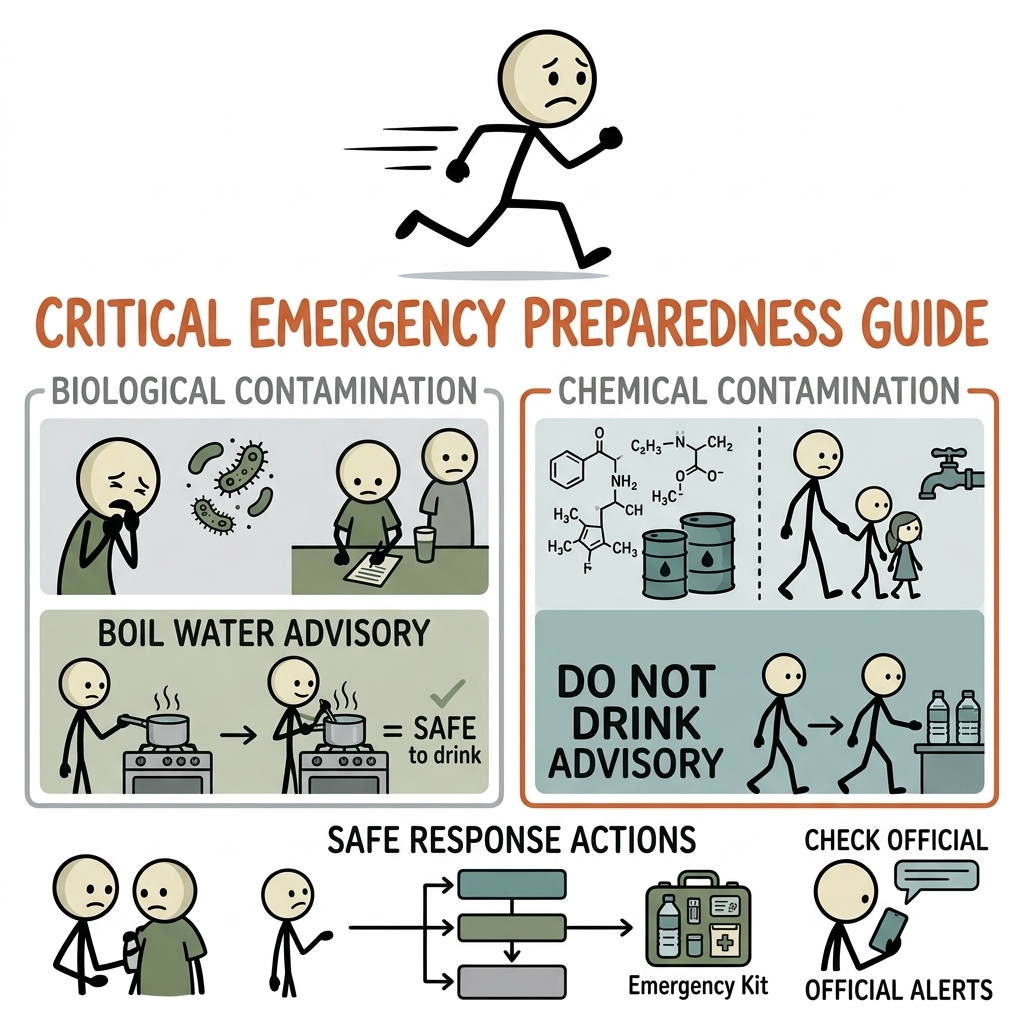
The Alert Spectrum: Boil Water vs. Do Not Drink vs. Do Not Use
Public water authorities work under strict regulatory guidelines established by the EPA under the Safe Drinking Water Act. When municipal monitors detect anomalies, or when physical line integrity fails, officials issue specific public notifications designed to mitigate exact physiological threats. Confusing these advisories or treating them interchangeably can expose your household to acute poisoning, chronic organ damage, or severe gastrointestinal illness. For the practical checklist side, use the neighborhood preparedness network.
1. Boil Water Advisory (BWA)
A Boil Water Advisory—issued either as a precautionary measure or a mandatory notice—indicates that testing or physical infrastructure conditions show potential or confirmed biological contamination. This means the barrier between external contaminants and your drinking supply has collapsed, permitting pathogenic microorganisms (bacteria, viruses, and protozoan parasites) to enter the distribution network. Under a BWA, heat is your most reliable ally. Bringing water to a vigorous, rolling boil denatures the structural proteins and melts the cellular envelopes of living pathogens, neutralizing their ability to infect human hosts. For the practical checklist side, use the emergency communication plan.
2. Do Not Drink Order (DND)
A Do Not Drink Order represents an immediate shift from biological concerns to chemical, industrial, or toxicological hazards. In this scenario, municipal supplies have been breached by substances that cannot be killed because they were never alive. Contaminants may include heavy metals (such as lead or hexavalent chromium), agricultural runoff (like nitrates and pesticides), harmful algal bloom metabolites (such as microcystin), or industrial hydrocarbons. Under a DND, you must never boil the water. Doing so causes the clean water molecules to escape into the atmosphere as steam while the stable chemical compounds remain behind in the vessel, drastically increasing their concentration per fluid ounce. Tap water during a DND alert may still generally be cleared for flushing toilets, laundering non-delicate clothing, and limited showering for healthy adults, provided no water is ingested or introduced to open lesions.
3. Do Not Use Order (DNU)
A Do Not Use Order is the most severe tier of municipal water restriction, signaling a contamination profile that is hazardous through multiple exposure pathways: ingestion, dermal absorption, and inhalation. Often issued after massive industrial derailments, chemical pipeline fractures, or distribution network sabotage, a DNU indicates that the water contains substances like volatile organic compounds (VOCs, such as benzene or vinyl chloride), potent caustics, or radioactive isotopes. Simply running your tap during a DNU can release toxic vapors into your home's enclosed atmosphere, transforming a simple kitchen sink into an active source of toxic gas. Under a DNU, municipal water must not be consumed, cooked with, bathed in, washed with, or even used to flush sanitation systems unless specifically authorized by hazmat personnel.
Biological Contamination: Mechanics, Threats, and Thermal Neutralization
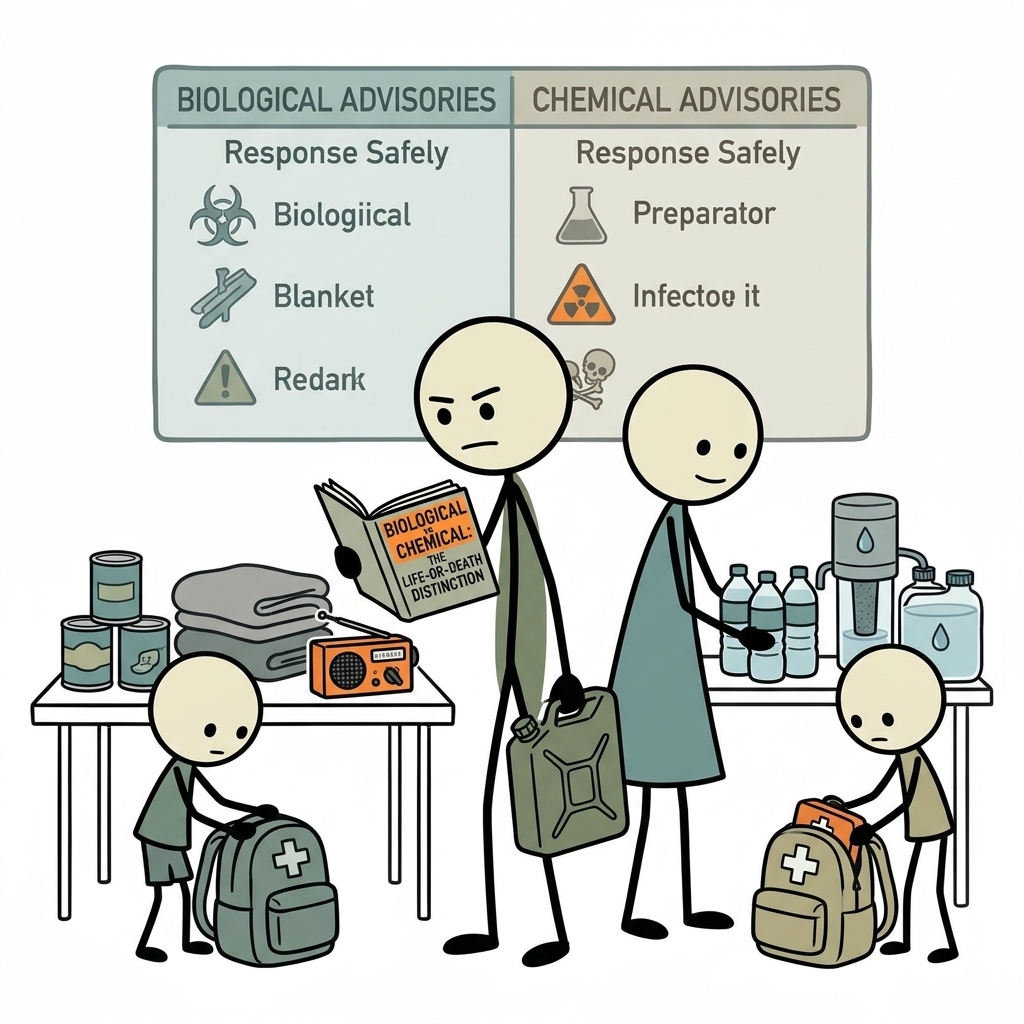
Biological contamination of municipal and private well systems occurs when protective pressure envelopes fail or surface runoff bypasses natural geological filtration. According to hydrological tracking by the U.S. Geological Survey (USGS), extreme precipitation events frequently cause combined sewer overflows, forcing raw sewage into alluvial aquifers and surface water intakes. Simultaneously, physical municipal pipe networks rely on continuous hydrostatic pressure (typically kept above 20 to 35 psi) to keep surrounding groundwater from migrating inward through microscopic fractures. When an aged main fractures or power cuts silence municipal pumping stations, back-siphonage draws untreated, biologically loaded subsurface water straight into the drinking line.
The Primary Pathogenic Threats
Biological contaminants fall into three taxonomic categories, each possessing distinct survival capabilities and resistance to chemical disinfectants:
- Bacteria (e.g., Escherichia coli, Salmonella enterica, Vibrio cholerae): Single-celled organisms that cause acute, dehydrating diarrheal disease, hemolytic uremic syndrome, and systemic infections. While highly infectious, bacteria have vulnerable cell membranes that succumb rapidly to chemical disinfectants and temperatures above 160°F (71°C).
- Viruses (e.g., Norovirus, Rotavirus, Hepatitis A): Sub-microscopic infectious agents that hijack human cellular machinery. They are resilient in cold water and can persist for weeks on plumbing fixtures, but they denature quickly when subjected to sustained, boiling temperatures.
- Protozoan Parasites (e.g., Cryptosporidium parvum, Giardia duodenalis): The ultimate survivalists of the biological spectrum. Cryptosporidium forms an extraordinarily thick, multi-layered oocyst wall that is biologically shielded against standard chlorine dosing. In 1993, a municipal filtration breakdown in Milwaukee, Wisconsin, allowed Cryptosporidium to sweep through the tap system, sickening over 400,000 residents and killing 69. Physical filtration down to absolute 1 micron or thermal inactivation via boiling are the only absolute fail-safes against these biological armor-bearers.
The Science of Thermal Disinfection
To safely navigate a boil water advisory, you must adhere strictly to established microbiological heat-kill curves validated by the CDC and the World Health Organization (WHO). Pathogens begin to denature well before the boiling point—pasteurization of most enteric pathogens occurs between 145°F and 165°F (63°C–74°C). However, in home Survival Scenarioss, dial thermometers and culinary probes introduce human error. The definitive visual cue is the rolling boil: large, vigorous bubbles churning throughout the liquid that cannot be interrupted by stirring.
At standard atmospheric pressure (sea level up to 5,000 feet), keeping water at a rolling boil for one full minute provides a 100% margin of safety against all known enteric waterborne pathogens. At elevations above 5,000 feet (1,524 meters), atmospheric pressure drops, causing water to boil at lower temperatures (for example, approximately 202°F at 5,280 feet). To compensate for this thermal deficit, prolong the rolling boil to three full minutes. Once boiled, the water must be covered, allowed to cool naturally in the same vessel to avoid cross-contamination, and transferred exclusively to sanitized, food-grade storage containers.
Chemical Contamination: The Dangerous Physics of Boiling Toxins
The core imperative when evaluating boil water vs do not drink notices is recognizing that chemicals do not possess cellular physiology. They cannot be "killed." They are chemical elements, synthetic compounds, or stable biological metabolites governed by strict thermodynamic and physical chemistry laws.
The Concentration Effect
When you heat water that contains dissolved inorganic solutes—such as nitrates from agricultural fertilizers, lead leached from aging plumbing, arsenic, or per- and polyfluoroalkyl substances (PFAS)—water molecules ($H_2O$) readily transition from liquid to gas at 212°F (100°C). These heavy metals, salts, and fluorinated compounds have significantly higher boiling points, meaning they do not vaporize. As the liquid volume in your pot drops through evaporation, the absolute mass of the chemical contaminant remains identical, resulting in a higher, more toxic concentration per milliliter.
Consider an infant consuming formula mixed with water taken from a well breached by agricultural runoff containing nitrates. If that water is boiled under the false assumption that it makes it safer, the nitrate concentration rises rapidly. When ingested, nitrates convert to nitrites in the digestive tract, binding to hemoglobin to produce methemoglobin. This compound cannot bind or carry oxygen, causing methemoglobinemia, or "blue baby syndrome"—an acute, oxygen-depriving medical emergency that can prove fatal within hours.
Aerosolization of Volatile Organic Compounds (VOCs)
The danger accelerates when dealing with industrial solvents, fuels, and volatile chemicals such as benzene, trichloroethylene (TCE), methyl tert-butyl ether (MTBE), or vinyl chloride. These compounds exhibit low boiling points and high vapor pressures. Applying thermal energy through stove boiling, running hot dishwashers, or taking hot showers causes these chemicals to flash off rapidly into the surrounding air.
When you boil VOC-laden tap water indoors, you convert a liquid-phase ingestion risk into an aerosolized inhalation hazard. Inhaling vaporized industrial solvents drives toxins directly into the alveoli of the lungs, bypassing the liver’s initial metabolic filtration and entering the arterial bloodstream instantly. This can cause acute central nervous system depression, respiratory mucosal damage, cardiac arrhythmias, and severe long-term carcinogenic exposure.
Cyanotoxins: Nature's Chemical Weapons
A rapidly expanding threat across North American freshwater systems, cataloged extensively by the EPA and NOAA, is the prevalence of harmful algal blooms (HABs) driven by cyanobacteria (blue-green algae). These organisms produce deadly chemical metabolites, primarily microcystins, cylindrospermopsin, and anatoxins. When high concentrations of cyanobacteria enter water utility treatment streams, standard chlorination can rupture the cyanobacterial cells, discharging pure intracellular toxins into the water column.
Microcystins are stable, cyclic heptapeptides. They are intensely hepatotoxic and remain structurally intact even when subjected to prolonged boiling. In 2014, a massive microcystin bloom in Lake Erie entered the municipal water intake for Toledo, Ohio, triggering a sudden, multi-day Do Not Drink order for more than 400,000 residents. Citizens who ignored the advisory and boiled their tap water concentrated the microcystin peptides, risking immediate liver failure and severe gastrointestinal hemorrhage.
Household Protocols: Action Matrix for Water Advisories
When a municipal notice goes live, you must adapt your entire domestic operational footprint within minutes. Secondary exposures—such as brushing your teeth, feeding household pets, or washing fresh produce—carry the same clinical risks as drinking a glass of compromised water directly from the tap. Review the matrix below to deploy the correct countermeasures based on the specific advisory level.
| Domestic Task | Boil Water Advisory (Biological) | Do Not Drink Order (Chemical/Toxin) | Do Not Use Order (Severe/Volatile) |
|---|---|---|---|
| Drinking & Ice Making | Safe ONLY after rolling boil for 1 min (3 min >5,000 ft). Discard existing ice. | FORBIDDEN. Use exclusively bottled, certified hauled, or RO-treated reserves. | STRICTLY FORBIDDEN. Tap contact prohibited. |
| Food Prep & Cooking | Boil water first or use for boiling foods (e.g., pasta). Wash produce in boiled, cooled water. | Safe only if using sealed emergency reserves. Cooking does not neutralize chemical toxins. | STRICTLY FORBIDDEN. Do not run water for any culinary purpose. |
| Dishwashing | Dishwashers safe if final rinse exceeds 150°F (65°C) or sanitizing cycle is used. For handwashing: rinse with bleach solution (1 tsp unscented bleach per gal). | Acceptable for non-porous dishware if rinsed thoroughly and air-dried. Better: use disposable paper supplies. | FORBIDDEN. Chemical residues remain on plate surfaces and vaporize in dishwashers. |
| Bathing & Hygiene | Adults may shower; DO NOT swallow water. Sponge-bathe infants/toddlers using boiled/bottled water. | Short, lukewarm showers acceptable for adults without open wounds. Never ingest. | STRICTLY FORBIDDEN. Vapors cause pulmonary toxicity; direct contact causes chemical burns/absorption. |
| Teeth Brushing | Use boiled and cooled water, or bottled water only. | Use bottled or verified independent reserves only. | Use bottled water only. Do not stand near running tap. |
| Pets & Livestock | Provide boiled and cooled water. Domestic animals are susceptible to the same pathogens as humans. | Provide bottled/stored reserves. Animals are acutely sensitive to nitrates and cyanotoxins. | Provide bottled/stored reserves. Do not wash animals with tap water. |
| Medical Devices (CPAP/Neti) | Use commercially manufactured sterile/distilled water only. Never use boiled tap water in Neti pots. | Use commercially manufactured sterile/distilled water only. | Use commercially manufactured sterile/distilled water only. |
Alternative Emergency Water Treatment: Capabilities and Limits
When physical isolation or infrastructure devastation isolates your home during a prolonged disruption, tap water safety hinges on deployed point-of-use (POU) hardware and chemical intervention. However, relying on the wrong emergency water treatment methodology for a specific threat profile will lead to immediate failure.
Mechanical Filtration: The Micron Rating Imperative
Modern emergency gravity-fed and pump filters rely on dense media matrices, typically sintered ceramic or hollow-fiber membranes. When confronting a biological event under a boil water advisory, the critical metric is the filter's absolute micron rating:
- 0.1 to 0.2 Micron Membranes: Capable of physically barring protozoa (Giardia, Cryptosporidium) and standard enteric bacteria. However, they cannot exclude enteric viruses (such as Hepatitis A or Norovirus), which measure down to 0.02 microns.
- Ultrafiltration and Reverse Osmosis (RO): Reverse osmosis forces water under hydraulic pressure through a semi-permeable membrane with pore sizes around 0.0001 microns. A certified multi-stage RO system is capable of removing viruses, dissolved biological macromolecules, heavy metals, nitrates, and many pesticides. However, residential counter-top gravity filters do not perform reverse osmosis, and standard backpacking filters leave you entirely exposed to viral threats unless paired with a secondary chemical sanitizer.
Chemical Disinfection: Bleach, Iodine, and Chlorine Dioxide
If fuel supplies fail during a boil water notice and thermal treatment is impossible, chemical disinfection serves as the secondary biological defense line. According to the EPA and CDC, household bleach can sanitize water if it is clear and uses the proper chemical formulation:
- Liquid Chlorine Bleach: Must be unscented, non-color-safe, and contain between 5% and 9% sodium hypochlorite. Add 8 drops (approximately 1/8 teaspoon) per gallon of clear water; double the dosage to 16 drops if the water is turbid or cold. Mix thoroughly and allow it to stand undisturbed for a minimum of 30 minutes. A faint chlorine smell should be present; if not, repeat the dosage and wait another 15 minutes. Note: Chlorine bleach does not reliably kill Cryptosporidium oocysts.
- Chlorine Dioxide Tablets: Unlike basic sodium hypochlorite, chlorine dioxide generates a powerful oxidative reaction that can penetrate and destroy the thick protective walls of Cryptosporidium oocysts and chemical biofilms, making it vastly superior for wilderness and raw-water emergency applications. However, it requires an incubation contact period of up to four hours to achieve complete 4-log (99.99%) inactivation of cryptosporidium cysts in icy water.
The Carbon Trap: What Carbon Filters Cannot Do
A widespread, dangerous assumption is that running chemically contaminated water through a standard activated-carbon pitcher filter makes it safe to consume during a Do Not Drink order. Activated carbon utilizes adsorption, bonding organic compounds to the vast internal surface area of its porous carbon pores. While high-grade, block-extruded activated carbon can reduce chlorine taste, certain heavy metals, and some specific VOCs, inexpensive pour-through gravity pitchers possess short contact times and low adsorption capacities. They saturate quickly and allow heavy toxic breakthroughs. They do not reliably eliminate high concentrations of cyanotoxins, dissolved nitrates, arsenic, or industrial solvents during a major municipal breach.
Constructing an Uncompromising Household Potable Water Reserve
The safest, most resilient response to any water alert—biological or chemical—is to immediately sever reliance on the municipal grid. When you operate from a verified, self-contained residential water reserve, you can disregard ambiguous initial alerts, bypass lengthy boiling procedures, and eliminate the risk of domestic poisoning while municipal authorities scramble to assess line hazards.
Calculating Realistic Family Consumption
Emergency management planning traditionally cites the FEMA baseline: one gallon per person per day, partitioned as a half-gallon for hydration and a half-gallon for food prep and basic sanitation, projected across a 14-day disruption window. For a household of four, this equals a 56-gallon reserve. However, protocol realities quickly show that this baseline is inadequate during summer heat emergencies, for families with non-weaned infants requiring reconstituting powdered formula, or for households caring for pets and livestock. A realistic operational cache targets 1.5 to 2 gallons per human per day, with an additional 1 gallon per large domestic pet.
Storage Vessels, Treatment, and Cyclic Maintenance
Water must never be stored in previously used milk jugs or containers that held food substances prone to bacterial colonization. High-density polyethylene (HDPE, marked with recycling code 2) drums, food-grade stackable water bricks, or heavy-gauge metallized Water Calculator bags are mandatory to prevent toxic chemical leaching and micro-punctures.
- Sanitizing Storage Vessels: Prior to filling, wash containers thoroughly with hot water and dish soap, rinse completely, and sanitize the interior surfaces with a solution of 1 tablespoon of unscented household bleach mixed into one quart of clean water. Swirl the solution to contact all walls for 60 seconds, pour out, and let air-dry.
- Preservation and Rotation: Fill containers directly with clean municipal tap water (which already contains low-level disinfectant residuals). If filling from an unchlorinated private well source, treat water with 2 drops of 6% unscented liquid bleach per gallon before sealing. Store vessels in a dark, climate-controlled space between 50°F and 70°F, elevated off bare concrete floors to prevent the chemical migration of volatile curing vapors into the plastic over years of storage. Rotate stored reserves every six to twelve months, or utilize specialized bio-stabilizing copper/silver ion water preservatives to extend the operational shelf-life up to five continuous years.
The "All Clear": Safe Decontamination and System Flushing
When municipal authorities finally lift a Boil Water Advisory, Do Not Drink Order, or Do Not Use Order, your home's internal plumbing network remains a primary hazard. Contaminated, stagnant water sits trapped in your water heater, water softener resin beds, appliance manifolds, under-sink filter housings, and refrigerator lines. You must never resume drinking tap water the minute the broadcast alert announces the all-clear.
Execute this systematic decontamination sweep to clear and sanitize your household distribution system:
1. Purge Cold-Water Lines System-Wide
Open the cold water tap at every faucet across your home, starting with the fixture physically closest to the main water meter or service entrance and finishing at the furthest point. Let the entire line network run wide open for at least 5 to 10 minutes. This flushes the dead-leg volume in the main municipal delivery lateral and runs pristine, pressurized utility water through your primary branches.
2. Thermal Cycling of the Hot Water Heater
Hot water tanks provide an ideal thermal breeding ground for opportunistic pathogens like Legionella pneumophila when temperatures drop during line-pressure failures. Flush the water heater by opening the hot water taps across all bathtubs and sinks, running them until the hot water is entirely depleted and runs completely cold. Allow the water heater to refill and confirm the thermostat is set to at least 120°F–140°F (49°C–60°C) to ensure comprehensive thermal sanitization of the tank's internal reservoir.
3. Appliance and Inline Hardware Remediation
- Refrigerators and Ice Makers: Run and discard the water dispenser lines continuously for at least 5 minutes (or approximately one gallon of liquid). Dump the first three full cycles of new ice cubes completely. Wash and sanitize the ice bin before putting it back into commission.
- Point-of-Use Filters: Inline carbon filters, sediment cartouches, and refrigerator filter blocks that were exposed to contaminated biological or chemical water during the advisory are fully compromised. Turn off the service lines and replace every single filter cartridge with fresh media before consuming water through these systems.
- Water Softeners: Initiate a manual regeneration backwash cycle on your water softening system to flush out resin beds and pull clean, sanitized water through the mineral tank.
Decisive, proactive emergency preparedness relies on replacing unexamined assumptions with precise, technical protocols. Water alerts are not generic warnings—they are distinct biochemical instructions that require specific responses. By categorizing the threat, rejecting the dangerous instinct to boil non-biological contaminants, and maintaining an independent home potable supply, you safeguard your family against the most critical point of failure in any civil infrastructure crisis.
Frequently Asked Questions
What is the primary difference between a Boil Water Advisory and a Do Not Drink Advisory?
A Boil Water Advisory applies to microbial contamination (bacteria, viruses, parasites) that can be killed by heat. A Do Not Drink Advisory is issued for chemical, heavy metal, or radiological contamination that boiling cannot neutralize.
Can I boil water to make it safe during a Do Not Drink advisory?
No. Boiling does not neutralize chemicals or heavy metals. Boiling evaporates water and concentrates toxic contaminants, making the water more hazardous to consume.
How long should I boil water during a Boil Water Advisory?
Bring water to a vigorous, rolling boil for at least one full minute. If you are located at an elevation above 6,500 feet (1,000 meters), boil the water for three full minutes.
Can I still bathe or shower during these advisories?
During a standard Boil Water Advisory, adults may shower if careful not to swallow water. During a Do Not Drink advisory, showering is often permitted unless specified otherwise. However, during a strict 'Do Not Use' advisory, all contact with skin must be avoided.
What safe water sources should be used for pets and infant formula?
Use bottled water or boiled and cooled tap water during a Boil Water Advisory. If under a Do Not Drink or Do Not Use advisory, strictly use commercially bottled or verified off-grid emergency water.
Sources & Further Reading
- Centers for Disease Control and Prevention - Boil Water Advisory
- Ready.gov - Safe Drinking Water in Emergencies
- U.S. Environmental Protection Agency - Drinking Water Advisories
- Centers for Disease Control and Prevention - Drinking Water Emergencies
- American Red Cross - Water Safety & Emergency Preparedness