⚡ Key Facts
- Community is your strongest shield: According to the Federal Emergency Management Agency (FEMA), organized neighborhood networks and community coordination are the most effective multipliers for post-disaster resilience and security.
- Most vulnerabilities are structural: Department of Justice (DOJ) data indicates that over 34% of unlawful entries occur directly through the front door, highlighting the critical need for physical hardening before a crisis hits.
- Power loss invites opportunity: The American Red Cross notes that prolonged power outages significantly increase property vulnerability. Protecting your home during a power outage requires passive, grid-independent security measures like solar lighting.
- Grid-down scenarios are increasing: The National Oceanic and Atmospheric Administration (NOAA) reports a steady rise in billion-dollar weather disasters, meaning prolonged communication blackouts are a statistical reality, not just a theoretical threat.
- Deterrence works: Studies show that visible, non-lethal security measures—such as reinforced glass, defensive landscaping, and perimeter alarms—deter the vast majority of opportunistic property crimes during emergencies.
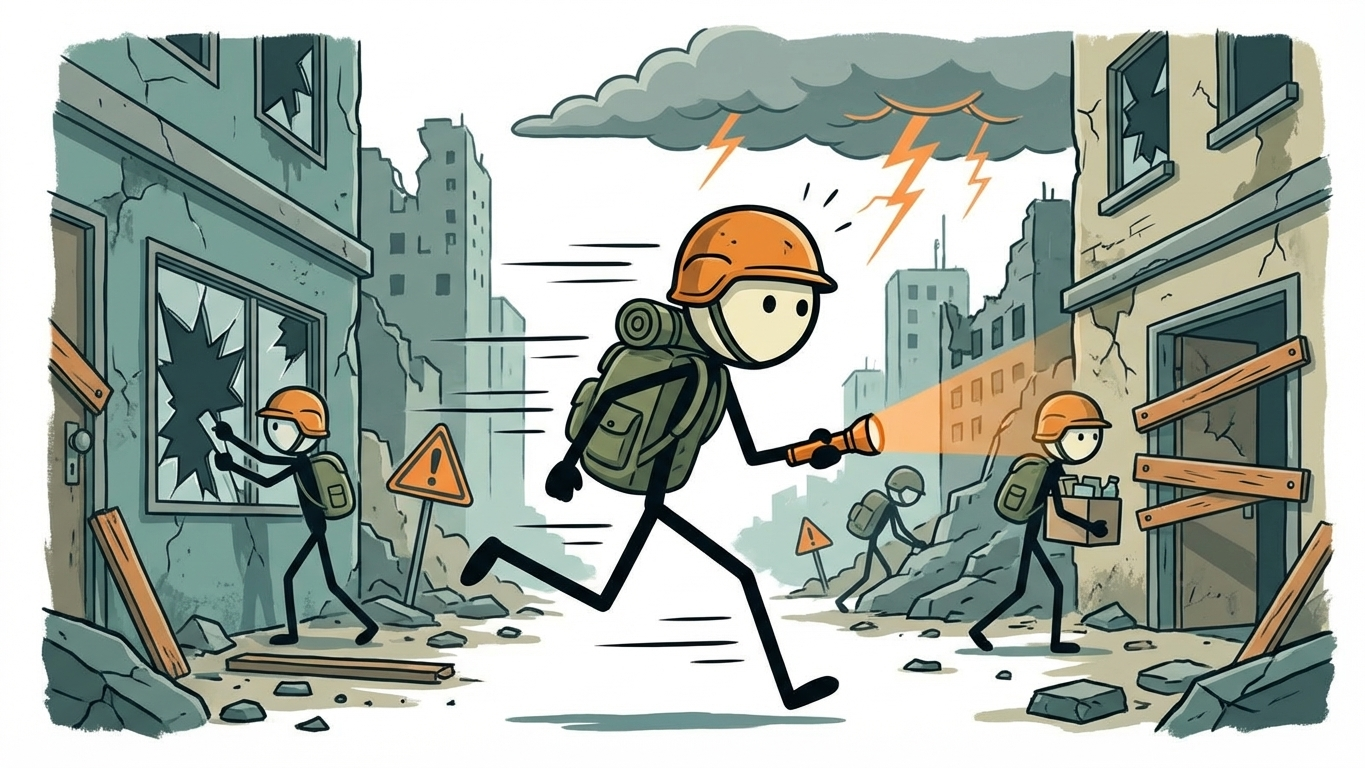
Imagine the immediate aftermath of a Category 4 hurricane, a severe winter freeze, or a localized grid failure. The streetlights are dead, emergency sirens have fallen silent, and the comforting hum of modern infrastructure has ground to a halt. In these critical moments, law enforcement and first responders are inevitably stretched to their absolute limits, triaging life-threatening emergencies. For a period of days or even weeks, you and your family are entirely responsible for your own safety. This is the stark reality of home security during disaster. For a structured city-focused plan, use the urban grid-down security protocol to coordinate communications, navigation, and home-defense choices under outage pressure.
However, this scenario does not need to be a source of fear. Emergency preparedness is fundamentally about empowerment, control, and peace of mind. True disaster home protection is not about transforming your residence into an impenetrable, cinematic fortress. Instead, it is about implementing a smart, layered defense system that deters opportunistic threats, hardens physical vulnerabilities, and leverages the power of community.
By taking proactive steps today, you can ensure your home remains a safe haven when the world outside becomes chaotic. From physical hardening and off-grid lighting to mastering situational awareness and emergency communication, this guide will walk you through the definitive strategies for securing your home and protecting your loved ones when normal systems fail.
Physical Hardening: Securing Your Perimeter
The foundation of emergency home security begins with physical hardening. When law enforcement response times are measured in hours - or even days as outlined in the critical 72-hour rule - or days rather than minutes, your home’s physical barriers are your primary line of defense. The goal is not necessarily to make your home invincible, but to make it resilient enough to discourage anyone looking for an easy target.
Opportunistic criminals look for the path of least resistance. By increasing the time, effort, and noise required to breach your perimeter, you dramatically reduce the likelihood of a successful intrusion. This concept, known as target hardening, is a cornerstone of professional security architecture.
Reinforcing Doors and Entryways
Your exterior doors are the most common point of entry during a security breach. Standard residential doors are notoriously fragile, often failing at the strike plate or hinges with a single forceful kick. Upgrading these weak points is an affordable and highly effective weekend project.
- Upgrade strike plates: Replace standard, flimsy strike plates with heavy-duty, reinforced steel box strikes. This distributes force over a wider area of the door frame.
- Use three-inch screws: The screws provided with most door hardware barely penetrate the door trim. Replace all strike plate and hinge screws with 3-inch or 4-inch wood screws to anchor the hardware directly into the structural wall studs.
- Install deadbolts: Ensure every exterior door is equipped with a Grade 1 or Grade 2 single-cylinder deadbolt. For doors with glass panels nearby, consider a double-cylinder deadbolt (though you must balance this with fire safety and egress needs).
- Utilize door barricades: For nighttime security during a crisis, internal door barricades or floor-mounted braces provide immense stopping power. These devices can withstand hundreds of pounds of force and are easily deployed from the inside.
Hardening Windows Against Debris and Intruders
Windows are inherently vulnerable, offering both a visual and physical breach point. During extreme weather, broken windows can lead to catastrophic structural failure due to internal pressurization. Securing them serves the dual purpose of weatherproofing and disaster home protection.
According to the United States Geological Survey (USGS) and FEMA, mitigating window vulnerabilities is a top priority for disaster resilience. Consider the following upgrades:
- Security window film: Applying a shatter-resistant security film (typically 8 to 12 mils thick) to ground-floor windows does not prevent the glass from breaking, but it holds the shattered shards in place. This makes breaching the window incredibly noisy, time-consuming, and dangerous for an intruder.
- Storm shutters: Roll-down or accordion-style storm shutters offer unparalleled protection against both hurricane-force debris and post-disaster looting. If permanent shutters are out of budget, pre-cut 5/8-inch exterior-grade plywood for every window and store it with the necessary mounting hardware.
- Defensive landscaping: Plant dense, thorny bushes (like barberry, bougainvillea, or holly) beneath ground-level windows. This passive security measure is aesthetically pleasing but acts as a painful deterrent to anyone attempting to peer into or access your windows.
Protecting Your Home During a Power Outage: Lighting
Darkness is the ally of the opportunistic trespasser. Protecting home during power outage events requires a robust, grid-independent lighting strategy. When the neighborhood goes dark, a well-lit perimeter signals that the home is occupied, alert, and prepared.
Solar-powered motion sensor lights are inexpensive and highly effective. Mount them high enough to prevent tampering, focusing on driveways, entry doors, and blind spots around the sides of your house. Because they rely on internal batteries charged by the sun, they will continue to function seamlessly during an extended blackout. Additionally, keep battery-powered LED lanterns and tactical flashlights staged indoors to maintain interior visibility without relying on the grid.
Situational Awareness and OPSEC
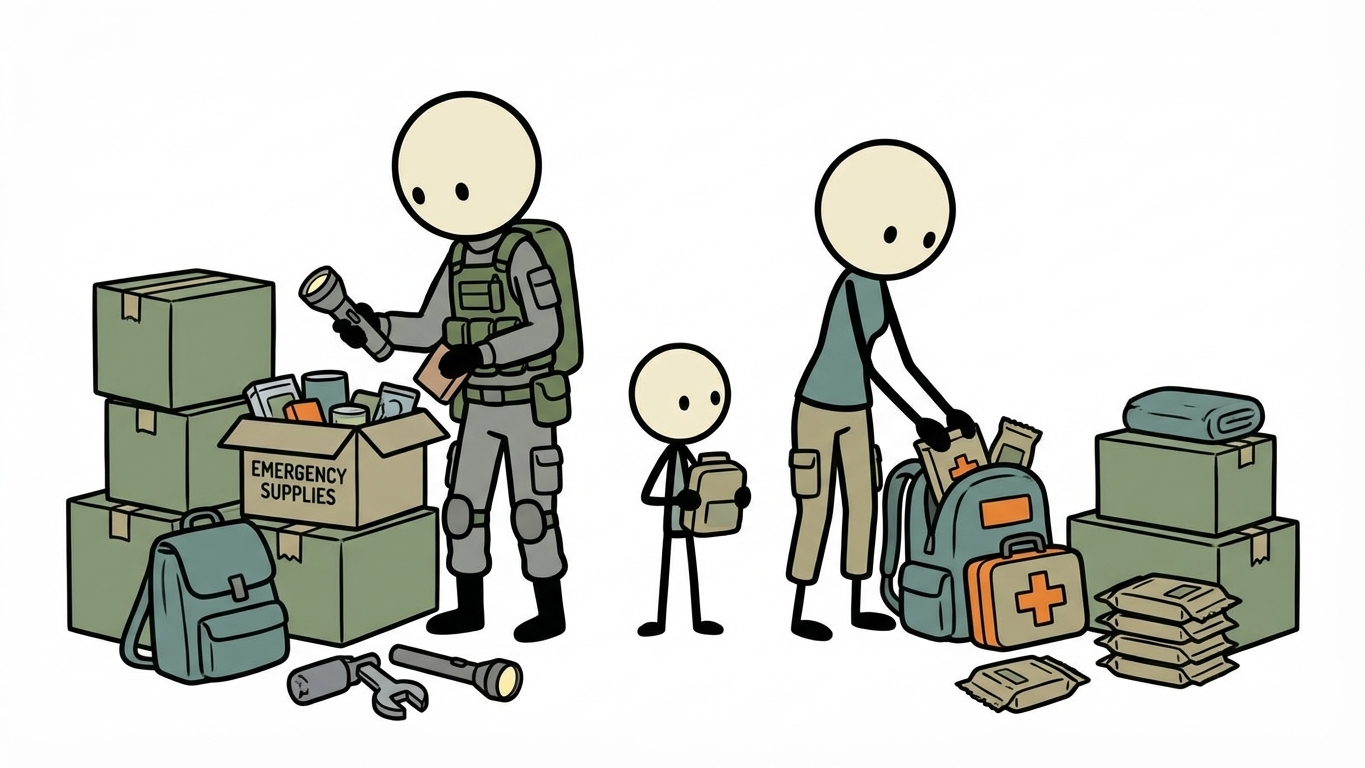
Physical barriers are useless if you are caught off guard. Situational awareness is the practice of consciously observing your environment, identifying potential threats, and making informed decisions before a crisis escalates. In a disaster scenario, your mindset is your most valuable survival tool.
Equally important is Operational Security (OPSEC). Originally a military concept, OPSEC involves protecting critical information that could be useful to an adversary. In the context of emergency home security, it means not advertising your level of preparedness to the outside world.
Establishing a Baseline
To recognize an anomaly, you must first know what is normal. This is called establishing a baseline. Pay attention to the natural rhythm of your neighborhood. Who drives down your street? What time do the delivery trucks usually arrive? What does the ambient noise sound like at 2:00 AM?
During a disaster, this baseline will shift dramatically. By intimately knowing your environment, you will instantly notice a vehicle idling where it shouldn't be, or the sound of footsteps in an alleyway that is usually empty. Trust your instincts; if something feels out of place, investigate cautiously or heighten your security posture.
Practicing Light and Noise Discipline
When the grid goes down, your home should not stand out like a beacon. If you are the only house on the block with a roaring generator, blazing interior lights, and the smell of cooking meat wafting down the street, you inadvertently make yourself a target for desperate individuals.
- Light discipline: Use blackout curtains or heavy blankets to cover windows at night. If you are using lanterns or flashlights indoors, ensure the light does not bleed out into the street.
- Noise discipline: If you utilize a generator, invest in an inverter model known for quiet operation, and build a safe, ventilated baffle box to muffle the sound. Keep voices low at night, and avoid running loud power tools unless absolutely necessary for emergency repairs.
- Trash management: Do not leave empty boxes of expensive survival gear, MREs, or generator packaging on your curb. Break down all cardboard and store your refuse out of sight until normal sanitation services resume.
Community Coordination: The Power of Neighborhood Security
The "lone wolf" survivalist trope is a dangerous myth. Historically, the communities that fare best during and after catastrophic events are those that work together. The Centers for Disease Control and Prevention (CDC) emphasizes that social cohesion and community networks are vital indicators of a population's ability to recover from public health emergencies and natural disasters.
Neighborhood security is a force multiplier. You cannot stay awake 24/7 to guard your property, but a coordinated group of neighbors can easily establish rotating watches, share vital resources, and present a united front that deters criminal elements.
Building the Network Before the Crisis
Do not wait until the power lines are down to introduce yourself to your neighbors. Start building relationships now. You don't need to reveal the contents of your pantry, but you can casually discuss weather preparedness or local crime trends to gauge their mindset.
Consider organizing or joining a local Neighborhood Watch or a FEMA Community Emergency Response Team (CERT). These programs provide excellent frameworks for organizing localized responses to emergencies. Knowing which neighbors have medical training, who possesses mechanical skills, and who has vulnerable elderly relatives allows your street to operate as a cohesive, resilient unit.
Establishing a Post-Disaster Block Watch
If a severe disaster strikes and law enforcement is unavailable, community coordination becomes essential for neighborhood security. Gather the trusted members of your street to assess the situation and pool resources.
- Set up a communication network: Determine how neighbors will contact each other if cellular service is down. Two-way radios are ideal for this purpose.
- Organize rotating watches: Establish a schedule where pairs of neighbors take shifts keeping an eye on the street. Visibility is key; a visible presence with flashlights and radios is usually enough to send opportunistic looters looking elsewhere.
- Designate safe zones and medical areas: Identify a central home where first aid can be administered or where vulnerable individuals can be consolidated and protected.
- Share the burden: Check on the elderly and disabled. Share perishable food before it spoils, and assist each other with debris removal or temporary structural repairs.
Non-Lethal Security Options: Deterrence and Defense
While physical barriers and community networks are your primary defenses, you must be prepared for the possibility that a threat breaches your perimeter. In the context of emergency home security, the focus should heavily favor deterrence and non-lethal defense. The goal is to stop an intrusion without escalating to lethal force unless absolutely necessary to protect human life.
Non-lethal tools are highly effective for managing desperate individuals who are looking for supplies rather than looking to cause physical harm. They provide a vital intermediate step in your escalation of force.
Early Warning Systems
Knowing that someone is approaching your home gives you the precious seconds needed to react, shelter in place, or prepare a defense. When electronic security systems fail due to power loss, you must rely on off-grid alternatives.
Battery-powered driveway alarms use passive infrared (PIR) sensors to detect movement, sending a chime to a receiver inside your home. They run for months on standard batteries. For a more tactical approach, perimeter trip-wire alarms can be set up using high-visibility fishing line. When triggered, these devices snap a blank 12-gauge primer or activate a piercing personal alarm, instantly startling the intruder and alerting you to their presence.
Tactical Flashlights and Strobe Deterrents
A high-lumen tactical flashlight is one of the most underrated non-lethal security tools available. In a pitch-black, grid-down environment, hitting an intruder in the eyes with 1,000+ lumens of light causes immediate, temporary blindness and disorientation.
Many tactical flashlights feature a strobe function specifically designed to induce vertigo and disrupt an attacker's OODA loop (Observe, Orient, Decide, Act). This buys you critical time to issue verbal commands, retreat to a safe room, or deploy other defensive measures. Keep a reliable, heavy-duty flashlight on your nightstand and ensure you have an ample Supply Calculator of backup batteries.
Chemical Irritants and Pepper Gel
If physical confrontation becomes unavoidable, chemical deterrents like pepper spray or bear mace offer a powerful means of repelling an attacker from a distance. For indoor use, pepper gel is vastly superior to traditional aerosol sprays.
Pepper gel deploys in a concentrated stream rather than a mist. This prevents the capsaicin from atomizing into the air and circulating through your home's ventilation system, which could inadvertently blind you or your family members. It also resists wind blowback if used outdoors. When deploying chemical irritants, aim for the eyes and face, sweep side-to-side, and immediately retreat to a secure location.
Communication When Normal Systems Fail
Information is the lifeblood of emergency preparedness. Having the right emergency supplies calculated and ready is equally critical. Knowing the path of a storm, the location of emergency aid stations, or the proximity of civil unrest dictates how you secure your home. Unfortunately, modern communication infrastructure is incredibly fragile.
Cellular towers rely on the power grid. While you plan communications, also ensure you have enough water stored for your household. While they have battery backups and generators, these typically only last 24 to 48 hours. When fiber optic lines are severed by debris or cellular networks become overloaded with panicked callers, your smartphone becomes a very expensive paperweight. Establishing a robust communication plan is a non-negotiable aspect of home security during disaster.
Gathering Information: Weather Radios and Scanners
Your first priority is receiving accurate, localized information. A NOAA weather radio is an absolute necessity for any preparedness kit. These radios tune into specific frequencies broadcast by the National Weather Service, providing 24/7 updates on severe weather, natural disasters, and national security emergencies.
Look for a model with Specific Area Message Encoding (SAME) technology, which allows you to program the radio to only alert you for events in your specific county. Ensure the radio has multiple power options, including a hand crank, solar panel, and battery backup. Additionally, a police scanner (or a ham radio with scanning capabilities) allows you to monitor local emergency services, giving you real-time intelligence on where first responders are deployed and what threats are active in your vicinity.
Two-Way Communication: GMRS, FRS, and Ham Radio
When you need to coordinate with your family or neighborhood security team, you need reliable two-way transmission. Relying on a single method of communication is a recipe for failure; you need layers.
- FRS (Family Radio Service): These are the standard "walkie-talkies" available at any sporting goods store. They require no license and are incredibly easy to use. While their range is limited to about half a mile in dense urban environments, they are perfect for communicating with neighbors on your immediate block or coordinating within your own property.
- GMRS (General Mobile Radio Service): GMRS radios operate on similar frequencies to FRS but allow for much higher power output (up to 50 watts for mobile units) and the use of repeater stations. This significantly extends their range, making them ideal for neighborhood-wide or cross-town communication. A simple, no-test license from the FCC covers your entire immediate family.
- Amateur (Ham) Radio: Ham radio is the ultimate grid-down communication tool. With the right equipment and training, you can communicate across your state, the country, or even the globe. It requires passing a technical exam to obtain a license, but the payoff is access to a massive network of trained radio operators who relay critical information during disasters.
Non-Electronic Signaling
You must also prepare for scenarios where electronic communication is completely impossible or tactically unwise. Simple, analog signal mirror methods have been used for centuries and remain highly effective.
Establish a whistle code with your family and immediate neighbors (e.g., one blast for "location," two blasts for "come here," three blasts for "emergency/help needed"). Whistles carry much further than the human voice and require far less physical exertion. For daytime signaling to rescue helicopters or distant neighbors, a high-quality signal mirror can flash sunlight for miles. Finally, ensure your house numbers are large, reflective, and visible from the street to aid first responders attempting to locate your home in the dark.
Building a Resilient Mindset
Securing your home during a disaster is not a single action, but a comprehensive lifestyle approach. Make sure your go-bag is packed and ready in case evacuation becomes the safer option. It requires looking at your property through a critical lens, identifying vulnerabilities before they are exploited, and taking practical, measured steps to mitigate risk. By hardening your physical perimeter, managing your situational awareness, and investing in grid-independent lighting and communication, you create a formidable barrier against the chaos of a crisis.
Remember that the ultimate goal of disaster home protection is not isolation, but resilience. Cultivating strong relationships with your neighbors and establishing a coordinated community response will always be your most powerful defense. Disasters will inevitably occur, and the grid will occasionally fail. But with a proactive mindset, the right tools, and a commitment to preparedness, you can ensure that your home remains a secure, stable sanctuary for you and your family, no matter what happens beyond your front door.
Improve home security during disasters with our emergency preparedness guide. Plan family responses using our family emergency plan. Build an evacuation kit with our go-bag builder. Calculate security supplies with our supply calculator. Learn advanced tactics through our preparedness courses.
Frequently Asked Questions
Is crime actually worse during disasters?
Research shows a mixed picture. In major natural disasters, most looting occurs in commercial areas, not residential homes. However, prolonged outages and displacement do create conditions where opportunistic crime can increase — particularly in areas that were already high-crime before the event. The greater risk in most residential scenarios is not looting but rather the appearance of vulnerability: dark homes, open garages, and no visible signs of occupancy signal an easy target.
What are the most important physical security improvements for my home?
The highest-impact upgrades are: door frame reinforcement (most kicks break the frame, not the door), deadbolt locks with 3-inch screws into wall studs, security film on ground-floor windows (prevents shattering), motion-activated solar lights around the perimeter, and a solid core door with no glass panels within 40 inches of the lock. These passive measures deter the vast majority of opportunistic intrusions without requiring any monitoring.
How do I maintain home security during a power outage?
Battery-backup security cameras (Reolink Argus and similar) continue recording without grid power. Solar-charged motion lights activate automatically. A battery-operated alarm system with cellular backup (not landline-dependent) continues to function. For the exterior, maintain visibility: trim hedges below window height so there are no hiding spots, and keep at least one light visible from the street to signal occupancy. A dog — or even a 'Beware of Dog' sign — is statistically one of the most effective deterrents. For a broader perspective on how communities handle these situations, see our community preparedness guide.
How should I coordinate with my neighbors during a disaster?
Before any emergency, introduce yourself to at least the 5 closest neighbors and exchange phone numbers. During a disaster, establish a simple check-in system — a visible signal (porch light on at night, flag in window during day) that means 'we're OK.' Neighbors watching out for each other is the single most effective community security measure. The CERT (Community Emergency Response Team) program offers free training in neighborhood coordination.
What communication tools work when cell networks are down?
During major disasters, cell networks often become congested or fail entirely. Alternatives include: FRS/GMRS walkie-talkies (no license required for FRS, range 1-2km in suburban environments), ham radio (requires a license but covers enormous range), and the NOAA weather radio for incoming broadcasts. For neighborhood coordination, a pre-agreed physical meeting point is more reliable than any electronic communication when everything else has failed.
Sources & Further Reading
Related resource: Family & Community Resilience Course.
Related resource: Community Emergency Preparedness Guide.