⚡ Key Facts
- Grid Vulnerability: According to the U.S. Energy Information Administration (EIA), the average duration and frequency of power outages have steadily increased over the last decade due to aging infrastructure and severe weather.
- The 4/48 Rule: The CDC states that a closed refrigerator keeps food safe for only 4 hours, while a full, unopened freezer can maintain safe temperatures for up to 48 hours.
- Carbon Monoxide Risks: The Consumer Product Safety Commission (CPSC) reports that carbon monoxide poisoning spikes dramatically during blackouts due to improper use of portable generators and camp stoves.
- Communication Lifelines: Most cellular towers are equipped with battery backups that last only 4 to 24 hours, making an alternative communication plan essential for extended grid failures.
- Thermal Efficiency: Consolidating your household into a single, sealed "warm room" can naturally raise the ambient temperature by 10°F to 15°F using only trapped body heat.
Use Radio Channels Legally and Deliberately
A radio belongs in an outage plan only if the household knows which service it uses, what range is realistic, and when to check in. Our FRS, GMRS, and ham radio guide explains the relevant channels, licensing boundaries, and practical family-radio setup.
Keep Your Plan Usable
A written checklist is only useful if it stays current. The Protocol Survival preparedness app helps households track supplies, turn gaps into next actions, and keep the plan ready to use when normal services are disrupted.
Start With Three Days
For most households, 72 hours is 3 days of essentials before outside help or normal services may return. Use the 72-hour emergency preparedness guide to turn this checklist into a realistic water, food, light, communications, and family-plan baseline.
First 72 Hours: Fast Action Path
The query behind this page is simple: 72 hours is 3 days. In preparedness terms, those three days are the bridge between a normal household and delayed outside help. Start with the 72-hour rule guide, then build skills through the free Catastrophe Survival 101 course.
For the practical kit, use the 72-hour kit guide, calculate supplies with the supply calculator, and set water targets with the water calculator.
The sudden silence is always the first thing you notice. The persistent, low-frequency hum of the refrigerator fades, the glowing digits on the microwave vanish, and the room plunges into absolute darkness. In an instant, your modern home is thrust back into the 19th century. As extreme weather events intensify and our aging electrical infrastructure struggles to keep pace with soaring demand, grid failure is no longer a distant hypothetical-it is a predictable reality. Whether triggered by a massive winter storm, a hurricane, or a localized equipment failure, the initial moments of a blackout can feel disorienting and chaotic. However, the trajectory of your entire experience is dictated by the actions you take in the immediate aftermath. For a quick definition, see grid down.
For a broader playbook, use our emergency preparedness guide to turn these steps into a practical plan.
Surviving a power outage in the first 24 hours requires a pivot from reliance on the grid to self-sufficiency. It is a critical window where the clock starts ticking on your food supply, your home's climate control, and your ability to communicate with the outside world. Panic is the enemy of preparedness; methodical, informed action is your greatest asset. By understanding exactly what to do in a power outage, you can transform a potential crisis into a manageable inconvenience. This comprehensive guide breaks down the essential protocols for food safety, thermal regulation, communication, and physical security during those crucial first 24 hours of blackout survival.
The Immediate Response: Securing Your Environment
When the lights go out, your first priority is immediate physical safety and situational awareness. Do not blindly stumble through a dark house. Stay seated for a moment to let your eyes adjust to the darkness, then reach for the tactical flashlight or headlamp you should ideally have staged in your nightstand or everyday carry bag. Once you have a reliable light source, it is time to assess the scope of the problem.
Look out the window to determine if the outage is isolated to your home or if the entire neighborhood is dark. If streetlights are out and neighboring houses are pitch black, you are likely dealing with a broader grid failure. If your home is the only one affected, the issue may simply be a tripped breaker or a localized blown transformer. In the event of a widespread outage, your immediate physical actions inside the home will set the stage for your power outage survival plan.
Unplug to Protect
One of the most overlooked steps in power outage preparedness is protecting your appliances from the inevitable power surge that occurs when the grid comes back online. The sudden rush of electricity can fry the delicate circuit boards in modern televisions, computers, HVAC systems, and even smart refrigerators. Walk through your home and systematically unplug all major electronics and sensitive devices.
Leave a single, prominent lamp turned on in a central living area. This serves as your "beacon." When the power company eventually restores service, this lamp will instantly alert you that the grid is back, preventing you from constantly checking switches or missing the restoration entirely.
The Danger of Open Flames
It is a common instinct to reach for candles when the power fails, but this is a dangerous relic of the past. The National Fire Protection Association (NFPA) reports that power outages are a peak time for fatal residential fires, largely driven by the unattended use of candles. In a high-stress environment, a knocked-over candle can ignite curtains or papers in seconds, and without power, your hardwired smoke detectors may fail if their backup batteries are dead.
Rely exclusively on battery-powered or hand-cranked lighting. LED headlamps are superior for hands-free navigation, while battery-powered lanterns are excellent for illuminating a shared living space. Save the open flames for absolute emergencies, and never leave them unattended.
Food Safety: Beating the Biological Clock
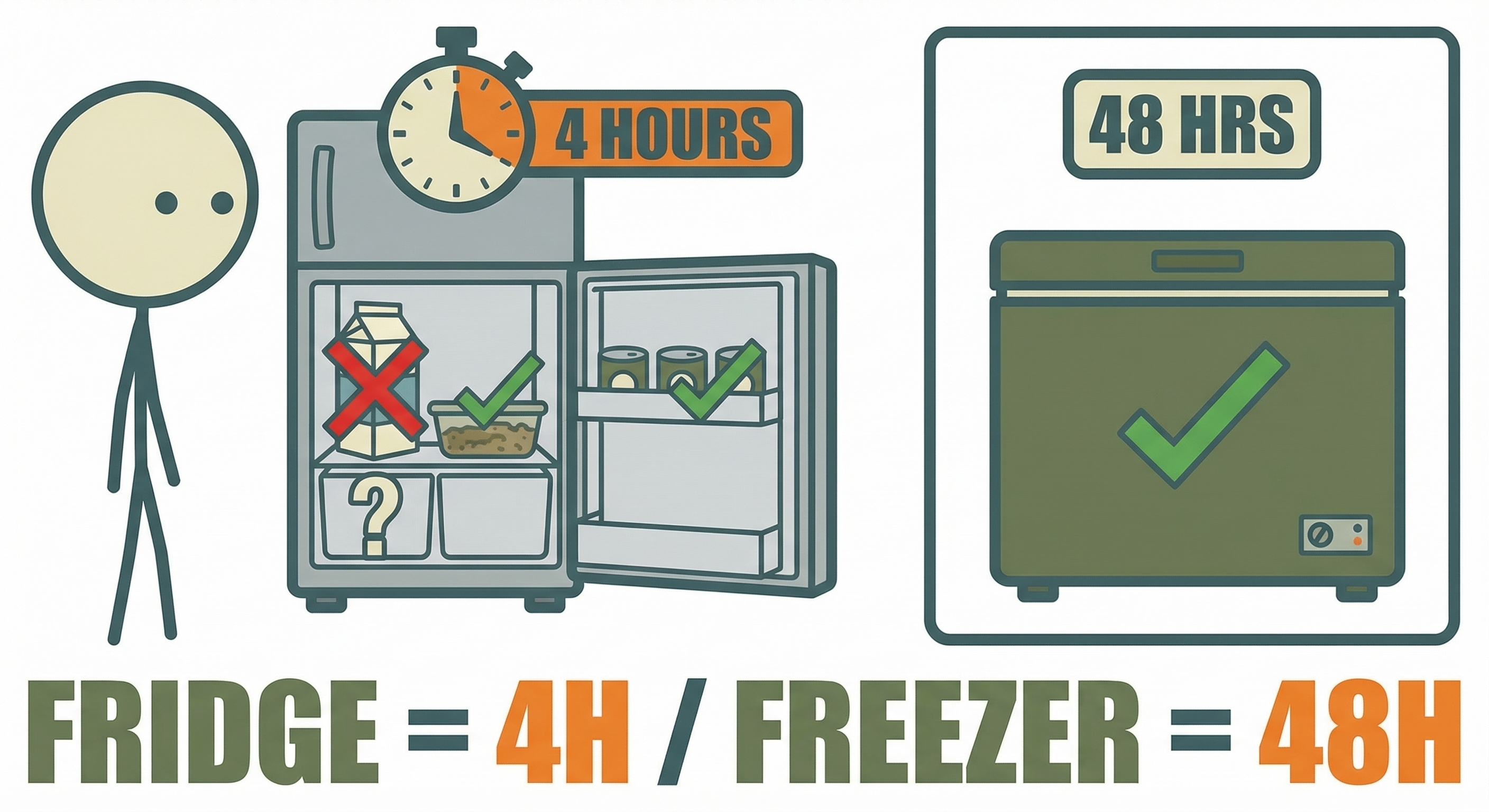
The moment the compressor on your refrigerator stops, a biological countdown begins. Foodborne illness is a severe and often overlooked risk during a grid failure. Without active cooling, the temperature inside your appliances will slowly rise, eventually entering what the FDA calls the "Danger Zone"-the temperature range between 40°F and 140°F where harmful bacteria multiply exponentially. Managing your food supply requires strict discipline and a clear understanding of thermal retention.
The 4-Hour and 48-Hour Rules
According to the Centers for Disease Control and Prevention (CDC), a refrigerator will keep food safely cold for approximately four hours, provided the doors remain closed. Every time you open the door to peek inside, you dump the heavy, dense cold air onto the floor and replace it with warm ambient air, drastically accelerating the spoilage process. Tape the refrigerator door shut if necessary to prevent children or forgetful adults from opening it out of habit.
Your freezer is your long-term storage vault. A fully packed freezer acts as a massive block of thermal mass. The frozen items insulate each other, allowing a full freezer to hold a safe temperature for up to 48 hours. A half-full freezer, however, contains too much empty air and will only stay safe for about 24 hours. If you know a severe storm is approaching, fill empty spaces in your freezer with containers of water; they will freeze into solid blocks of ice, increasing your thermal mass and providing emergency drinking water as they melt.
The "Eat First" Hierarchy
To maximize your resources during the first 24 hours, adhere to a strict consumption hierarchy. Start by eating perishable items from your refrigerator that are nearing the 4-hour mark-think leftovers, soft cheeses, milk, and fresh meats. If you have a safe outdoor method for cooking, such as a propane grill or a camp stove, cook these highly perishable proteins first.
Once the refrigerator items are depleted or no longer safe, move to the pantry. Non-perishable, shelf-stable foods like canned beans, protein bars, jerky, and dry cereal should be your primary sustenance. Leave the freezer completely sealed until the 48-hour mark approaches, or until you absolutely need to access it. When you do open the freezer, group remaining items together so they continue to insulate one another.
Identifying Spoilage
Never rely on the "smell test" to determine if food is safe to eat. Pathogens that cause food poisoning, such as Salmonella and E. coli, do not necessarily alter the taste, smell, or appearance of food. If your refrigerator has been without power for more than four hours, discard perishable foods like meat, poultry, fish, eggs, and dairy. When in doubt, throw it out. A severe bout of food poisoning during a blackout-when medical facilities may be overwhelmed or unreachable-is a life-threatening complication you must avoid.
Warmth and Climate Control: Defending Your Microclimate
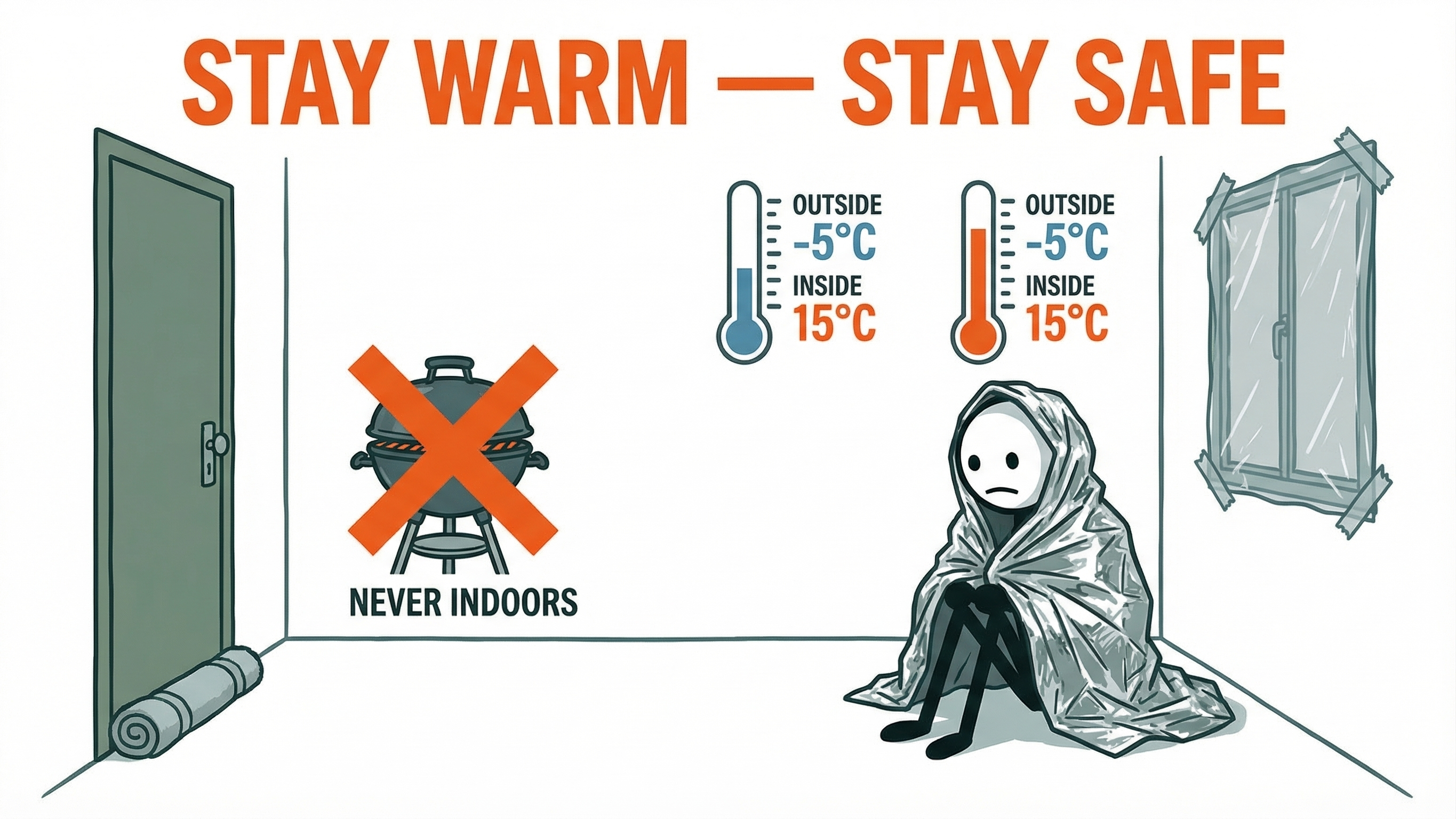
Depending on the season, a power outage can quickly transition from an inconvenience to a thermal emergency. Modern homes are heavily reliant on HVAC systems to maintain a livable environment. Without them, your house will rapidly equalize with the outdoor temperature. Whether you are facing a sub-zero winter storm or a sweltering summer heatwave, mastering climate control is a cornerstone of blackout survival. For heating without electricity, consider these alternative strategies.
Winter Blackouts: The "Warm Room" Strategy
During a winter grid failure, the threat of hypothermia becomes very real within the first 12 to 24 hours. Your goal is not to heat the entire house-which is impossible without central power-but to create a defensible microclimate. Choose a single room on the interior of the house, preferably one with few windows, low ceilings, and a door that closes tightly. This will become your "warm room."
Gather all family members and pets into this room. The human body acts as a 100-watt radiant heater. By consolidating everyone into a small space, you harness this natural thermal output. Seal the perimeter of the room by placing rolled-up towels under the door to block drafts. If the room has windows, cover them with heavy blankets or bubble wrap to add an extra layer of insulation against the glass.
For additional warmth, pitch a camping tent inside this room. A tent traps the heat radiating from your bodies in an even smaller volume of air, creating a surprisingly warm sanctuary. Layer your clothing systematically: start with a moisture-wicking base layer (synthetic or wool, never cotton), add an insulating mid-layer like fleece, and top it with a wind-breaking shell if necessary. Wear a beanie, as a significant amount of heat is lost through exposed skin on the head and neck.
Summer Blackouts: Preventing Heat Exhaustion
Conversely, a summer power outage presents the risk of hyperthermia and heat stroke. Without air conditioning, a well-insulated house can quickly become an oven. In this scenario, your strategy is to block external heat and maximize airflow. Close all blinds, shades, and curtains on the sun-facing sides of your home immediately. You want to prevent solar radiation from penetrating the glass and heating the interior.
Because heat rises, abandon the upper floors of your home. Move your living and sleeping arrangements to the lowest level possible, such as a basement or a ground-floor interior hallway. Stay hydrated by drinking plenty of water, even if you don't feel thirsty. To cool down rapidly, apply damp, cool cloths to your pulse points-the neck, wrists, groin, and ankles. This helps cool the blood circulating through your body, lowering your core temperature.
The Silent Killer: Carbon Monoxide Safety
The most tragic and preventable deaths during power outages are caused by carbon monoxide (CO) poisoning. In a desperate bid to stay warm or cook food, people often bring outdoor equipment inside. The CDC and FEMA issue urgent warnings every year: never, under any circumstances, use a gas-powered generator, a charcoal grill, a propane camp stove, or an unvented kerosene heater indoors, in a garage, or even on a partially enclosed porch.
Carbon monoxide is an odorless, colorless gas that binds to the hemoglobin in your blood, suffocating you from the inside out. Symptoms include headache, dizziness, weakness, nausea, and confusion, eventually leading to unconsciousness and death. If you are using a portable generator, it must be placed at least 20 feet away from your home, with the exhaust pointing directly away from any windows, doors, or vents. Ensure you have battery-powered carbon monoxide detectors installed and functioning on every level of your home.
Communications: Staying Connected When the World Goes Dark
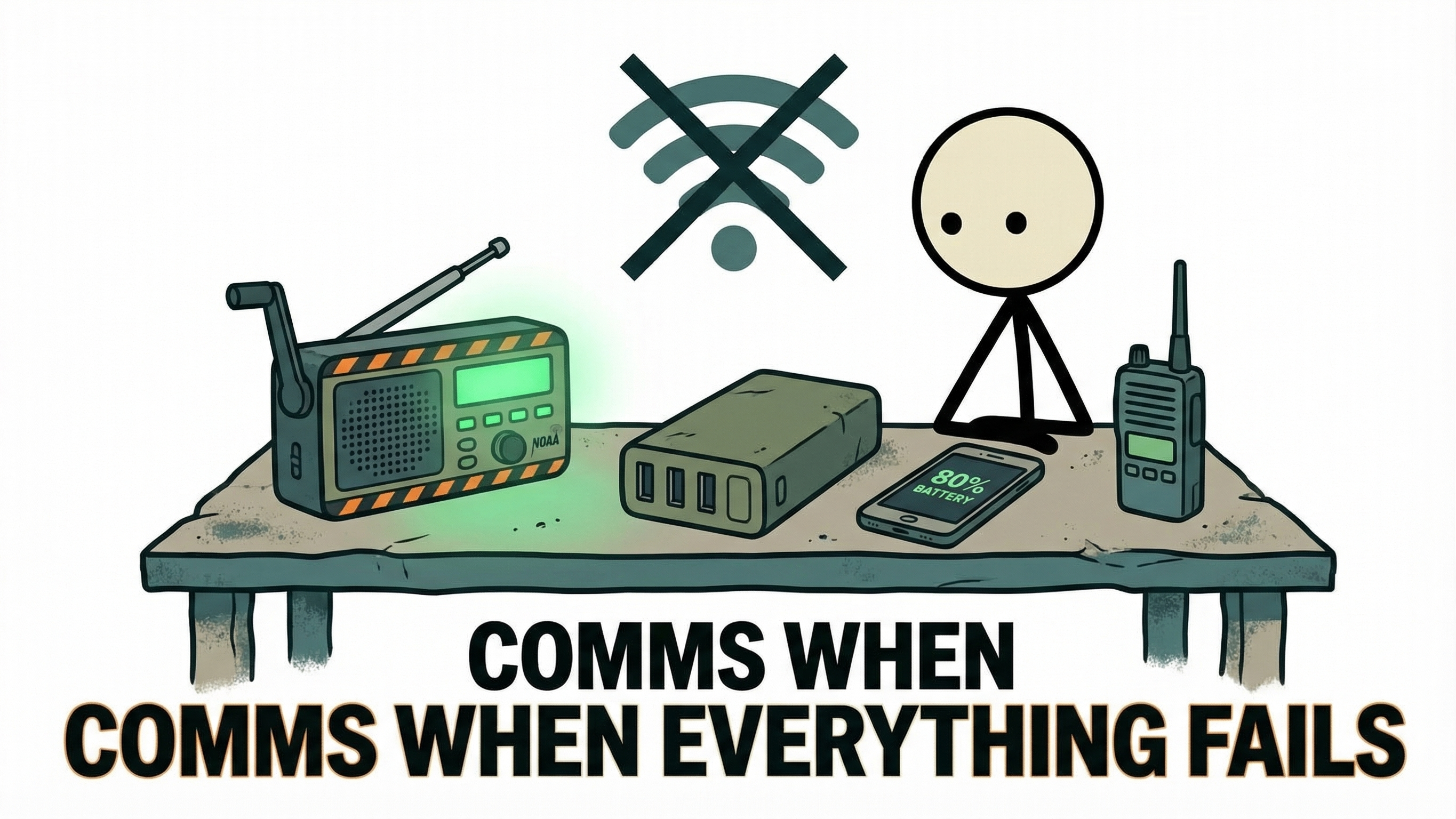
Information is a critical survival resource. Knowing the cause of the outage, the estimated time of restoration, and the location of emergency shelters can dictate your next moves. However, the modern communication infrastructure we rely on is surprisingly fragile. When the grid fails, your ability to reach the outside world operates on a strictly limited battery life. Learn how to develop an emergency communication plan for your family.
The Vulnerability of Cellular Networks
It is a common misconception that cell phones will work indefinitely during a power outage. While your phone may be fully charged, the cellular towers it connects to are tied to the local power grid. Most cell towers are equipped with backup battery banks, but these are typically designed to last only 4 to 24 hours. Once those batteries deplete, the network goes dark, regardless of how much power your personal device has.
Furthermore, during a widespread emergency, the remaining functional cell towers become massively congested as everyone attempts to call loved ones simultaneously. This congestion can make voice calls impossible. To bypass this, rely on SMS text messages. Text messages require significantly less bandwidth than voice calls and operate on a "store-and-forward" protocol. Even if the network is jammed, a text message will wait in the queue and push through the moment a sliver of bandwidth becomes available.
Conserving Your Digital Lifeline
In the first hour of a blackout, aggressively conserve your smartphone's battery. Turn on "Low Power Mode" or "Battery Saver" immediately. Dim your screen brightness to the lowest readable level. Turn off Wi-Fi, Bluetooth, and location services, as these radios constantly scan for connections and drain the battery. Close all background applications, and avoid using the phone for entertainment.
If you have high-capacity lithium-ion power banks, use them to top off your phone before its battery drops too low. Power outage preparedness means having at least one fully charged 20,000mAh power bank in your emergency kit, which can help you use the supply calculator to determine needed quantities.
The Ultimate Backup: NOAA Weather Radios
When cellular networks fail and the internet drops, the airwaves remain your most reliable source of information. A dedicated emergency radio is an absolute necessity for blackout survival. Specifically, you need a radio capable of receiving NOAA (National Oceanic and Atmospheric Administration) weather broadcasts.
NOAA operates a nationwide network of radio stations broadcasting continuous weather information, emergency alerts, and post-disaster instructions directly from the nearest National Weather Service office. Look for a radio with multiple power options: battery-powered, solar-powered, and hand-cranked. A hand-crank dynamo ensures that even if you exhaust all your batteries, two minutes of vigorous cranking will yield enough power to catch the latest emergency broadcast. Many of these radios also feature a USB port, allowing you to siphon a small amount of emergency power to your smartphone.
Water and Sanitation: The Overlooked Necessities
While food, warmth, and light are top of mind, water and sanitation often catch people off guard during a grid failure. The relationship between electricity and water pressure is direct and immediate in many households.
Why the Taps Run Dry
If you live in a rural area and rely on a private well, you will lose water pressure the exact second the power cuts out, as your electric well pump can no longer draw water. You must rely entirely on the water you have stored. If you live in a municipal area, gravity-fed water towers may provide pressure for a day or two, but city booster pumps eventually require electricity. Once the towers drain, municipal pressure will drop to a trickle or stop altogether.
This is why emergency management agencies like FEMA recommend storing at least one gallon of water per person, per day, for a minimum of three days. This accounts for drinking, basic hygiene, and light cooking. If you have advanced warning of a storm, fill your bathtubs and large containers with water. While bathtub water is not generally safe for drinking without filtration and purification, it is essential for another critical function: sanitation.
Managing Sanitation Without Power
When the water pressure fails, your toilets will no longer flush automatically. However, the mechanical action of a toilet still works if you manually introduce water. To flush a toilet during an outage, simply take a bucket of your stored bathtub water (about one to two gallons) and pour it directly and forcefully into the toilet bowl. The sudden volume of water will trigger the siphon jet, flushing the waste down the drain.
Maintain strict hygiene during an outage. Without hot water, handwashing becomes less frequent, increasing the risk of transmitting illnesses. Keep a large supply of alcohol-based hand sanitizer and antibacterial wet wipes in your emergency kit. Using paper plates and disposable utensils during the first 24 hours also eliminates the need to wash dishes, conserving your precious water supply for hydration and sanitation.
Safety and Security: Navigating the Dark Safely
A power outage fundamentally alters the safety dynamics of your home and neighborhood. Darkness obscures hazards, and the lack of electronic security systems can make you feel vulnerable. Prioritizing physical safety and situational awareness is paramount.
Preventing Physical Injury
Hospitals routinely see a surge in emergency room visits during blackouts, not just from carbon monoxide poisoning, but from severe lacerations, fractures, and head injuries. Navigating a dark, cluttered house is incredibly dangerous. Take the first few minutes of the outage to clear pathways. Move toys, shoes, and low furniture out of the main walking corridors. Keep your flashlight on your person at all times, and never attempt to navigate stairs without a clear light source.
Securing the Perimeter
When the grid goes down, your electronic alarm systems, Wi-Fi security cameras, and motion-sensor floodlights become useless. While widespread looting during localized blackouts is rare, crimes of opportunity can increase in total darkness. Ensure all exterior doors and first-floor windows are physically locked. If you have a manual garage door release, familiarize yourself with how to use it so you can secure your vehicles or evacuate if necessary.
Maintain a low profile. If you are using a portable generator, its loud engine noise essentially broadcasts that you have power and resources. Secure the generator to a fixed object with a heavy-duty chain and padlock to prevent theft. At night, use blackout curtains or heavy blankets over your windows to prevent the light from your lanterns from spilling out into the street, drawing unnecessary attention to your home.
Community Resilience
True survival is rarely a solitary endeavor. Once your immediate household is secured, fed, and warm, check on your neighbors. Elderly individuals, people with disabilities, and those dependent on oxygen concentrators or refrigerated medications are exceptionally vulnerable during a grid failure. A quick knock on a neighbor's door to share information or offer a spare flashlight builds community resilience. In prolonged disasters, a cooperative neighborhood is vastly safer and more effective than a street of isolated, fearful individuals. Building a strong family emergency plan is the foundation for this community approach.
Mastering the First 24 Hours
Surviving a power outage is not about enduring misery; it is about executing a well-thought-out protocol. The first 24 hours dictate the tone of the entire event. By immediately securing your environment, ruthlessly managing the thermal clock on your food, defending your microclimate against extreme temperatures, and establishing reliable off-grid communications, you strip the fear out of the equation. Grid failures are an inevitable part of modern life, but becoming a victim of one is entirely optional. When you approach a blackout with knowledge, preparation, and decisive action, you transform a dark, silent house into a resilient fortress, ready to weather whatever the storm brings. To strengthen your overall preparedness, browse our preparedness courses for comprehensive training.
Key hazards during power outage survival include carbon monoxide poisoning from improper generator use, foodborne illnesses from spoiled food, and fire risks from candles. Always use flashlights instead of candles and run generators outdoors, at least 20 feet away from your home.