⚡ Key Facts
- FEMA Recommendation: Every household should maintain a minimum of three days of non-perishable food, though a two-week supply is optimal for severe, prolonged disasters.
- Food Safety Window: The CDC warns that a closed refrigerator will only keep food safe for up to 4 hours during an outage, while a full freezer holds temperature for about 48 hours.
- Rising Grid Vulnerability: According to NOAA, weather-related power outages have doubled over the past two decades, making self-reliance more critical than ever.
- Hydration Baseline: The American Red Cross advises storing at least one gallon of water per person, per day, to cover both drinking and basic hygiene needs.
- Infrastructure Risks: The USGS highlights that major seismic events or severe storms can sever municipal water and gas lines for weeks, underscoring the necessity of ready-to-eat provisions that require zero utilities.
Check Water and Heat Before Choosing Freeze-Dried Meals
Freeze-dried food can be convenient, but it still depends on safe water and usually hot water for the best result. Use our ReadyWise vs Mountain House guide to compare the practical trade-offs before treating any branded bucket as a no-cook plan.
Keep Your Plan Usable
A written checklist is only useful if it stays current. The Protocol Survival preparedness app helps households track supplies, turn gaps into next actions, and keep the plan ready to use when normal services are disrupted.
Food Backup Skills That Support the First 72 Hours
After water and a basic 72-hour kit, close the food-access gaps that break real emergency plans. Learn how to open a can without a can opener, compare whether a home freeze dryer is worth it for preppers, and add safe wild-food awareness with the plantain weed identification guide.
Imagine the grid goes down, and it stays down. The initial hours of a power outage often feel like a minor inconvenience, but as the clock ticks past the 24-hour mark, the reality of the situation sets in. According to data from NOAA, extreme weather events are increasingly stressing our aging electrical infrastructure, leading to longer and more frequent blackouts. When the refrigerator warms up and the electric stove becomes nothing more than a countertop paperweight, your reliance on the modern emergency food storage guide chain abruptly ends. You need a plan that doesn't rely on boiling water, microwaving, or refrigeration. See emergency food storage guide for practical steps.
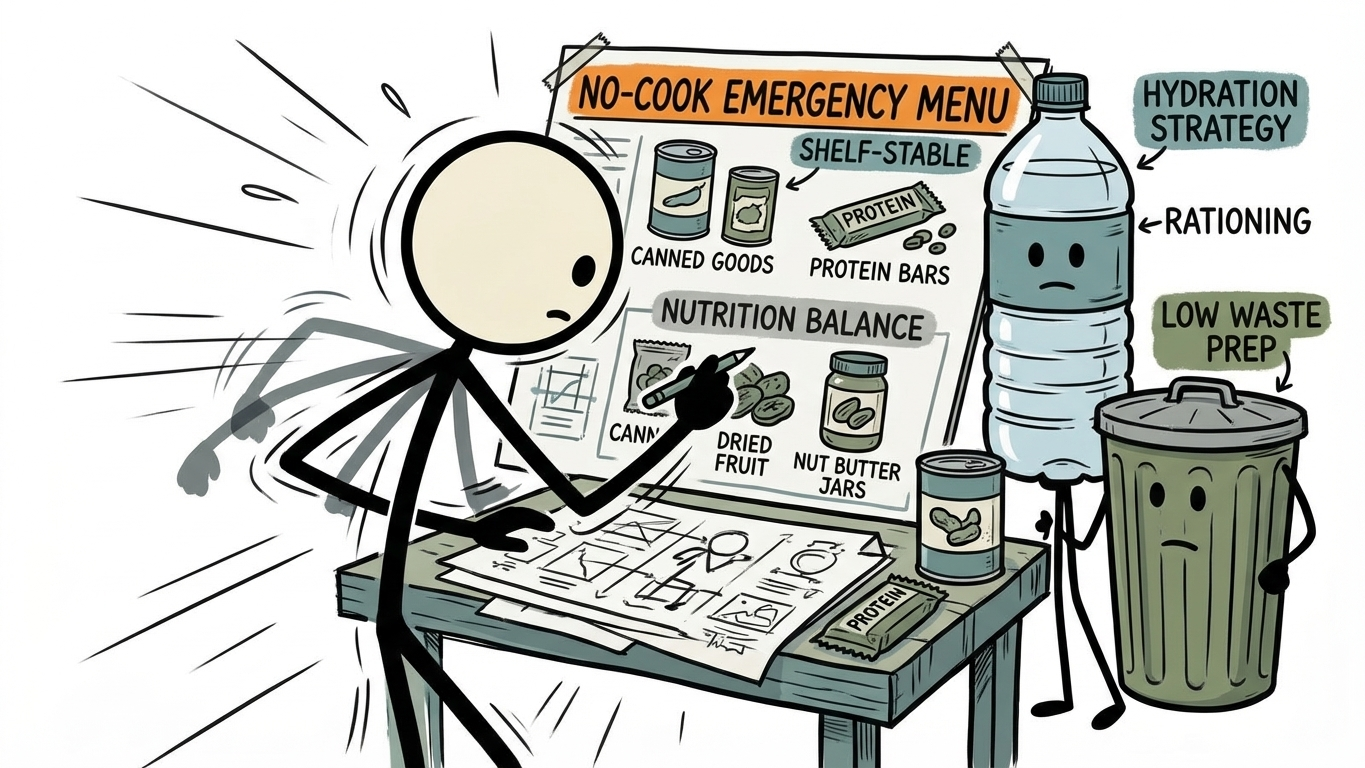
Developing a robust no cook emergency food strategy is one of the most empowering steps you can take for your family's safety. In a high-stress Survival Scenarios, the last thing you want to worry about is how you will feed yourself or whether your food is safe to consume. Relying on indoor camp stoves or gas grills can introduce severe carbon monoxide risks, a danger the CDC frequently highlights in post-disaster reports. By eliminating the need for heat and cooking entirely, you remove a massive layer of complexity and danger from your survival strategy. See supply calculator for practical steps.
This comprehensive guide will walk you through the precise steps of building a resilient blackout food plan. We will cover how to balance your macronutrients for sustained energy, how to execute a flawless hydration strategy, and how to manage low-waste food prep when municipal trash services are suspended. By the end of this guide, you will have the knowledge to build a pantry that keeps you nourished, hydrated, and ready for whatever comes your way. See water calculator for practical steps. For a quick definition, see dehydration.
The Anatomy of a No-Cook Emergency Strategy
When designing a survival pantry, many people mistakenly stock up on bulk rice, dried beans, and dehydrated meals. While these are excellent long-term survival staples, they all share one critical flaw: they require copious amounts of water and a reliable heat source to become edible. If a severe storm knocks out your power and a boil-water advisory is issued, those bulk bags of rice are essentially useless in the immediate aftermath. See go-bag essentials checklist for practical steps.
A true no cook emergency food stash bridges the gap between the moment your perishables spoil and the time utilities are restored. This strategy focuses entirely on foods that can be opened and consumed immediately, straight from the container, without any preparation. This approach not only saves time and energy but also conserves your precious emergency Water Calculator, which should be reserved primarily for hydration and basic sanitation. See survival scenarios library for practical steps.
Furthermore, an effective strategy accounts for appetite fatigue. In a stressful environment, eating the same bland crackers and canned tuna for four days straight can severely impact morale. Your blackout food plan must include a variety of textures, flavors, and nutritional profiles to keep spirits high and bodies fueled. Planning for variety is not a luxury in an emergency; it is a psychological necessity that helps maintain a sense of normalcy when the world outside is chaotic.
Nutritional Balance: Fueling Your Body Under Stress
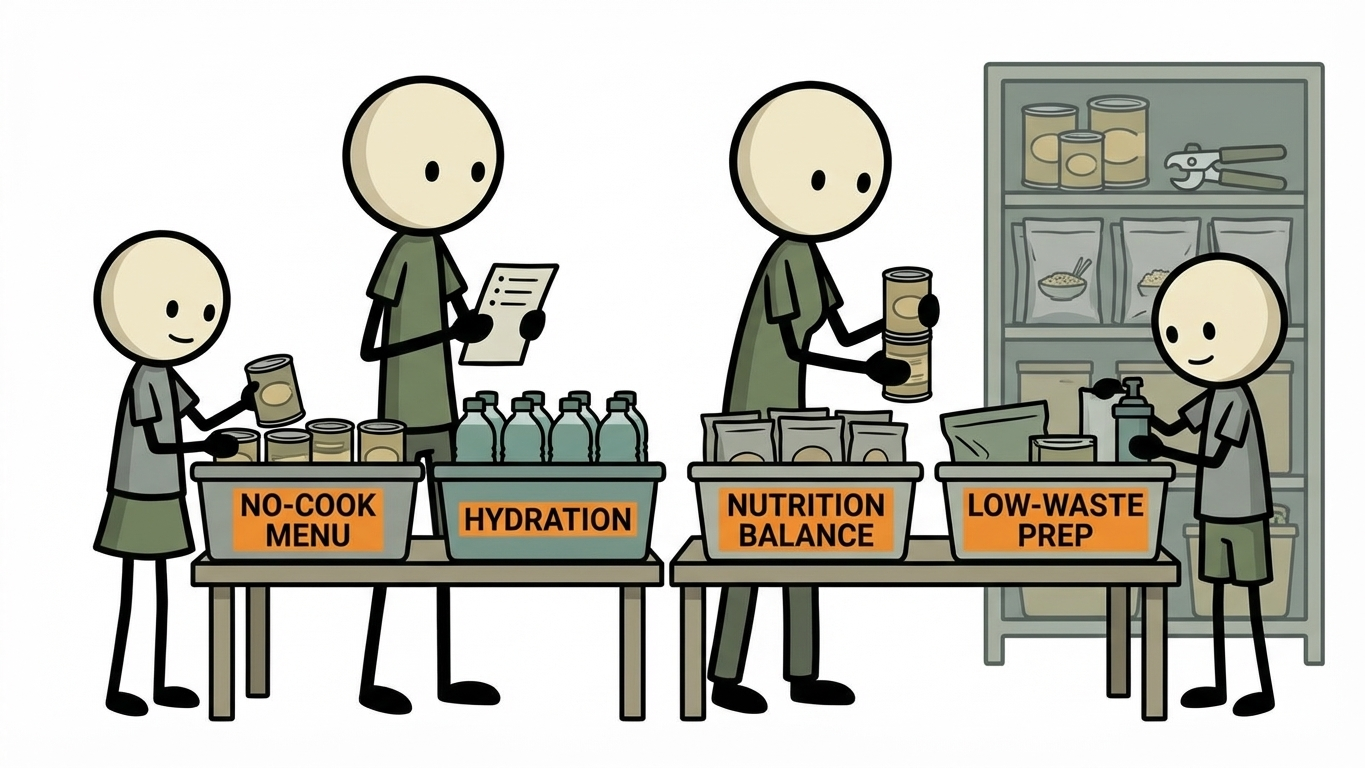
During a disaster, your body's caloric and nutritional needs often shift. Stress, anxiety, and the potential need for physical exertion (such as clearing debris or managing your property) will burn through calories faster than a typical sedentary day. FEMA guidelines suggest planning for a baseline of 2,000 to 2,500 calories per day for an adult, but the quality of those calories is just as important as the quantity.
Prioritizing Protein
Protein is essential for muscle repair, immune function, and keeping you feeling full longer. When carbohydrates are burned quickly, protein provides the sustained energy necessary to stay alert. Since you cannot cook raw meats, you must rely on shelf stable no cook food sources. Canned chicken, tuna, salmon, and sardines are excellent, bioavailable protein sources. Plant-based options like canned chickpeas, black beans, and high-quality protein bars also provide vital amino acids without the need for refrigeration.
Complex Carbohydrates for Energy
Carbohydrates are your body's primary energy source, but not all carbs are created equal. Relying heavily on sugary snacks will lead to rapid spikes and crashes in your blood sugar, leaving you lethargic and irritable. Instead, focus on complex carbohydrates that digest slowly. Whole wheat crackers, rice cakes, canned sweet potatoes, and rolled oats (which can be soaked in cold water or milk alternatives) offer steady, reliable energy.
Healthy Fats for Satiety and Brain Function
Fats are incredibly calorie-dense, offering nine calories per gram compared to the four calories per gram found in proteins and carbs. This makes fats an efficient way to store and consume calories in a compact form. Moreover, healthy fats are crucial for cognitive function, helping you make sharp, rational decisions during a crisis. Nuts, seeds, peanut butter, almond butter, and olive oil should be foundational elements of your ready to eat disaster food supply.
Building Your Shelf-Stable Pantry
Stocking your emergency pantry requires a strategic approach to shelf life, packaging, and ease of access. You want to focus on items that have a minimum shelf life of one to two years and require zero specialized tools to open, aside from a manual can opener. Below is a breakdown of the best items to include in your power outage meals.
Canned and Pouched Meats
Modern packaging has made storing meats incredibly convenient. Vacuum-sealed pouches of tuna, salmon, and chicken are lightweight, take up minimal space, and do not require draining. If you opt for canned meats, ensure you have multiple high-quality manual can openers stored in different locations. Spam and canned sausages are also viable options, as their high sodium content can actually be beneficial for replacing electrolytes lost through sweat during summer power outages.
Fruits and Vegetables
Getting adequate vitamins and fiber without a working refrigerator can be challenging. Canned vegetables like green beans, corn, and carrots can be eaten cold right out of the tin. For fruits, look for options canned in their own juice or water rather than heavy syrup, which can increase your thirst. Unsweetened applesauce cups, dried fruits (apricots, raisins, cranberries), and fruit leathers are excellent, high-fiber additions that require zero preparation.
Dairy Alternatives and Calcium
Fresh milk will spoil within hours of a blackout. To maintain calcium intake and have a liquid base for cold cereals or oats, stock up on shelf-stable milk alternatives. UHT (Ultra-High Temperature) pasteurized dairy milk, almond milk, or oat milk can sit in a pantry for months. Evaporated milk and condensed milk are also traditional survival staples, though they are quite rich and better used sparingly.
Comfort Foods and Morale Boosters
Never underestimate the power of a small comfort food during a high-stress event. The Red Cross and FEMA both recommend including familiar, comforting items in your disaster kits, especially if you have children. Hard candies, dark chocolate (which resists melting better than milk chocolate), graham crackers, and instant pudding (which can be made with shelf-stable milk) can provide a much-needed psychological lift when the environment is bleak.
The Hydration Strategy: Water is Your Lifeline
You can survive weeks without food, but only a few days without water. A blackout food plan is entirely useless if it is not supported by a robust hydration strategy. The American Red Cross sets the absolute minimum at one gallon of water per person, per day. However, this is a baseline. If you live in a hot climate, are pregnant, or have underlying medical conditions, your requirements will be significantly higher.
Calculating Your Water Needs
When calculating your storage, you must account for everyone in the household, including pets. A family of four planning for a realistic two-week grid failure needs to store a minimum of 56 gallons of water. This sounds like a massive amount, but it is entirely necessary when you consider that this water must cover drinking, brushing teeth, washing faces, and basic sanitation. Because you are utilizing a no-cook menu, you are saving gallons of water that would otherwise be lost to boiling pasta or washing heavy pots and pans.
Electrolytes and Hydration Efficiency
Drinking plain water is sometimes not enough, especially if you are sweating profusely in a summer blackout with no air conditioning. When you sweat, you lose vital minerals like sodium, potassium, and magnesium. If you only replenish with plain water, you risk a dangerous condition called hyponatremia. Stock your pantry with powdered electrolyte packets, liquid hydration drops, or commercial sports drinks. These mix easily into room-temperature water and ensure your body actually absorbs the hydration you are giving it.
Water Sourcing and Purification
In the event that your stored water runs out, you must have a way to make scavenged water safe to drink. The USGS warns that natural disasters frequently compromise municipal water treatment plants. Keep a high-quality gravity water filter (like a Berkey or LifeStraw Family) in your kit. Additionally, store unexpired water purification tablets (chlorine dioxide) and unscented household bleach. The CDC advises that 8 drops of 6% unscented bleach can treat one gallon of clear water, providing a vital backup if boiling is impossible.
Low-Waste Prep and Sanitation Without Running Water
One of the most overlooked aspects of emergency preparedness is waste management. When the power goes out, municipal services like trash collection and water pumping stations often fail shortly after. If you are eating three meals a day, the resulting packaging, food scraps, and dirty dishes will accumulate rapidly. Without running water to wash dishes, poor sanitation can quickly lead to foodborne illnesses, compounding an already dangerous situation.
The Case for Disposables
While environmental sustainability is important in daily life, an emergency dictates a different set of priorities. Your primary goal is to prevent illness and conserve drinking water. Stock up on heavy-duty paper plates, disposable bowls, and plastic cutlery. By serving your ready to eat disaster food on disposable products, you completely eliminate the need to use your precious water supply for washing dishes. This single step drastically reduces the risk of cross-contamination and bacterial growth in your kitchen.
Managing Food Waste
Because you do not have a working refrigerator, any food container you open must be consumed in a single sitting. If you open a large can of beans and only eat half, the remainder will spoil rapidly at room temperature, attracting insects and rodents. This is why purchasing single-serve pouches and smaller cans is a superior strategy for a blackout food plan. If you do have food scraps, they must be managed aggressively. Double-bag all food waste in heavy-duty contractor garbage bags and store them outside, away from the immediate perimeter of your home, to keep pests at bay.
Hand Hygiene and Surface Sanitation
The CDC emphasizes that handwashing is the single most effective way to prevent the spread of disease. However, washing hands under a running tap wastes too much water during a shortage. Instead, build a sanitation kit consisting of high-alcohol hand sanitizer (at least 60% alcohol), heavy-duty antibacterial wet wipes, and a spray bottle filled with a diluted bleach solution for wiping down countertops. Clean your food prep surfaces before and after every single meal, even if you are just opening a box of crackers.
Sample 3-Day No-Cook Emergency Menu
To put these principles into practice, here is a highly balanced, calorically dense 3-day menu. This power outage meals plan requires zero cooking, uses minimal water, utilizes disposable dining ware, and provides the macronutrients needed to keep your energy and morale high.
Day 1: Transitioning to the Grid-Down Reality
- Breakfast: 1 cup of rolled oats soaked in 1 cup of shelf-stable almond milk (prepare 15 minutes before eating). Mix in a handful of raisins and a tablespoon of peanut butter for healthy fats.
- Lunch: Tuna salad made from two single-serve pouches of tuna mixed with individual mayonnaise packets (stolen from your condiment stash). Served over whole-wheat crackers with a side of unsweetened applesauce.
- Dinner: "Pantry Taco Bowl" consisting of one can of drained black beans, one can of drained sweet corn, and a pouch of precooked, shelf-stable chicken. Season with a packet of taco seasoning and eat with tortilla chips.
- Snacks: Beef jerky, a handful of almonds, and a hydration drink mixed with an electrolyte powder.
Day 2: Sustaining Energy and Morale
- Breakfast: Two high-protein meal replacement bars and a canned fruit cocktail (in water, not syrup). Drink one cup of instant coffee prepared with cold water and vigorously shaken.
- Lunch: Canned chicken spread on pre-packaged tortillas or flatbreads. Add a side of canned green beans (eaten cold) tossed with a splash of olive oil and salt for extra calories.
- Dinner: Ready-to-eat canned hearty soup or chili (look for varieties that are palatable at room temperature). Serve with a side of dense pumpernickel or pilot bread that has a long shelf life.
- Snacks: Trail mix containing walnuts, pumpkin seeds, and dark chocolate chips. One fruit leather strip.
Day 3: Combating Appetite Fatigue
- Breakfast: Dry granola mixed with sunflower seeds and dried cranberries. Serve with a glass of UHT pasteurized dairy milk.
- Lunch: Peanut butter and honey sandwiches on dense crackers or survival bread. The honey provides a quick, natural carbohydrate boost, while the peanut butter offers sustained protein and fat.
- Dinner: Canned salmon mixed with a splash of lemon juice (from a bottle) and black pepper. Serve alongside a can of diced potatoes and a side of canned peas.
- Snacks: Graham crackers dipped in almond butter, and a hard candy to boost morale in the evening.
Mastering Storage and Shelf-Life Rotation
A well-designed emergency menu is only effective if the food is actually safe to eat when you need it. Unlike a set-and-forget survival kit, a no-cook pantry requires active management. The easiest way to maintain your supply is by implementing the FIFO method: First In, First Out. When you buy new canned goods or pouches, place them at the back of your pantry shelves, pushing the older items to the front.
Temperature control is another vital factor in extending the life of your shelf stable no cook food. The USDA notes that for every 10 degrees above 60°F, the shelf life of canned goods is essentially cut in half. Store your emergency provisions in a cool, dark, and dry location. Avoid keeping food in uninsulated garages, attics, or next to appliances that generate heat. If a can shows signs of deep denting along the seam, severe rusting, or bulging, discard it immediately, as these are signs of dangerous botulism contamination.
Finally, conduct a biannual audit of your entire emergency food and water supply. Many families choose to align this audit with the changing of the clocks for daylight saving time. Check expiration dates, inspect water containers for leaks, and rotate out any foods that your family's dietary preferences have outgrown. An emergency is not the time to discover that your children refuse to eat the specific brand of protein bars you stockpiled three years ago.
Empowerment Through Preparation
Facing a prolonged power outage can be a daunting prospect, but the anxiety of the unknown is easily mitigated by taking proactive, calculated steps today. By designing a comprehensive no-cook emergency menu, you strip away the vulnerabilities associated with modern grid dependence. You are no longer at the mercy of the electric company to provide a hot meal, nor are you risking your family's safety with dangerous indoor cooking methods.
Building a resilient blackout food plan requires an upfront investment of time and resources, but the peace of mind it yields is immeasurable. When the storms roll in and the lights inevitably flicker and die, you won't be scrambling in the dark. Instead, you will calmly access a well-organized, nutritionally balanced pantry, confident in your hydration strategy and sanitation protocols. True survival is not about reacting to a disaster; it is about having the foresight to prepare so thoroughly that an emergency simply becomes a manageable inconvenience.
Master no-cook meal planning using our water and food storage guide. Learn food storage from our emergency food storage guide. Calculate no-cook supplies with our supply calculator. Build meal kits with our go-bag builder. Get nutrition training through our preparedness courses.
Frequently Asked Questions
What is the first step to prepare for this scenario?
Start with a realistic risk assessment for your location, then build a simple written plan your whole household can follow.
How much should beginners spend initially?
Begin with high-impact basics and a phased budget. Small consistent upgrades beat expensive one-time purchases.
How often should plans and gear be reviewed?
Audit every 6 to 12 months and after every real incident to capture lessons learned.
What should go in every emergency kit?
Water, food, first aid, lighting, communication, documents, and essential medications.
How do I get family buy-in for preparedness?
Keep it practical, avoid fear language, and run short drills that show clear everyday value.
Sources & Further Reading
Related resource: Water & Food Storage Guide.